
- Procedures & Tests
- Symptoms A-Z
- Symptom Checker
- Kidney Diet
- First Aid
- Anatomy Atlas
- Ask MedicalVideos
- Drug Guide
- Lab Values
- Vital Signs
- Muscles A–Z
- Clinical Signs
- Medical Abbreviations
- Medical Terminology
- Physical Examination
- Surgical Examination
- Ophthalmology
- Clinical Skills
- Orthopedics
- Surgery Videos
- Laparoscopy
- Pediatrics
- Medical Humor
- Cardiothoracic Surgery
- Nursing Videos
- Plastic Surgery
- Otorhinolaryngology
- Histology and Histopathology
- Neurosurgery
- Dermatology
- Pediatric Surgery
- Urology
- Dentistry
- Oncology and Cancers
- Anatomy Videos
- Health and Fitness
- Radiology
- Anaesthesia
- Physical Therapy
- Pharmacology
- Interventional Radiology
- Cardiology
- Endocrinology
- Gynecology
- Emergency Medicine
- Psychiatry and Psychology
- Childbirth Videos
- General Medical Videos
- Nephrology
- Physiology
- Diet and Food Health
- Diabetes Mellitus
- Neurology
- Women Health
- Osteoporosis
- Gastroenterology
- Pulmonology
- Hematology
- Rheumatology
- Toxicology
- Nuclear Medicine
- Infectious Diseases
- Vascular Disease
- Reproductive Health
- Burns and Wound Healing
- Kidney Zone Podcast
- Other
Other
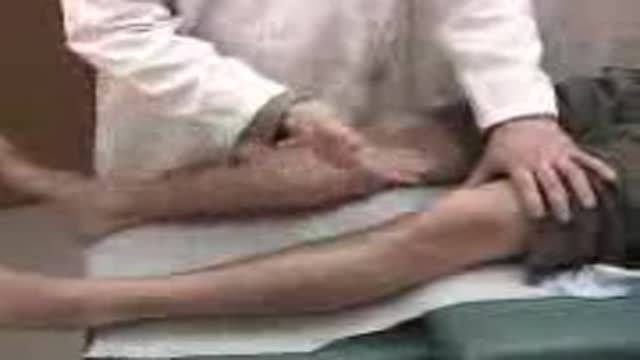

This USMLE-style demonstration shows a complete physical examination of the knee joint. The examiner covers inspection for deformity and swelling, palpation of the bony landmarks, and varus and valgus stress testing of the collateral ligaments. The Lachman test assesses cruciate ligament stability, the McMurray test evaluates the meniscus, and patellar tracking and effusion checks complete the sequence.
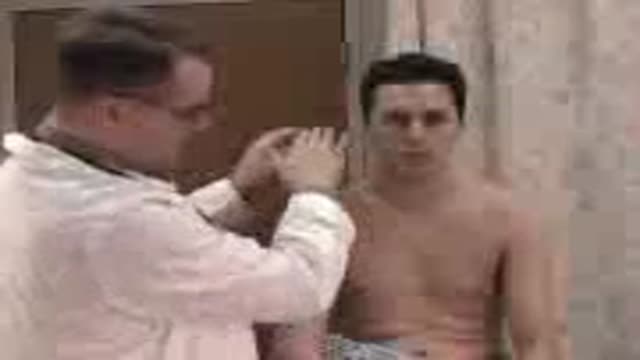
Shoulder examination for USMLE preparation is demonstrated with inspection and palpation. The examiner compares muscle size and shoulder position, palpates the clavicle, joints, coracoid, scapula and humerus, then performs impingement maneuvers. The recording lasts just under three minutes.
A video of examination of peripheral pulsations from the USMLE collection
Costovertebral angle tenderness, a physical examination finding assessed in this USMLE-style video, is demonstrated on examination. The clip shows how tenderness at the back over the kidney region is elicited during assessment. It is a study resource for students preparing for clinical examinations.
Step-by-step teaching demonstrates the abdominal examination for USMLE skills. The examiner covers inspection for scars, distension and hernias, then auscultation of bowel sounds and bruits before palpation, explaining the order as he goes. It is a structured Physical Examination study resource.
Posterior chest examination is demonstrated in this USMLE physical examination video. Inspection checks rib, scapular and midline symmetry, followed by chest excursion and tactile fremitus testing. Percussion compares tones across the intercostal spaces, and auscultation compares breath sounds on both sides while avoiding the scapula, completing the posterior chest sequence.
In this USMLE-style demonstration, the anterior chest and lungs are examined. It works through inspection for deformity, palpation and tactile fremitus as the patient repeats '99', percussion, and auscultation comparing both sides. It is a compact study guide to the anterior chest examination.
In this brief examination, the Rinne test is demonstrated with a 512 Hz tuning fork. The examiner places the fork on the mastoid, asks the patient when the sound fades, and then checks hearing in front of the ear. The comparison illustrates bone conduction and air conduction during a basic ear assessment, making the clip useful for students reviewing clinical examination technique for hearing and for USMLE-style topics.
Ear examination and Weber's test are demonstrated in this USMLE-style clinical video. The examiner inspects and palpates the external ear, then uses an otoscope to view the canal and tympanic membrane. Hearing assessment with a 512 hertz tuning fork placed on the head, and asking the patient where the sound localizes, is also shown.
Hearing assessment is demonstrated with the whispered voice test. The examiner whispers individual words into each ear and asks the patient to repeat them. This eighteen-second clip gives a concise example of a bedside hearing check from a USMLE-style clinical examination collection for students.
This demonstration teaches use of the ophthalmoscope for the eye examination. The examiner shows the wall-mounted instrument and its focusing dial, darkens the room so the pupils dilate, and demonstrates the fundoscopic exam: examining the right eye with the right eye, following the retinal vessels to the optic disc and cup, then repeating on the other side.
This examination demonstration shows visual acuity testing with a Snellen chart. The patient reads the smallest line with both eyes and then with each eye covered in turn, and the examiner records each result, illustrating a routine eye examination skill from the USMLE collection for students.

The HEENT, or Head, Eye, Ear, Nose and Throat Exam is usually the initial part of a general physical exam, after the vital signs. Like other parts of the physical exam, it begins with inspection, and then proceeds to palpation. It requires the use of several special instruments in order to inspect the eyes and ears, and special techniques to assess their special sensory function. This module reviews some of the relevant surface anatomy and describes the basic HEENT exam. The module includes an introduction to use of the ophthalmoscope.
An educational recording of a vaginal childbirth, showing how labor and delivery progress. For learning purposes only — not medical advice; talk to your own clinician about your pregnancy and delivery.
A clear 3D animation of a normal vaginal delivery, showing how the baby moves through the birth canal. Educational only — not medical advice.
Medical Videos
Free medical and surgery videos for patients, students and professionals — trusted since 2007.
Founded by Dr. Mohamed Ibrahim, MD, PhD — physician-scientist.
Follow us on Facebook · Instagram