- Physical Examination
- Surgical Examination
- Ophthalmology
- Clinical Skills
- Orthopedics
- Surgery Videos
- Laparoscopy
- Pediatrics
- Funny Videos
- Cardiothoracic Surgery
- Nursing Videos
- Plastic Surgery
- Otorhinolaryngology
- Histology and Histopathology
- Neurosurgery
- Dermatology
- Pediatric Surgery
- Urology
- Dentistry
- Oncology and Cancers
- Anatomy Videos
- Health and Fitness
- Radiology
- Anaesthesia
- Physical Therapy
- Pharmacology
- Interventional Radiology
- Cardiology
- Endocrinology
- Gynecology
- Emergency Medicine
- Psychiatry and Psychology
- Childbirth Videos
- General Medical Videos
- Nephrology
- Physiology
- Diet and Food Health
- Diabetes Mellitus
- Neurology
- Women Health
- Osteoporosis
- Gastroenterology
- Pulmonology
- Hematology
- Rheumatology
- Toxicology
- Nuclear Medicine
- Infectious Diseases
- Vascular Disease
- Reproductive Health
- Burns and Wound Healing
- Kidney Zone Podcast
- Other
Axis
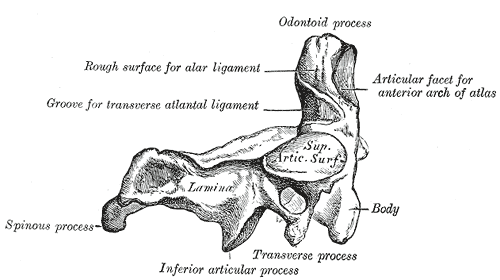
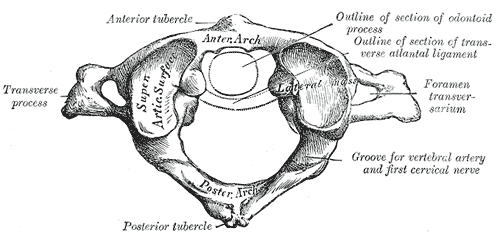
Gray's Anatomy (1918) plate, public domain
The axis is the second cervical vertebra (C2), distinguished by the dens — a tooth-like peg projecting upwards from its body. The atlas (and the head) rotate around this peg, producing the side-to-side 'no' movement. Strong ligaments hold the dens against the atlas ring, with the spinal cord passing just behind.
Key facts
- The axis's dens is the pivot for head rotation.
- About half of all neck rotation happens at the atlas-axis joint.
- The dens was originally the body of the atlas, fused during development.
- Ligaments (alar and transverse) keep the dens safely positioned.
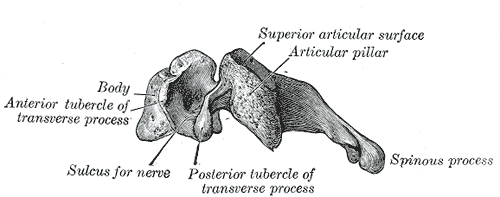
- The axis has the stout spinous process you can feel at the top of the neck's back.
What can go wrong
The dens can fracture in falls, especially in older people, and such fractures need specialist care because of the cord nearby. In children, the joint can sometimes shift after throat infections or minor trauma, causing a stubborn head tilt (rotatory subluxation) that is assessed in clinic.
Related procedures & tests
Related symptoms
Related muscles
Frequently asked questions
What is the dens?
A peg of bone rising from the axis that acts as the axle for the head's rotation — anatomists also call it the odontoid process, from the Greek for 'tooth-like'.
Why is the dens fracture-prone in older people?
Falls onto the face or head transmit force through the peg, and age-related bone thinning weakens its base. It is one of the commonest spine fractures in people over 70.
Educational information only. This atlas explains normal anatomy and describes conditions in general terms; it is not medical advice and does not replace assessment by a qualified clinician. If you have symptoms that worry you, seek medical care.