- Physical Examination
- Surgical Examination
- Ophthalmology
- Clinical Skills
- Orthopedics
- Surgery Videos
- Laparoscopy
- Pediatrics
- Funny Videos
- Cardiothoracic Surgery
- Nursing Videos
- Plastic Surgery
- Otorhinolaryngology
- Histology and Histopathology
- Neurosurgery
- Dermatology
- Pediatric Surgery
- Urology
- Dentistry
- Oncology and Cancers
- Anatomy Videos
- Health and Fitness
- Radiology
- Anaesthesia
- Physical Therapy
- Pharmacology
- Interventional Radiology
- Cardiology
- Endocrinology
- Gynecology
- Emergency Medicine
- Psychiatry and Psychology
- Childbirth Videos
- General Medical Videos
- Nephrology
- Physiology
- Diet and Food Health
- Diabetes Mellitus
- Neurology
- Women Health
- Osteoporosis
- Gastroenterology
- Pulmonology
- Hematology
- Rheumatology
- Toxicology
- Nuclear Medicine
- Infectious Diseases
- Vascular Disease
- Reproductive Health
- Burns and Wound Healing
- Kidney Zone Podcast
- Other
Coccyx
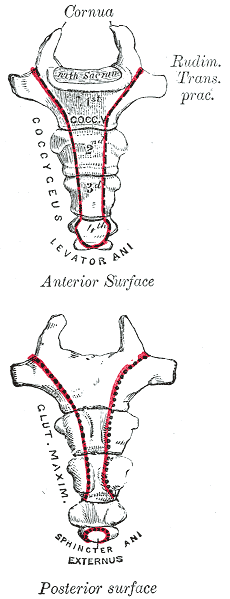
Gray's Anatomy (1918) plate, public domain
The coccyx — the tailbone — is a small triangular bone of (usually) four fused vertebrae at the very base of the spine, the remnant of the tail our distant ancestors had. It is not useless: it anchors pelvic-floor muscles and ligaments and forms one leg of the 'tripod' you sit on, along with the two seat bones.
Key facts
- The coccyx is usually 3 to 5 (typically 4) fused vertebrae.
- It is the evolutionary remnant of a tail.
- Pelvic floor muscles and the gluteus maximus attach to it.
- It helps support the pelvic organs when sitting.
- Its segments may stay partly separate and slightly mobile in some people.
What can go wrong
The coccyx is easily bruised or fractured by falling backwards onto a hard surface, causing coccydynia — pain when sitting, sometimes lasting months. Cushions with a cut-out at the back relieve the pressure. Very rarely, persistent coccyx pain follows childbirth or has no clear cause and needs specialist input.
Related procedures & tests
Related symptoms
Related muscles
Frequently asked questions
Do humans need a tailbone?
We do not need a tail, but the coccyx itself earns its keep: pelvic-floor muscles and ligaments anchor to it, and it helps bear weight when we lean back while sitting.
Why does a bruised coccyx hurt for so long?
Every time you sit, the coccyx takes load, and it is surrounded by sensitive structures. Repeated loading of a bruised or irritated bone delays settling, which is why cushioning and posture changes are the mainstays of recovery.
Educational information only. This atlas explains normal anatomy and describes conditions in general terms; it is not medical advice and does not replace assessment by a qualified clinician. If you have symptoms that worry you, seek medical care.