- Physical Examination
- Surgical Examination
- Ophthalmology
- Clinical Skills
- Orthopedics
- Surgery Videos
- Laparoscopy
- Pediatrics
- Funny Videos
- Cardiothoracic Surgery
- Nursing Videos
- Plastic Surgery
- Otorhinolaryngology
- Histology and Histopathology
- Neurosurgery
- Dermatology
- Pediatric Surgery
- Urology
- Dentistry
- Oncology and Cancers
- Anatomy Videos
- Health and Fitness
- Radiology
- Anaesthesia
- Physical Therapy
- Pharmacology
- Interventional Radiology
- Cardiology
- Endocrinology
- Gynecology
- Emergency Medicine
- Psychiatry and Psychology
- Childbirth Videos
- General Medical Videos
- Nephrology
- Physiology
- Diet and Food Health
- Diabetes Mellitus
- Neurology
- Women Health
- Osteoporosis
- Gastroenterology
- Pulmonology
- Hematology
- Rheumatology
- Toxicology
- Nuclear Medicine
- Infectious Diseases
- Vascular Disease
- Reproductive Health
- Burns and Wound Healing
- Kidney Zone Podcast
- Other
Cervical Vertebrae
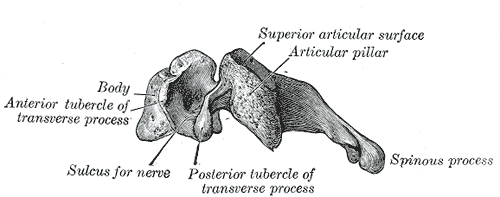
Gray's Anatomy (1918) plate, public domain
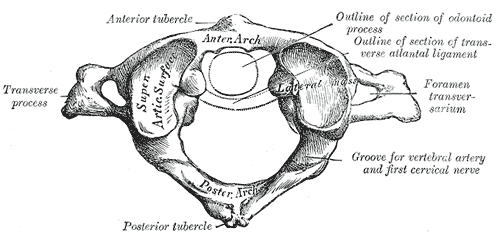
The seven cervical vertebrae form the neck. They are the smallest true vertebrae, supporting the head while allowing it to turn, nod and tilt. Each has a small hole (foramen transversarium) in its side processes carrying the vertebral artery to the brain, and most have a split (bifid) spinous process.
Key facts
- There are seven cervical vertebrae, numbered C1 to C7.
- They form the forward curve (lordosis) of the neck.
- The vertebral artery passes through holes in their side processes.
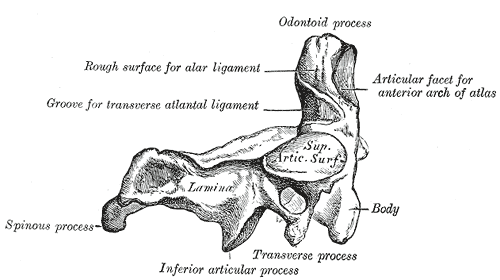
- The first two — atlas and axis — are specialised for head movement.
- Their small size reflects mobility over load-bearing.
What can go wrong
The neck's mobility makes it vulnerable to whiplash-type injuries in collisions, and to wear in the facet joints and discs, which can cause neck pain and stiffness. Because the vertebral artery runs through these bones, significant neck injuries are assessed with the artery in mind. Tingling into the arm can follow irritation of a nerve leaving the neck.
Related procedures & tests
Related symptoms
Related muscles
Watch: related videos
Frequently asked questions
Why do neck vertebrae have extra holes?
The foramen in each transverse process forms a protected channel up the neck for the vertebral artery and vein, supplying the back part of the brain.
How much movement does the neck have?
A healthy neck rotates about 80 degrees to each side, tilts ear-to-shoulder about 45 degrees, and nods through roughly 100 degrees in total — most rotation happens at the top two vertebrae.
Educational information only. This atlas explains normal anatomy and describes conditions in general terms; it is not medical advice and does not replace assessment by a qualified clinician. If you have symptoms that worry you, seek medical care.