- Physical Examination
- Surgical Examination
- Ophthalmology
- Clinical Skills
- Orthopedics
- Surgery Videos
- Laparoscopy
- Pediatrics
- Funny Videos
- Cardiothoracic Surgery
- Nursing Videos
- Plastic Surgery
- Otorhinolaryngology
- Histology and Histopathology
- Neurosurgery
- Dermatology
- Pediatric Surgery
- Urology
- Dentistry
- Oncology and Cancers
- Anatomy Videos
- Health and Fitness
- Radiology
- Anaesthesia
- Physical Therapy
- Pharmacology
- Interventional Radiology
- Cardiology
- Endocrinology
- Gynecology
- Emergency Medicine
- Psychiatry and Psychology
- Childbirth Videos
- General Medical Videos
- Nephrology
- Physiology
- Diet and Food Health
- Diabetes Mellitus
- Neurology
- Women Health
- Osteoporosis
- Gastroenterology
- Pulmonology
- Hematology
- Rheumatology
- Toxicology
- Nuclear Medicine
- Infectious Diseases
- Vascular Disease
- Reproductive Health
- Burns and Wound Healing
- Kidney Zone Podcast
- Other
Corpus Callosum
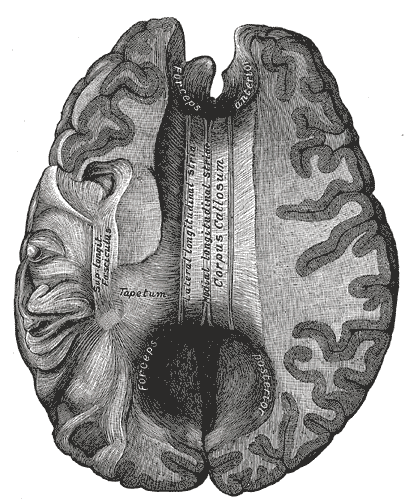
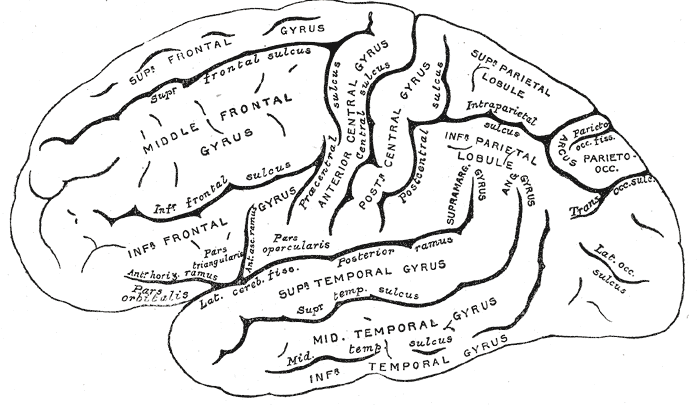
Gray's Anatomy (1918) plate, public domain
The corpus callosum is the great white-matter bridge of about 200 million fibres connecting the two cerebral hemispheres, visible as a broad arch on a midline view of the brain. It lets the hemispheres share information and coordinate activity — particularly for tasks needing both sides, like integrating the two visual fields or coordinating the hands. Its parts connect corresponding regions from frontal (genu) to occipital (splenium).
Key facts
- It is the largest white-matter structure in the brain.
- Its fibres are heavily myelinated for fast transfer — interhemispheric signals cross in milliseconds.
- It develops through childhood and adolescence along with the hemispheres' specialisation.
- Rarely it fails to form (agenesis), and other pathways partially compensate.
What can go wrong
The corpus callosum is famously divided surgically (callosotomy) for some severe epilepsies, producing 'split-brain' phenomena that revealed how the hemispheres specialise. It can be damaged by strokes, multiple sclerosis plaques, tumours and the toxic effects of alcohol (Marchiafava-Bignami disease). Everyday callosal problems usually blur into the symptoms of the connected regions — impaired coordination of complex or bimanual tasks and slowed processing.
Related conditions
Related procedures & tests
Related symptoms
Frequently asked questions
What did split-brain research show?
That each hemisphere can perceive and learn independently when the bridge is cut, and that language and conscious narration are usually dominated by the left hemisphere.
Can you be born without a corpus callosum?
Yes — agenesis of the corpus callosum is one of the commoner brain malformations; effects range from none detectable to learning and social difficulties.
Educational information only. This atlas explains normal anatomy and describes conditions in general terms; it is not medical advice and does not replace assessment by a qualified clinician. If you have symptoms that worry you, seek medical care.