- Physical Examination
- Surgical Examination
- Ophthalmology
- Clinical Skills
- Orthopedics
- Surgery Videos
- Laparoscopy
- Pediatrics
- Funny Videos
- Cardiothoracic Surgery
- Nursing Videos
- Plastic Surgery
- Otorhinolaryngology
- Histology and Histopathology
- Neurosurgery
- Dermatology
- Pediatric Surgery
- Urology
- Dentistry
- Oncology and Cancers
- Anatomy Videos
- Health and Fitness
- Radiology
- Anaesthesia
- Physical Therapy
- Pharmacology
- Interventional Radiology
- Cardiology
- Endocrinology
- Gynecology
- Emergency Medicine
- Psychiatry and Psychology
- Childbirth Videos
- General Medical Videos
- Nephrology
- Physiology
- Diet and Food Health
- Diabetes Mellitus
- Neurology
- Women Health
- Osteoporosis
- Gastroenterology
- Pulmonology
- Hematology
- Rheumatology
- Toxicology
- Nuclear Medicine
- Infectious Diseases
- Vascular Disease
- Reproductive Health
- Burns and Wound Healing
- Kidney Zone Podcast
- Other
Cranial Nerves
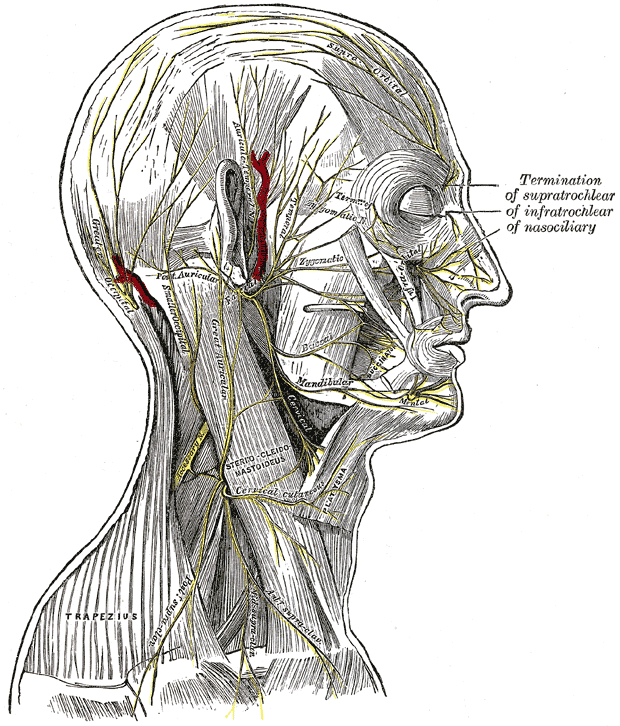
Gray's Anatomy (1918) plate, public domain
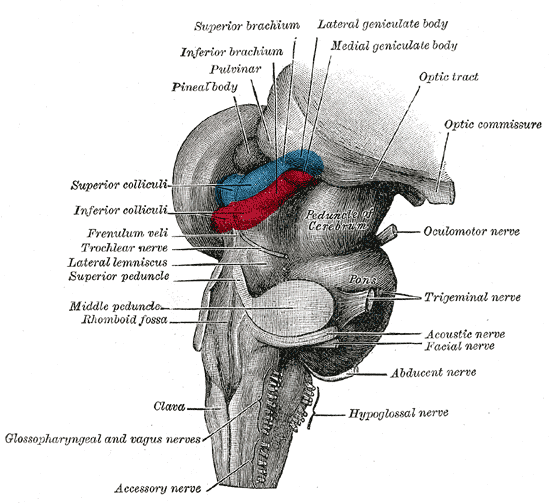
The cranial nerves are twelve pairs of nerves arising directly from the brain and brainstem, numbered I to XII from front to back. They carry smell, sight, eye movement, facial sensation and expression, hearing and balance, taste, swallowing, voice, shoulder shrugging and tongue movement; the vagus (X) ranges far beyond the head to the chest and abdomen.
Key facts
- Cranial nerves are numbered with Roman numerals, I to XII, in order from front to back.
- Some are purely sensory, some purely motor, and some mixed.
- They leave the skull through specific openings, which is why skull-base problems affect them in patterns.
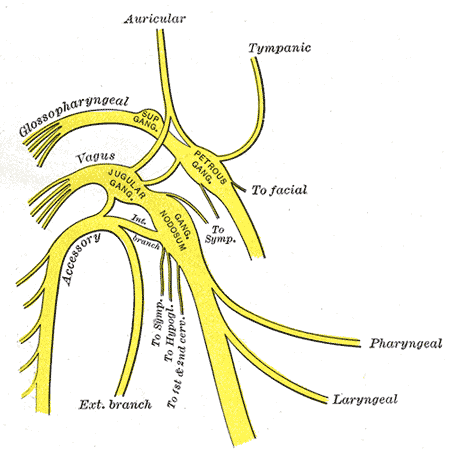
- The vagus (CN X) is the longest, reaching the gut.
- Testing the cranial nerves is a standard part of the neurological examination.
What can go wrong
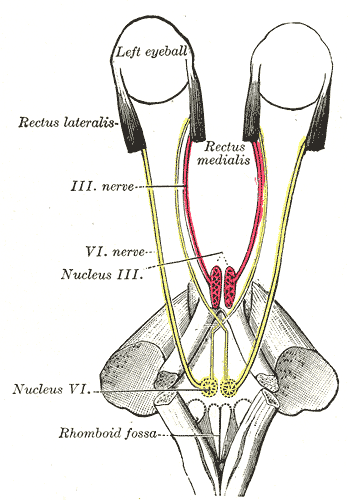
Individual cranial nerves can be affected by injury, compression, inflammation or stroke. Classic examples include loss of smell after head injury (I), facial weakness in Bell's palsy (VII), and double vision from the eye-movement nerves (III, IV, VI). New combinations of cranial nerve signs are always investigated for their underlying cause.
Related conditions
Related procedures & tests
Related symptoms
Watch: related videos
Frequently asked questions
How do students remember the cranial nerves?
With mnemonics — a famous one begins 'On Old Olympus' Towering Top…' for Olfactory, Optic, Oculomotor, Trochlear, Trigeminal, Abducens, Facial, Auditory (vestibulocochlear), Glossopharyngeal, Vagus, Spinal accessory and Hypoglossal.
Why twelve pairs and not more?
The twelve are the nerves that leave through the skull rather than between vertebrae, an arrangement inherited from our evolutionary history. The numbering is convention, settled by anatomists in the 18th century.
Educational information only. This atlas explains normal anatomy and describes conditions in general terms; it is not medical advice and does not replace assessment by a qualified clinician. If you have symptoms that worry you, seek medical care.