- Physical Examination
- Surgical Examination
- Ophthalmology
- Clinical Skills
- Orthopedics
- Surgery Videos
- Laparoscopy
- Pediatrics
- Funny Videos
- Cardiothoracic Surgery
- Nursing Videos
- Plastic Surgery
- Otorhinolaryngology
- Histology and Histopathology
- Neurosurgery
- Dermatology
- Pediatric Surgery
- Urology
- Dentistry
- Oncology and Cancers
- Anatomy Videos
- Health and Fitness
- Radiology
- Anaesthesia
- Physical Therapy
- Pharmacology
- Interventional Radiology
- Cardiology
- Endocrinology
- Gynecology
- Emergency Medicine
- Psychiatry and Psychology
- Childbirth Videos
- General Medical Videos
- Nephrology
- Physiology
- Diet and Food Health
- Diabetes Mellitus
- Neurology
- Women Health
- Osteoporosis
- Gastroenterology
- Pulmonology
- Hematology
- Rheumatology
- Toxicology
- Nuclear Medicine
- Infectious Diseases
- Vascular Disease
- Reproductive Health
- Burns and Wound Healing
- Kidney Zone Podcast
- Other
Eardrum
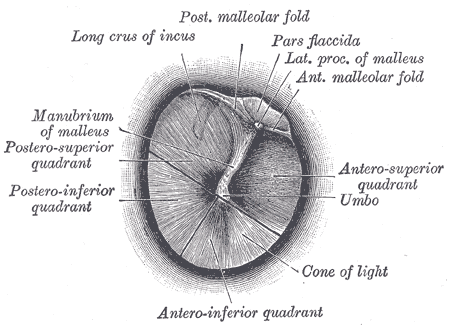
Gray's Anatomy (1918) plate, public domain
The eardrum (tympanic membrane) is a thin, cone-shaped membrane, about 1 cm across, sealing the end of the ear canal from the middle ear. It vibrates with sound and passes the movement to the malleus, the first of the ossicles. Its outer surface is skin, its inner surface mucosa, with a fibrous middle layer giving it strength. It also protects the middle ear from water and debris — and it regenerates remarkably well after injury.
Key facts
- The eardrum's area is about 17 times that of the stapes footplate, part of the pressure-amplifying lever system of the ossicles.
- It is so thin (about 0.1 mm) that the malleus handle can be seen through it on examination.
- Its blood vessels run along the malleus handle — visible when inflamed.
- Most perforations from infection or injury heal spontaneously within weeks.
What can go wrong
A hole in the eardrum (perforation) follows middle-ear infection pressure, trauma (including cotton buds and slaps) or rapid pressure change (barotrauma in diving or flying); it causes some hearing loss and lets water and infection in. Repeated infections can leave a permanent perforation with discharge (chronic otitis media). The drum bulges painfully in acute middle-ear infection and may burst, releasing pus and relieving pain.
Related procedures & tests
Related symptoms
Frequently asked questions
Can a perforated eardrum heal?
Yes — small perforations from infection or injury usually close by themselves within a few weeks if the ear is kept dry; persistent ones can be repaired surgically (myringoplasty).
Why do ears pop on aeroplanes?
Pressure changes make the eardrum bow in or out until the Eustachian tube opens to equalise it — the pop is the drum snapping back to neutral.
Educational information only. This atlas explains normal anatomy and describes conditions in general terms; it is not medical advice and does not replace assessment by a qualified clinician. If you have symptoms that worry you, seek medical care.