- Physical Examination
- Surgical Examination
- Ophthalmology
- Clinical Skills
- Orthopedics
- Surgery Videos
- Laparoscopy
- Pediatrics
- Funny Videos
- Cardiothoracic Surgery
- Nursing Videos
- Plastic Surgery
- Otorhinolaryngology
- Histology and Histopathology
- Neurosurgery
- Dermatology
- Pediatric Surgery
- Urology
- Dentistry
- Oncology and Cancers
- Anatomy Videos
- Health and Fitness
- Radiology
- Anaesthesia
- Physical Therapy
- Pharmacology
- Interventional Radiology
- Cardiology
- Endocrinology
- Gynecology
- Emergency Medicine
- Psychiatry and Psychology
- Childbirth Videos
- General Medical Videos
- Nephrology
- Physiology
- Diet and Food Health
- Diabetes Mellitus
- Neurology
- Women Health
- Osteoporosis
- Gastroenterology
- Pulmonology
- Hematology
- Rheumatology
- Toxicology
- Nuclear Medicine
- Infectious Diseases
- Vascular Disease
- Reproductive Health
- Burns and Wound Healing
- Kidney Zone Podcast
- Other
Epididymis
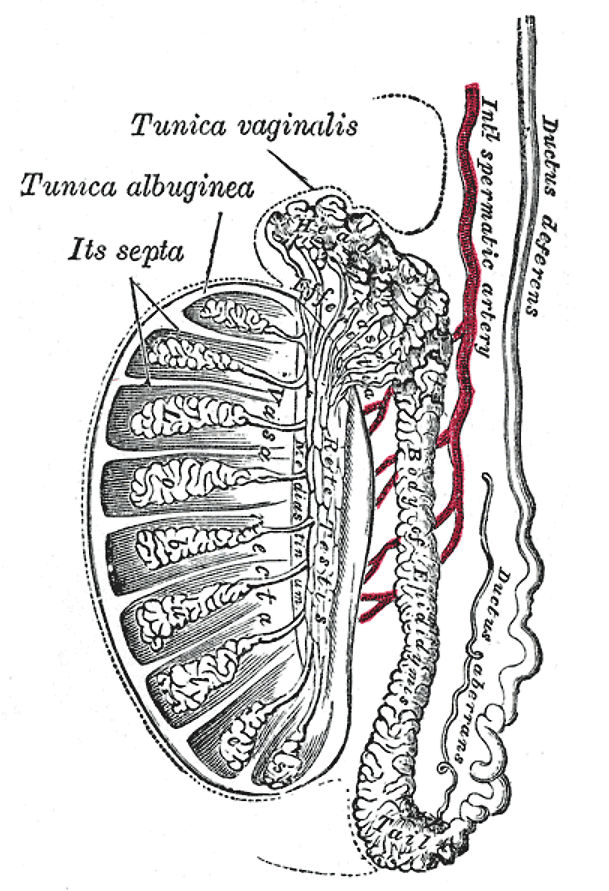
Gray's Anatomy (1918) plate, public domain
The epididymis is a tightly coiled tube — about 6 metres long when unravelled — sitting on the back of each testis. Sperm leaving the testis spend 1-2 weeks travelling through it, maturing and gaining the ability to swim, and are stored in its tail until ejaculation. It has a head (receiving the testis's ducts), a body and a tail that continues as the vas deferens.
Key facts
- Sperm entering the epididymis cannot yet swim properly; they mature during their slow transit.
- Its lining absorbs much of the fluid the testis produces, concentrating the sperm.
- The tail is the storage reservoir drawn on at ejaculation.
- It can be felt as a soft cord-like ridge behind the testis on examination.
What can go wrong
Inflammation of the epididymis (epididymitis) — from urinary infections or sexually transmitted infections — causes gradual scrotal pain and swelling, sometimes with fever and urinary symptoms. Cysts of the epididymis are common, benign and often found incidentally. Distinguishing epididymitis from testicular torsion (sudden, severe) matters because torsion is an emergency; ultrasound helps when the diagnosis is uncertain.
Related procedures & tests
Related symptoms
Related muscles
Watch: related videos
Frequently asked questions
What does the epididymis do?
It is the maturation and storage duct for sperm: they spend days travelling its coils, learning to swim, before being held in its tail ready for ejaculation.
How is epididymitis different from torsion?
Epididymitis usually builds over a day or more with urinary symptoms or discharge, while torsion strikes suddenly with severe pain and a high-riding testis — and torsion is an emergency.
Educational information only. This atlas explains normal anatomy and describes conditions in general terms; it is not medical advice and does not replace assessment by a qualified clinician. If you have symptoms that worry you, seek medical care.