
- Physical Examination
- Surgical Examination
- Ophthalmology
- Clinical Skills
- Orthopedics
- Surgery Videos
- Laparoscopy
- Pediatrics
- Funny Videos
- Cardiothoracic Surgery
- Nursing Videos
- Plastic Surgery
- Otorhinolaryngology
- Histology and Histopathology
- Neurosurgery
- Dermatology
- Pediatric Surgery
- Urology
- Dentistry
- Oncology and Cancers
- Anatomy Videos
- Health and Fitness
- Radiology
- Anaesthesia
- Physical Therapy
- Pharmacology
- Interventional Radiology
- Cardiology
- Endocrinology
- Gynecology
- Emergency Medicine
- Psychiatry and Psychology
- Childbirth Videos
- General Medical Videos
- Nephrology
- Physiology
- Diet and Food Health
- Diabetes Mellitus
- Neurology
- Women Health
- Osteoporosis
- Gastroenterology
- Pulmonology
- Hematology
- Rheumatology
- Toxicology
- Nuclear Medicine
- Infectious Diseases
- Vascular Disease
- Reproductive Health
- Burns and Wound Healing
- Kidney Zone Podcast
- Other
Scrotal ultrasound
Category: Imaging & Scans · All imaging & scans
What it is
A scrotal ultrasound uses sound waves to picture the testicles and surrounding structures, including blood flow. It is a quick, painless way to assess lumps and pain.
Why it is done
It is used to investigate a lump in the scrotum, swelling, or testicular pain, and to look for causes such as cysts, fluid collections or varicose veins (varicocele).
How to prepare
No preparation is needed. The examination is done in a private room and a chaperone is available.
What happens during the procedure
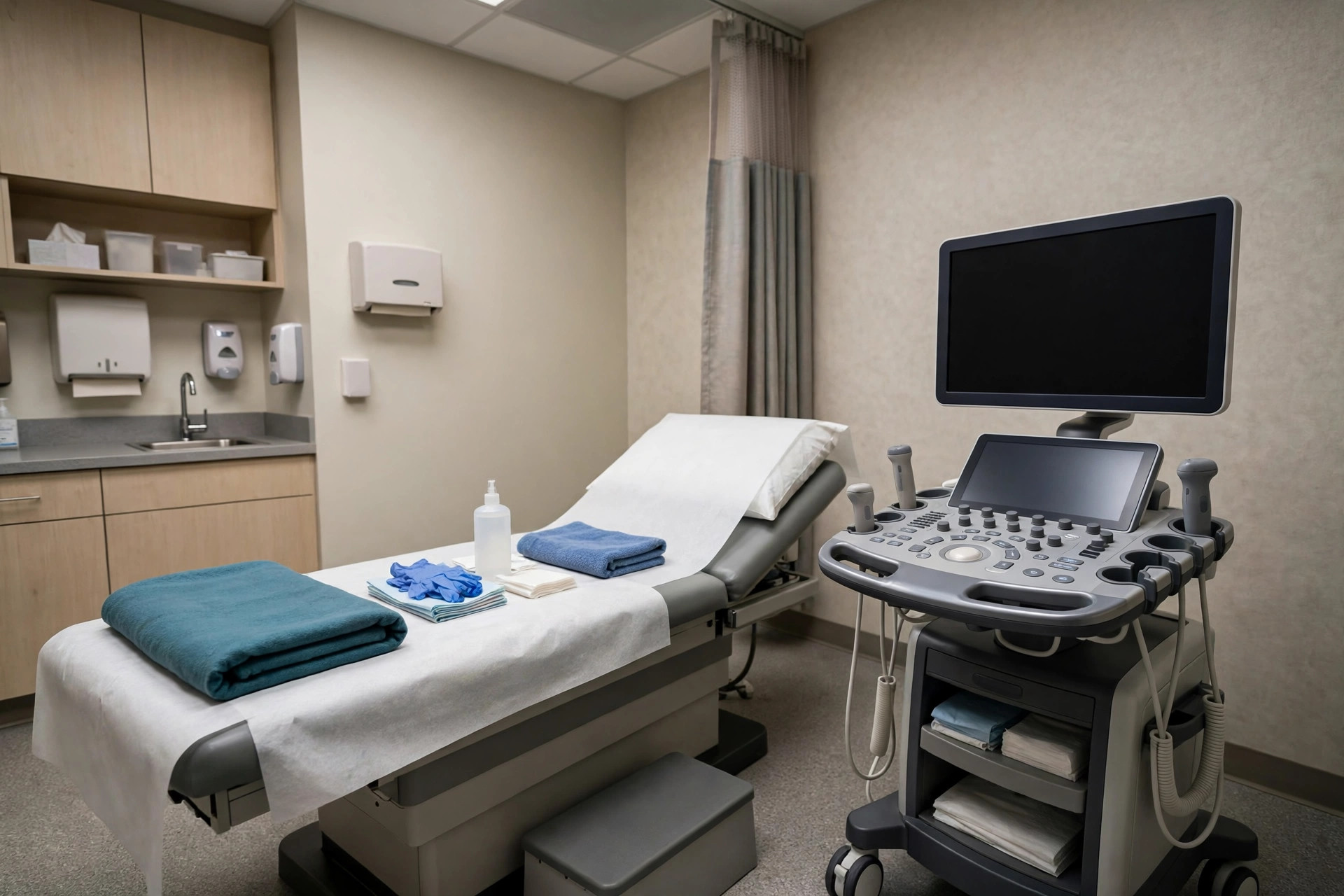
You lie on a couch, gel is applied and the probe is moved gently over the scrotum. It usually takes 15 to 20 minutes. Sudden severe testicular pain is an emergency and is assessed in hospital immediately, not by waiting for a routine scan.
Afterwards — recovery & results
You can leave straight away. The report goes to your doctor promptly, and any lump that needs further assessment is usually referred on to a specialist urgently as a precaution.
Risks & considerations
There are no known risks from the scan. Severe, sudden testicular pain should always be treated as an emergency because a twisted testicle (torsion) needs surgery within hours.
Related guides on MedicalVideos.com
Frequently asked questions
Can the scan tell a harmless cyst from something serious?
It usually can show whether a lump is fluid-filled, part of the normal structures, or solid within the testicle itself. Solid lumps inside the testicle always need specialist assessment.
Does it hurt?
The scan is painless, though pressing on a tender area can be briefly uncomfortable.
Related procedures — Imaging & Scans
Browse the S section of the A–Z list or return to the Procedures & Tests hub.