- Physical Examination
- Surgical Examination
- Ophthalmology
- Clinical Skills
- Orthopedics
- Surgery Videos
- Laparoscopy
- Pediatrics
- Funny Videos
- Cardiothoracic Surgery
- Nursing Videos
- Plastic Surgery
- Otorhinolaryngology
- Histology and Histopathology
- Neurosurgery
- Dermatology
- Pediatric Surgery
- Urology
- Dentistry
- Oncology and Cancers
- Anatomy Videos
- Health and Fitness
- Radiology
- Anaesthesia
- Physical Therapy
- Pharmacology
- Interventional Radiology
- Cardiology
- Endocrinology
- Gynecology
- Emergency Medicine
- Psychiatry and Psychology
- Childbirth Videos
- General Medical Videos
- Nephrology
- Physiology
- Diet and Food Health
- Diabetes Mellitus
- Neurology
- Women Health
- Osteoporosis
- Gastroenterology
- Pulmonology
- Hematology
- Rheumatology
- Toxicology
- Nuclear Medicine
- Infectious Diseases
- Vascular Disease
- Reproductive Health
- Burns and Wound Healing
- Kidney Zone Podcast
- Other
Penis
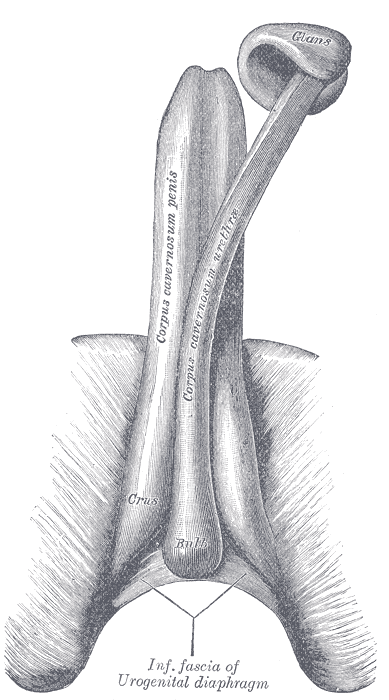
Gray's Anatomy (1918) plate, public domain
The penis is the male external organ for urination and reproduction. It consists of three cylinders of spongy erectile tissue — two corpora cavernosa on top and the corpus spongiosum beneath, which surrounds the urethra and expands into the glans at the tip. Erection occurs when arterial inflow fills the erectile tissue while venous outflow is compressed. The foreskin (prepuce) covers the glans in uncircumcised men.
Key facts
- The erectile tissue's blood spaces (sinusoids) are what trap blood to produce rigidity.
- The urethra's passage through the spongiosum keeps it cushioned and patent during erection.
- The glans is among the most densely innervated skin areas of the body.
- Erections are controlled by an interplay of nerves, blood vessels and hormones — which is why erectile problems can be an early sign of vascular disease.
What can go wrong
Common penile problems include erectile dysfunction (frequently vascular or medication-related), curvature from scar plaques (Peytonie's disease), infections and skin conditions, tightening of the foreskin (phimosis) and urethral narrowing. A persistent painful erection (priapism) is an emergency. New lumps, ulcers or skin changes should be examined; penile cancer is uncommon but treatable when caught early.
Related conditions
Related procedures & tests
Related symptoms
Frequently asked questions
What causes an erection?
Sexual stimulation triggers nerve signals that relax the arteries and sinusoid muscles of the erectile tissue; blood rushes in and is trapped by compression of the draining veins.
What is phimosis?
A foreskin that cannot be pulled back over the glans. It is normal in young boys and usually resolves; in adults it may result from scarring skin conditions and is assessed by a clinician.
Educational information only. This atlas explains normal anatomy and describes conditions in general terms; it is not medical advice and does not replace assessment by a qualified clinician. If you have symptoms that worry you, seek medical care.