- Physical Examination
- Surgical Examination
- Ophthalmology
- Clinical Skills
- Orthopedics
- Surgery Videos
- Laparoscopy
- Pediatrics
- Funny Videos
- Cardiothoracic Surgery
- Nursing Videos
- Plastic Surgery
- Otorhinolaryngology
- Histology and Histopathology
- Neurosurgery
- Dermatology
- Pediatric Surgery
- Urology
- Dentistry
- Oncology and Cancers
- Anatomy Videos
- Health and Fitness
- Radiology
- Anaesthesia
- Physical Therapy
- Pharmacology
- Interventional Radiology
- Cardiology
- Endocrinology
- Gynecology
- Emergency Medicine
- Psychiatry and Psychology
- Childbirth Videos
- General Medical Videos
- Nephrology
- Physiology
- Diet and Food Health
- Diabetes Mellitus
- Neurology
- Women Health
- Osteoporosis
- Gastroenterology
- Pulmonology
- Hematology
- Rheumatology
- Toxicology
- Nuclear Medicine
- Infectious Diseases
- Vascular Disease
- Reproductive Health
- Burns and Wound Healing
- Kidney Zone Podcast
- Other
Ovaries
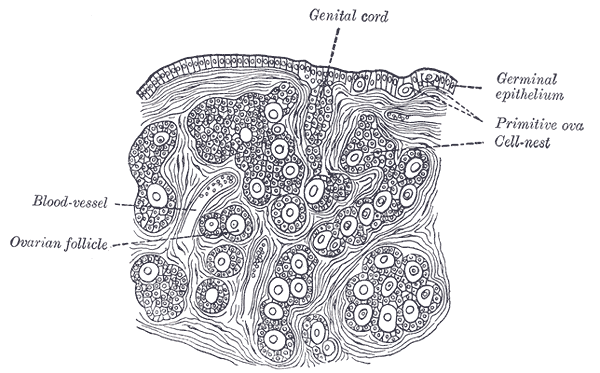
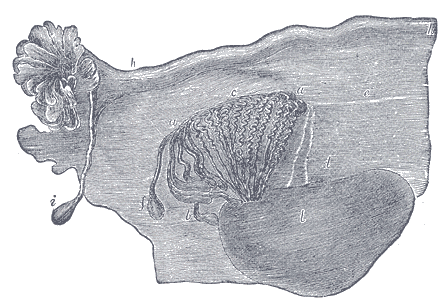
Gray's Anatomy (1918) plate, public domain
The ovaries are the two almond-sized glands in the pelvis that store and release eggs and produce the hormones estrogen and progesterone. A baby girl is born with her lifetime supply of immature eggs (around 1-2 million, falling ever after); each cycle, follicles compete and usually one egg matures and is released at ovulation. After release the emptied follicle becomes the corpus luteum, making progesterone.
Key facts
- Only about 400-500 eggs are ever ovulated; the vast majority of follicles quietly degenerate.
- Each ovary is about the size and shape of an almond, but shrinks after the menopause.
- The ovaries' hormone output follows the brain's signals (FSH and LH) in a monthly feedback loop.
- An egg released at ovulation is captured by the fringed end of the adjacent fallopian tube.
What can go wrong
Functional cysts form commonly when a follicle or corpus luteum fills with fluid, usually resolving on their own. Polycystic ovary syndrome (PCOS) disrupts ovulation and hormones, affecting periods, fertility, skin and weight. The ovary can twist on its supports (torsion) — a painful emergency. Ovarian cancer often causes only vague symptoms (bloating, feeling full quickly), which is why persistent symptoms deserve attention.
Related conditions
Related procedures & tests
Related symptoms
Frequently asked questions
Are women born with all their eggs?
Yes — the peak number is reached before birth and declines continuously; unlike sperm, no new eggs are made after birth in the classic understanding of ovarian biology.
What is an ovarian cyst?
A fluid-filled sac on or in the ovary. Most are functional, related to the monthly cycle, and disappear within a few cycles; large, persistent or painful cysts are assessed with ultrasound.
Educational information only. This atlas explains normal anatomy and describes conditions in general terms; it is not medical advice and does not replace assessment by a qualified clinician. If you have symptoms that worry you, seek medical care.