- Physical Examination
- Surgical Examination
- Ophthalmology
- Clinical Skills
- Orthopedics
- Surgery Videos
- Laparoscopy
- Pediatrics
- Funny Videos
- Cardiothoracic Surgery
- Nursing Videos
- Plastic Surgery
- Otorhinolaryngology
- Histology and Histopathology
- Neurosurgery
- Dermatology
- Pediatric Surgery
- Urology
- Dentistry
- Oncology and Cancers
- Anatomy Videos
- Health and Fitness
- Radiology
- Anaesthesia
- Physical Therapy
- Pharmacology
- Interventional Radiology
- Cardiology
- Endocrinology
- Gynecology
- Emergency Medicine
- Psychiatry and Psychology
- Childbirth Videos
- General Medical Videos
- Nephrology
- Physiology
- Diet and Food Health
- Diabetes Mellitus
- Neurology
- Women Health
- Osteoporosis
- Gastroenterology
- Pulmonology
- Hematology
- Rheumatology
- Toxicology
- Nuclear Medicine
- Infectious Diseases
- Vascular Disease
- Reproductive Health
- Burns and Wound Healing
- Kidney Zone Podcast
- Other
Breasts
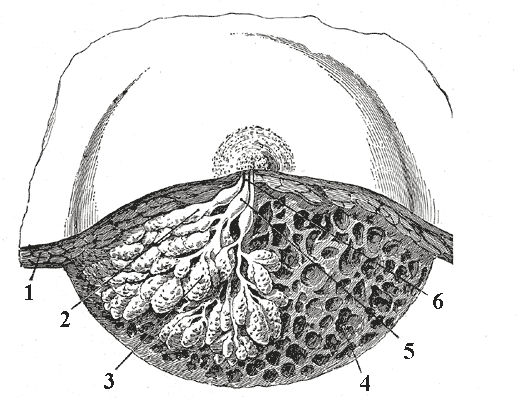
Gray's Anatomy (1918) plate, public domain
The breasts (mammary glands) are modified sweat glands sitting on the chest wall over the pectoral muscles. Each contains 15-20 lobes of milk-producing gland arranged around the nipple like segments of an orange, drained by ducts, embedded in fat that gives the breast its shape. Ligaments (of Cooper) support the tissue. Under hormonal control the glands develop at puberty, change across the menstrual cycle, and produce milk after childbirth.
Key facts
- Breast size is determined mainly by fat, not by the amount of milk-producing gland.
- Milk production is driven by prolactin, while the hormone oxytocin triggers its release (let-down) during feeding.
- Breast tissue extends into the armpit (the axillary tail), an area included in breast examination.
- Men have rudimentary breast tissue too, which can enlarge (gynaecomastia) with hormonal shifts or medicines.
What can go wrong
Lumps are common and most are benign — cysts, fibroadenomas and cyclical lumpiness — but any new persistent lump needs assessment. Breast cancer is among the commonest cancers in women; mammography screening looks for it before symptoms. Other problems include infections during breastfeeding (mastitis), nipple discharge, and breast pain, which is common and rarely a cancer symptom. Assessment combines examination, imaging and, if needed, needle biopsy.
Related conditions
Related procedures & tests
- Mammogram (screening)
- Mammography
- Breast ultrasound
- Breast core biopsy
- Lumpectomy (breast-conserving surgery)
Related symptoms
Related muscles
Watch: related videos
Frequently asked questions
Why do breasts change during the menstrual cycle?
Estrogen and progesterone cause the glands and ducts to swell and retain fluid before a period, so breasts often feel tender and lumpy, settling afterwards.
What is a fibroadenoma?
A common benign breast lump of gland and fibrous tissue, typically smooth, mobile and painless, most frequent in younger women; it is confirmed with imaging and sometimes biopsy.
Educational information only. This atlas explains normal anatomy and describes conditions in general terms; it is not medical advice and does not replace assessment by a qualified clinician. If you have symptoms that worry you, seek medical care.