- Physical Examination
- Surgical Examination
- Ophthalmology
- Clinical Skills
- Orthopedics
- Surgery Videos
- Laparoscopy
- Pediatrics
- Funny Videos
- Cardiothoracic Surgery
- Nursing Videos
- Plastic Surgery
- Otorhinolaryngology
- Histology and Histopathology
- Neurosurgery
- Dermatology
- Pediatric Surgery
- Urology
- Dentistry
- Oncology and Cancers
- Anatomy Videos
- Health and Fitness
- Radiology
- Anaesthesia
- Physical Therapy
- Pharmacology
- Interventional Radiology
- Cardiology
- Endocrinology
- Gynecology
- Emergency Medicine
- Psychiatry and Psychology
- Childbirth Videos
- General Medical Videos
- Nephrology
- Physiology
- Diet and Food Health
- Diabetes Mellitus
- Neurology
- Women Health
- Osteoporosis
- Gastroenterology
- Pulmonology
- Hematology
- Rheumatology
- Toxicology
- Nuclear Medicine
- Infectious Diseases
- Vascular Disease
- Reproductive Health
- Burns and Wound Healing
- Kidney Zone Podcast
- Other
Cervix
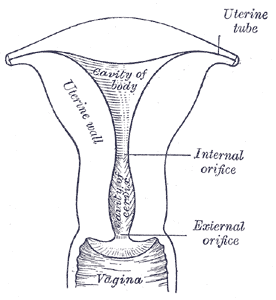
Gray's Anatomy (1918) plate, public domain
The cervix is the firm, cylindrical lower part of the uterus that projects into the top of the vagina. Its central canal connects the uterine cavity to the vagina, guarded by mucus that thickens or thins across the cycle — thinning around ovulation to let sperm through. During labour the cervix softens, shortens and dilates to about 10 cm to let the baby pass. Its surface is directly visible on speculum examination, which makes screening possible.
Key facts
- Cervical mucus is a smart gate: hostile to sperm most of the cycle, it becomes clear and stretchy near ovulation.
- The cervix produces the mucus plug that seals the uterus during pregnancy.
- Its transformation in labour (effacement and dilatation) is the main measure of progress in the first stage.
- Nearly all cervical cancers arise in the small transformation zone where two cell types meet.
What can go wrong
Persistent infection with high-risk HPV types can slowly change cervical cells (cervical intraepithelial neoplasia), which screening detects and treats before cancer develops — the basis of the cervical screening (smear) programme and HPV vaccination. Cervicitis causes discharge and bleeding after sex; a short or weak cervix in pregnancy (cervical insufficiency) can lead to premature birth and is sometimes supported with a stitch (cerclage).
Related conditions
Related procedures & tests
Related symptoms
Watch: related videos
Frequently asked questions
What does cervical screening look for?
Modern screening tests for high-risk HPV first; if present, the cells are examined for the pre-cancerous changes that can be treated before cancer develops.
How does the cervix change during labour?
Hormones and contractions soften it, pull it up (effacement) and stretch it open (dilatation) from closed to about 10 cm so the baby can pass through.
Educational information only. This atlas explains normal anatomy and describes conditions in general terms; it is not medical advice and does not replace assessment by a qualified clinician. If you have symptoms that worry you, seek medical care.