- Physical Examination
- Surgical Examination
- Ophthalmology
- Clinical Skills
- Orthopedics
- Surgery Videos
- Laparoscopy
- Pediatrics
- Funny Videos
- Cardiothoracic Surgery
- Nursing Videos
- Plastic Surgery
- Otorhinolaryngology
- Histology and Histopathology
- Neurosurgery
- Dermatology
- Pediatric Surgery
- Urology
- Dentistry
- Oncology and Cancers
- Anatomy Videos
- Health and Fitness
- Radiology
- Anaesthesia
- Physical Therapy
- Pharmacology
- Interventional Radiology
- Cardiology
- Endocrinology
- Gynecology
- Emergency Medicine
- Psychiatry and Psychology
- Childbirth Videos
- General Medical Videos
- Nephrology
- Physiology
- Diet and Food Health
- Diabetes Mellitus
- Neurology
- Women Health
- Osteoporosis
- Gastroenterology
- Pulmonology
- Hematology
- Rheumatology
- Toxicology
- Nuclear Medicine
- Infectious Diseases
- Vascular Disease
- Reproductive Health
- Burns and Wound Healing
- Kidney Zone Podcast
- Other
Eustachian Tube
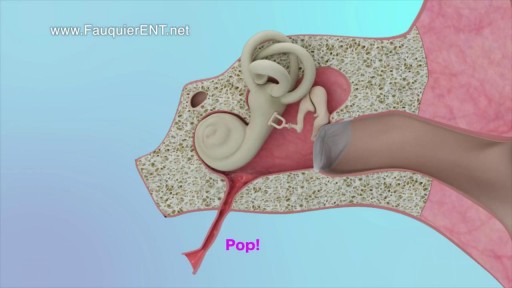
Video still from MedicalVideos.com: clogged ear due to ear infection or eustachian tube dysfunction
The Eustachian (auditory) tube is a narrow channel, about 3-4 cm long, running from the middle ear down to the back of the nose (nasopharynx). It ventilates the middle ear, equalising pressure across the eardrum, and drains its secretions. It is normally closed, opening briefly with swallowing and yawning through small palate muscles. In children it is shorter, flatter and floppier — one reason ear infections are commoner in childhood.
Key facts
- You open your tubes thousands of times a day without noticing, each time you swallow.
- The tube is partly bone (near the ear) and partly cartilage (near the nose).
- Its mucus is swept by cilia toward the throat, carrying middle-ear debris with it.
- Divers and pilots depend on it: failure to equalise during descent causes painful barotrauma.
What can go wrong
When the tube fails to open properly (Eustachian tube dysfunction) — with colds, allergy or adenoid enlargement — pressure drops in the middle ear, the drum retracts and fluid can collect (glue ear), muffling hearing, particularly in children. If fluid persists and affects hearing or speech, grommets (ventilation tubes) may be placed in the drum. A tube that stays abnormally open (patulous) causes the odd symptom of hearing one's own voice and breathing loudly in the ear.
Related procedures & tests
Related symptoms
Watch: related videos
Frequently asked questions
What is glue ear?
Persistent fluid behind an intact eardrum, usually after tube dysfunction in young children; it muffles hearing and can affect speech development if it lingers.
How can I equalise my ears when flying?
Swallowing, yawning or gently blowing against pinched nostrils opens the tubes; these manoeuvres are most effective started early in the descent.
Educational information only. This atlas explains normal anatomy and describes conditions in general terms; it is not medical advice and does not replace assessment by a qualified clinician. If you have symptoms that worry you, seek medical care.