- Physical Examination
- Surgical Examination
- Ophthalmology
- Clinical Skills
- Orthopedics
- Surgery Videos
- Laparoscopy
- Pediatrics
- Funny Videos
- Cardiothoracic Surgery
- Nursing Videos
- Plastic Surgery
- Otorhinolaryngology
- Histology and Histopathology
- Neurosurgery
- Dermatology
- Pediatric Surgery
- Urology
- Dentistry
- Oncology and Cancers
- Anatomy Videos
- Health and Fitness
- Radiology
- Anaesthesia
- Physical Therapy
- Pharmacology
- Interventional Radiology
- Cardiology
- Endocrinology
- Gynecology
- Emergency Medicine
- Psychiatry and Psychology
- Childbirth Videos
- General Medical Videos
- Nephrology
- Physiology
- Diet and Food Health
- Diabetes Mellitus
- Neurology
- Women Health
- Osteoporosis
- Gastroenterology
- Pulmonology
- Hematology
- Rheumatology
- Toxicology
- Nuclear Medicine
- Infectious Diseases
- Vascular Disease
- Reproductive Health
- Burns and Wound Healing
- Kidney Zone Podcast
- Other
Fifth Metatarsal
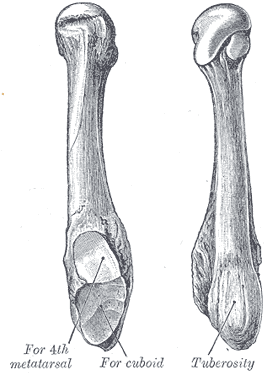
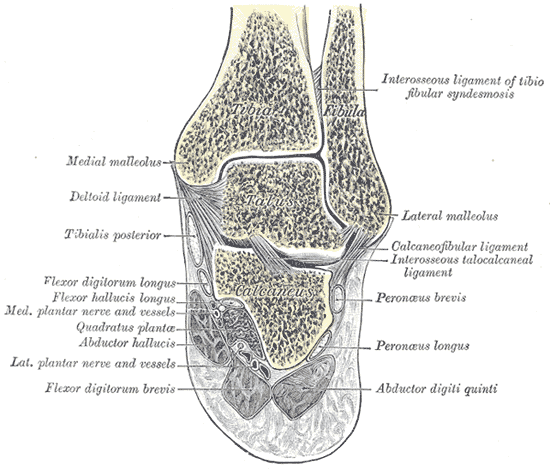
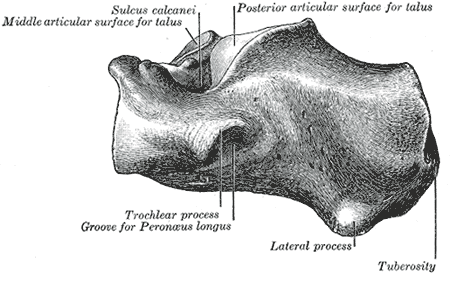
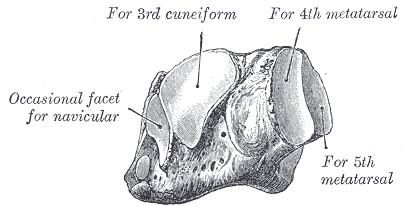
Gray's Anatomy (1918) plate, public domain
The fifth metatarsal is the little toe's forefoot bone, and its flared base forms the bump midway along the outer border of the foot. That base is where the fibularis brevis tendon pulls — and it is the site of two very different fractures: the common avulsion fracture from an ankle roll, and the slower-healing Jones fracture just beyond the base.
Key facts
- Its base is the bump you can feel on the outer edge of the foot.
- The fibularis brevis tendon attaches to its base.
- Ankle sprains can pull off a flake of its base (avulsion fracture).
- The Jones fracture, slightly further along, lies in a poor blood-supply zone.
- It forms the outer border of the forefoot.
What can go wrong
Fifth metatarsal fractures are among the most common foot fractures. The simple base avulsion usually heals well in a boot; the Jones fracture, in the watershed blood-supply area, heals slowly and is treated more cautiously, sometimes with surgery in athletes. Persistent pain at the base after an ankle sprain is the classic presentation.
Related procedures & tests
Related symptoms
Related muscles
Watch: related videos
Frequently asked questions
What is the difference between an avulsion and a Jones fracture?
Location: an avulsion flakes the tip of the base where the tendon pulls; a Jones fracture crosses the shaft just beyond the base, where blood supply is poor. The second heals much more slowly.
Why does an ankle sprain break this bone?
Rolling the ankle suddenly tensions the fibularis brevis tendon, which can pull its bony attachment off the fifth metatarsal base.
Educational information only. This atlas explains normal anatomy and describes conditions in general terms; it is not medical advice and does not replace assessment by a qualified clinician. If you have symptoms that worry you, seek medical care.