- Physical Examination
- Surgical Examination
- Ophthalmology
- Clinical Skills
- Orthopedics
- Surgery Videos
- Laparoscopy
- Pediatrics
- Funny Videos
- Cardiothoracic Surgery
- Nursing Videos
- Plastic Surgery
- Otorhinolaryngology
- Histology and Histopathology
- Neurosurgery
- Dermatology
- Pediatric Surgery
- Urology
- Dentistry
- Oncology and Cancers
- Anatomy Videos
- Health and Fitness
- Radiology
- Anaesthesia
- Physical Therapy
- Pharmacology
- Interventional Radiology
- Cardiology
- Endocrinology
- Gynecology
- Emergency Medicine
- Psychiatry and Psychology
- Childbirth Videos
- General Medical Videos
- Nephrology
- Physiology
- Diet and Food Health
- Diabetes Mellitus
- Neurology
- Women Health
- Osteoporosis
- Gastroenterology
- Pulmonology
- Hematology
- Rheumatology
- Toxicology
- Nuclear Medicine
- Infectious Diseases
- Vascular Disease
- Reproductive Health
- Burns and Wound Healing
- Kidney Zone Podcast
- Other
Femur
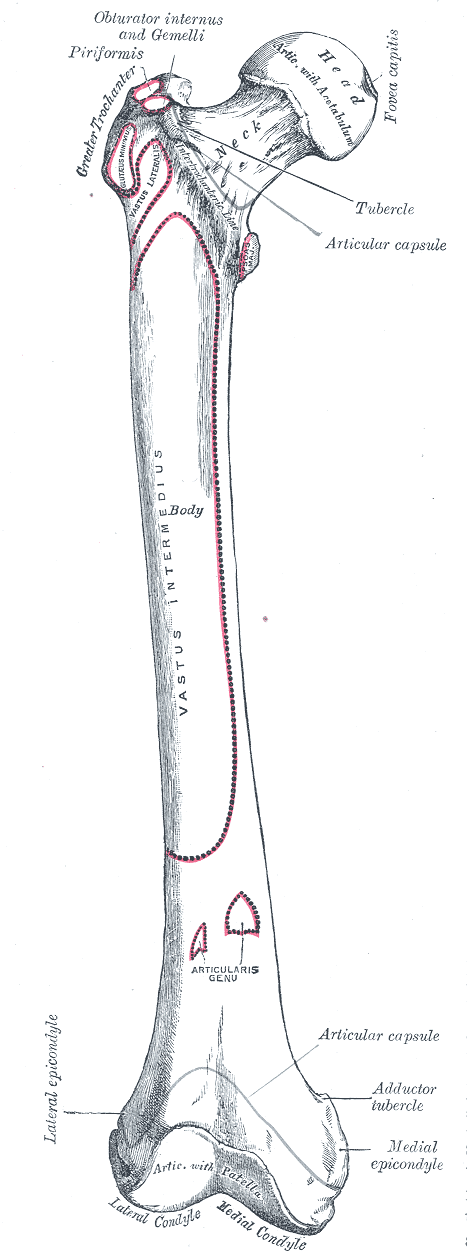
Gray's Anatomy (1918) plate, public domain
The femur is the thigh bone — the longest and strongest bone in the body. Its ball-shaped head angles forwards from the shaft on the femoral neck to meet the pelvis at the hip joint; its lower end spreads into two knuckles (condyles) that form the knee with the tibia and kneecap. Its shaft is bowed slightly forwards and lined with ridges for the powerful thigh muscles.
Key facts
- The femur is the longest bone in the body — roughly a quarter of your height.
- Its neck angles at about 125 degrees to the shaft.
- It is the only bone in the thigh.
- The intertrochanteric region and neck are common fracture sites in older adults.
- Its lower end forms the knee with the tibia; the kneecap glides on its front.
What can go wrong
Femoral neck fractures are a major injury of older adults with osteoporosis, usually from a sideways fall, and are typically treated with surgery to fix or replace the joint. The shaft can fracture in high-energy trauma. In children, growth-plate injuries at the knee end matter because this plate contributes greatly to leg length.
Related procedures & tests
Related symptoms
Related muscles
- Quadriceps Femoris (Group Overview)
- Hamstring Group (Overview)
- Gluteus Maximus
- Vastus Lateralis
- Adductor Magnus
Watch: related videos
Frequently asked questions
How strong is the femur?
Very — pound for pound, healthy femur bone withstands enormous loads, and the shaft usually takes a car-crash level of force to break in a young adult. The neck, however, thins with osteoporosis and can break in a simple fall.
Why is the femoral neck angled?
The angle sets the hip joint out from the pelvis while letting the knees fall close to the body's midline, which makes walking economical. It also creates the bending stress that makes this region fracture-prone.
Educational information only. This atlas explains normal anatomy and describes conditions in general terms; it is not medical advice and does not replace assessment by a qualified clinician. If you have symptoms that worry you, seek medical care.