- Physical Examination
- Surgical Examination
- Ophthalmology
- Clinical Skills
- Orthopedics
- Surgery Videos
- Laparoscopy
- Pediatrics
- Funny Videos
- Cardiothoracic Surgery
- Nursing Videos
- Plastic Surgery
- Otorhinolaryngology
- Histology and Histopathology
- Neurosurgery
- Dermatology
- Pediatric Surgery
- Urology
- Dentistry
- Oncology and Cancers
- Anatomy Videos
- Health and Fitness
- Radiology
- Anaesthesia
- Physical Therapy
- Pharmacology
- Interventional Radiology
- Cardiology
- Endocrinology
- Gynecology
- Emergency Medicine
- Psychiatry and Psychology
- Childbirth Videos
- General Medical Videos
- Nephrology
- Physiology
- Diet and Food Health
- Diabetes Mellitus
- Neurology
- Women Health
- Osteoporosis
- Gastroenterology
- Pulmonology
- Hematology
- Rheumatology
- Toxicology
- Nuclear Medicine
- Infectious Diseases
- Vascular Disease
- Reproductive Health
- Burns and Wound Healing
- Kidney Zone Podcast
- Other
Achilles Tendon
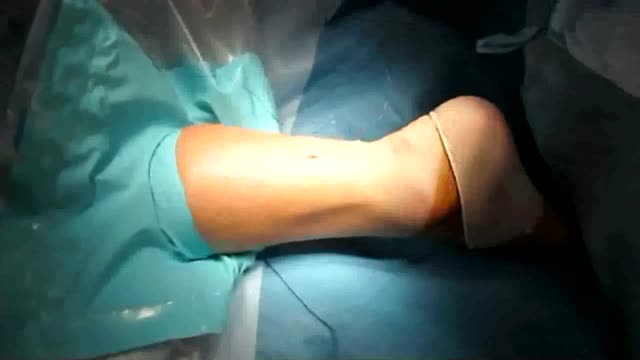
Video still from MedicalVideos.com: rupture of achilles tendon repair
The Achilles tendon is the body's largest and strongest tendon — the combined tendon of the calf muscles (gastrocnemius and soleus) inserting into the back of the heel bone. It transmits the force that lifts the heel in walking, running and jumping, withstanding loads of several times body weight. Its fibres spiral as they descend, and it has a relatively sparse blood supply in its middle section — a factor in its degeneration and rupture.
Key facts
- It can bear loads approaching a tonne in sprinting and jumping.
- The tendon is named for the Greek hero Achilles, whose heel was his one vulnerability.
- Unlike most tendons it has no true synovial sheath, sliding instead within a fatty paratenon.
- Its mid-portion, 2-6 cm above the insertion, is the usual rupture site.
What can go wrong
Achilles tendinopathy causes pain and stiffness in the tendon, typically in runners and middle-aged recreational athletes, from overload and degeneration rather than simple inflammation. Complete rupture — a sudden snap and push-off weakness, classically in 'weekend warrior' sport — can be managed in a boot or with surgery depending on the patient. Inflammation of the bursa in front of it and irritation at its insertion are related problems.
Related procedures & tests
Related symptoms
Related muscles
Watch: related videos
Frequently asked questions
How do you know if the Achilles has ruptured?
A sudden pop or snap during push-off, weakness lifting the heel, and a positive calf-squeeze test (the foot does not move when the calf is squeezed) point to rupture and need same-day assessment.
Why does tendinopathy hurt at the start of a run then ease?
The degenerative tendon is stiff and sensitised; gentle loading warms and temporarily desensitises it, so pain often eases during activity but returns afterwards.
Educational information only. This atlas explains normal anatomy and describes conditions in general terms; it is not medical advice and does not replace assessment by a qualified clinician. If you have symptoms that worry you, seek medical care.