- Physical Examination
- Surgical Examination
- Ophthalmology
- Clinical Skills
- Orthopedics
- Surgery Videos
- Laparoscopy
- Pediatrics
- Funny Videos
- Cardiothoracic Surgery
- Nursing Videos
- Plastic Surgery
- Otorhinolaryngology
- Histology and Histopathology
- Neurosurgery
- Dermatology
- Pediatric Surgery
- Urology
- Dentistry
- Oncology and Cancers
- Anatomy Videos
- Health and Fitness
- Radiology
- Anaesthesia
- Physical Therapy
- Pharmacology
- Interventional Radiology
- Cardiology
- Endocrinology
- Gynecology
- Emergency Medicine
- Psychiatry and Psychology
- Childbirth Videos
- General Medical Videos
- Nephrology
- Physiology
- Diet and Food Health
- Diabetes Mellitus
- Neurology
- Women Health
- Osteoporosis
- Gastroenterology
- Pulmonology
- Hematology
- Rheumatology
- Toxicology
- Nuclear Medicine
- Infectious Diseases
- Vascular Disease
- Reproductive Health
- Burns and Wound Healing
- Kidney Zone Podcast
- Other
Foot Phalanges
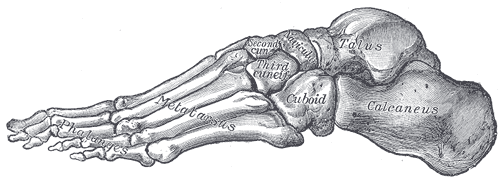
Gray's Anatomy (1918) plate, public domain
The phalanges of the foot are the toe bones: three in each of the four smaller toes and two in the big toe (hallux) — fourteen per foot. They are shorter and stubbier than the finger bones, built for balance and grip on the ground rather than dexterity; the big toe's pair is thick and strong, taking the final push of each step.
Key facts
- There are 14 phalanges in each foot.
- The big toe (hallux) has two; the other toes have three.
- Toe bones are much shorter than the corresponding finger bones.
- They help with balance, especially the big toe.
- The little toe's middle and end bones are often fused — a normal variant.
What can go wrong
Stubbed toes fracture phalanges commonly, especially the little toe; most are treated with buddy strapping. Toe deformities — hammer, claw and mallet toes — develop at their joints from muscle imbalance, footwear and arthritis, and the big toe's joints are affected by bunions and gout.
Related procedures & tests
Related symptoms
Related muscles
Frequently asked questions
Why can you stub a toe so hard yet rarely break the big toe?
The big toe's phalanges are thick and well protected by their position; the little toe, sticking out at the foot's edge, catches furniture and takes the classic fracture.
What is a hammer toe?
A toe bent into a claw-like position at its middle joint, usually from muscle imbalance or tight shoes, which can make the top of the joint rub painfully in footwear.
Educational information only. This atlas explains normal anatomy and describes conditions in general terms; it is not medical advice and does not replace assessment by a qualified clinician. If you have symptoms that worry you, seek medical care.