- Physical Examination
- Surgical Examination
- Ophthalmology
- Clinical Skills
- Orthopedics
- Surgery Videos
- Laparoscopy
- Pediatrics
- Funny Videos
- Cardiothoracic Surgery
- Nursing Videos
- Plastic Surgery
- Otorhinolaryngology
- Histology and Histopathology
- Neurosurgery
- Dermatology
- Pediatric Surgery
- Urology
- Dentistry
- Oncology and Cancers
- Anatomy Videos
- Health and Fitness
- Radiology
- Anaesthesia
- Physical Therapy
- Pharmacology
- Interventional Radiology
- Cardiology
- Endocrinology
- Gynecology
- Emergency Medicine
- Psychiatry and Psychology
- Childbirth Videos
- General Medical Videos
- Nephrology
- Physiology
- Diet and Food Health
- Diabetes Mellitus
- Neurology
- Women Health
- Osteoporosis
- Gastroenterology
- Pulmonology
- Hematology
- Rheumatology
- Toxicology
- Nuclear Medicine
- Infectious Diseases
- Vascular Disease
- Reproductive Health
- Burns and Wound Healing
- Kidney Zone Podcast
- Other
Fourth Metatarsal
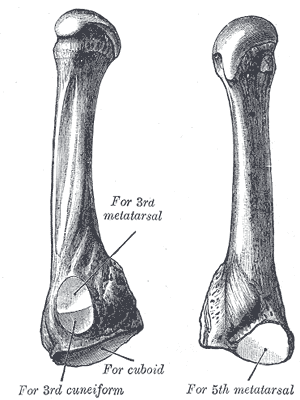
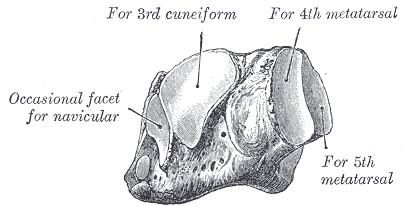
Gray's Anatomy (1918) plate, public domain
The fourth metatarsal is the fourth toe's forefoot bone. Towards the outer side of the foot the metatarsals become slightly more mobile at their bases, giving the forefoot some adaptability. The space between the fourth and third metatarsal heads is the classic site of a Morton's neuroma, a thickened, irritable digital nerve.
Key facts
- It supports the fourth toe.
- Its base sits on the cuboid and is modestly mobile.
- The web space beside its head is a common neuroma site.
- It shares forefoot load with its neighbours.
- It can suffer stress fractures like the other metatarsals.
What can go wrong
Problems at the fourth metatarsal are usually shared with its neighbours: stress fractures from overuse, overload pain at its head, and nerve irritation in the third web space (between third and fourth heads) causing burning pain and tingling when walking in narrow shoes.
Related procedures & tests
Related symptoms
Related muscles
Frequently asked questions
What is a Morton's neuroma?
A thickening of the tissue around a nerve between the metatarsal heads — most often between the third and fourth — that causes burning pain and tingling into the toes, often relieved by removing the shoe.
Why do narrow shoes aggravate forefoot pain?
They squeeze the metatarsal heads together, compressing the nerves and soft tissues between them and increasing pressure under the heads.
Educational information only. This atlas explains normal anatomy and describes conditions in general terms; it is not medical advice and does not replace assessment by a qualified clinician. If you have symptoms that worry you, seek medical care.