- Physical Examination
- Surgical Examination
- Ophthalmology
- Clinical Skills
- Orthopedics
- Surgery Videos
- Laparoscopy
- Pediatrics
- Funny Videos
- Cardiothoracic Surgery
- Nursing Videos
- Plastic Surgery
- Otorhinolaryngology
- Histology and Histopathology
- Neurosurgery
- Dermatology
- Pediatric Surgery
- Urology
- Dentistry
- Oncology and Cancers
- Anatomy Videos
- Health and Fitness
- Radiology
- Anaesthesia
- Physical Therapy
- Pharmacology
- Interventional Radiology
- Cardiology
- Endocrinology
- Gynecology
- Emergency Medicine
- Psychiatry and Psychology
- Childbirth Videos
- General Medical Videos
- Nephrology
- Physiology
- Diet and Food Health
- Diabetes Mellitus
- Neurology
- Women Health
- Osteoporosis
- Gastroenterology
- Pulmonology
- Hematology
- Rheumatology
- Toxicology
- Nuclear Medicine
- Infectious Diseases
- Vascular Disease
- Reproductive Health
- Burns and Wound Healing
- Kidney Zone Podcast
- Other
Incus
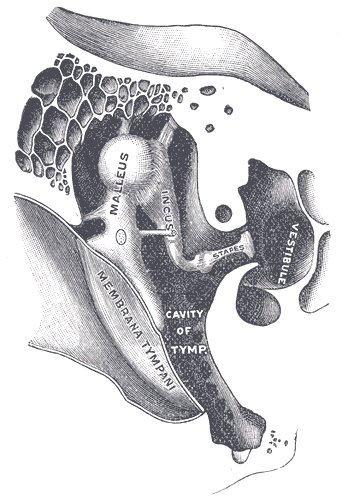
Gray's Anatomy (1918) plate, public domain
The incus — Latin for 'anvil' — is the middle of the three ear ossicles. It receives vibration from the malleus on one side and passes it to the stapes on the other, through a small knob called the lenticular process. It sits in the upper part of the middle-ear cavity.
Key facts
- The incus bridges the malleus and the stapes in the hearing chain.
- Its long process ends in the lenticular process, which meets the stapes head.
- Its blood supply is relatively delicate, which makes one part vulnerable to damage.
- It is suspended by ligaments in the top of the middle-ear space.
- Together with the other ossicles it is among the smallest bones in the body.
What can go wrong
The long process of the incus is the part of the hearing chain most often damaged by chronic middle-ear infection, because its blood supply is fragile; this interrupts sound conduction and causes hearing loss. The chain can also be disrupted by head injury or pressure damage from flying or diving with a blocked ear.
Related procedures & tests
Related symptoms
Frequently asked questions
Which ossicle is which?
From outside in: the malleus (hammer) touches the eardrum, the incus (anvil) sits in the middle, and the stapes (stirrup) presses on the inner ear's oval window. Sound crosses them in that order.
How small is the incus?
Only a few millimetres across — roughly the size of a grain of rice — yet it is a true bone with joints at both ends.
Educational information only. This atlas explains normal anatomy and describes conditions in general terms; it is not medical advice and does not replace assessment by a qualified clinician. If you have symptoms that worry you, seek medical care.