- Physical Examination
- Surgical Examination
- Ophthalmology
- Clinical Skills
- Orthopedics
- Surgery Videos
- Laparoscopy
- Pediatrics
- Funny Videos
- Cardiothoracic Surgery
- Nursing Videos
- Plastic Surgery
- Otorhinolaryngology
- Histology and Histopathology
- Neurosurgery
- Dermatology
- Pediatric Surgery
- Urology
- Dentistry
- Oncology and Cancers
- Anatomy Videos
- Health and Fitness
- Radiology
- Anaesthesia
- Physical Therapy
- Pharmacology
- Interventional Radiology
- Cardiology
- Endocrinology
- Gynecology
- Emergency Medicine
- Psychiatry and Psychology
- Childbirth Videos
- General Medical Videos
- Nephrology
- Physiology
- Diet and Food Health
- Diabetes Mellitus
- Neurology
- Women Health
- Osteoporosis
- Gastroenterology
- Pulmonology
- Hematology
- Rheumatology
- Toxicology
- Nuclear Medicine
- Infectious Diseases
- Vascular Disease
- Reproductive Health
- Burns and Wound Healing
- Kidney Zone Podcast
- Other
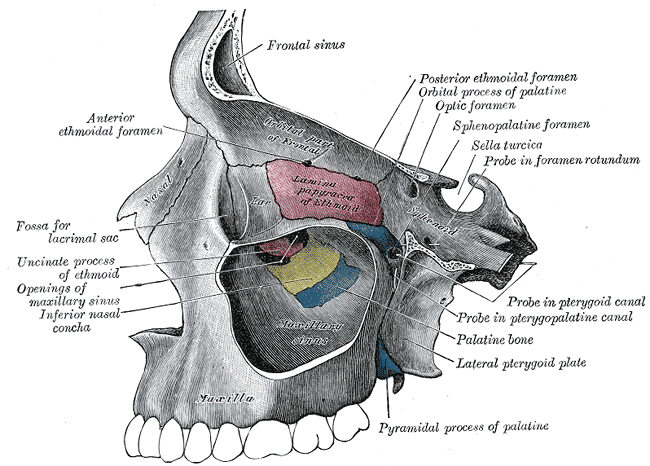
Inferior Nasal Concha
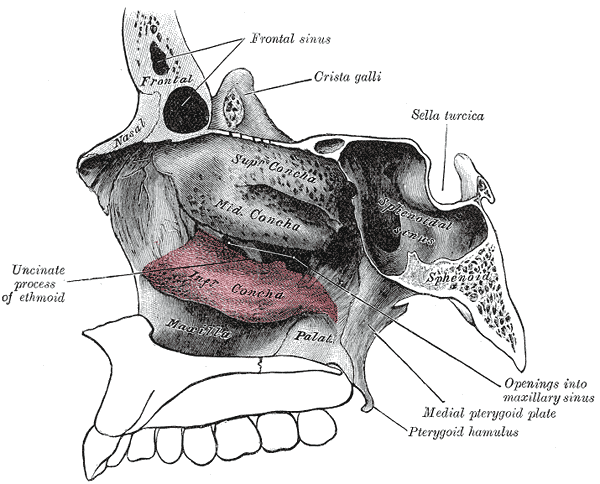
Gray's Anatomy (1918) plate, public domain
The inferior nasal conchae are two thin, curled plates of bone projecting from the side walls of the nasal cavity — the lowest of the three 'turbinate' shelves. Covered in soft, blood-rich lining, they warm, moisten and filter the air you breathe in, and steer it towards the smell region and the lungs.
Key facts
- Each inferior concha is a separate bone; the upper two shelves belong to the ethmoid bone.
- The conchae greatly increase the surface area inside the nose.
- Their lining swells and shrinks through the day, alternating airflow between the nostrils.
- They help warm cold air and trap dust before it reaches the lungs.
- The tear duct opens into the nose just beneath this concha.
What can go wrong
The soft tissue over the inferior conchae swells during colds, allergies and hay fever, which is the main reason a nose feels blocked even though the bone itself is unchanged. Persistently enlarged conchae can contribute to long-term nasal blockage and snoring, and are sometimes treated medically or with a small procedure.
Related procedures & tests
Related symptoms
Watch: related videos
Frequently asked questions
Why does one nostril feel more blocked than the other?
The lining over the conchae naturally takes turns swelling on each side every few hours — the nasal cycle. A cold exaggerates the swelling, so the lower nostril often feels blocked when you lie on one side.
Are turbinates and conchae the same thing?
Yes — turbinate is the everyday clinical word for the conchae, the curled bony shelves inside the nose. The inferior concha is a bone in its own right; the middle and superior conchae are parts of the ethmoid bone.
Educational information only. This atlas explains normal anatomy and describes conditions in general terms; it is not medical advice and does not replace assessment by a qualified clinician. If you have symptoms that worry you, seek medical care.