- Physical Examination
- Surgical Examination
- Ophthalmology
- Clinical Skills
- Orthopedics
- Surgery Videos
- Laparoscopy
- Pediatrics
- Funny Videos
- Cardiothoracic Surgery
- Nursing Videos
- Plastic Surgery
- Otorhinolaryngology
- Histology and Histopathology
- Neurosurgery
- Dermatology
- Pediatric Surgery
- Urology
- Dentistry
- Oncology and Cancers
- Anatomy Videos
- Health and Fitness
- Radiology
- Anaesthesia
- Physical Therapy
- Pharmacology
- Interventional Radiology
- Cardiology
- Endocrinology
- Gynecology
- Emergency Medicine
- Psychiatry and Psychology
- Childbirth Videos
- General Medical Videos
- Nephrology
- Physiology
- Diet and Food Health
- Diabetes Mellitus
- Neurology
- Women Health
- Osteoporosis
- Gastroenterology
- Pulmonology
- Hematology
- Rheumatology
- Toxicology
- Nuclear Medicine
- Infectious Diseases
- Vascular Disease
- Reproductive Health
- Burns and Wound Healing
- Kidney Zone Podcast
- Other
Iris
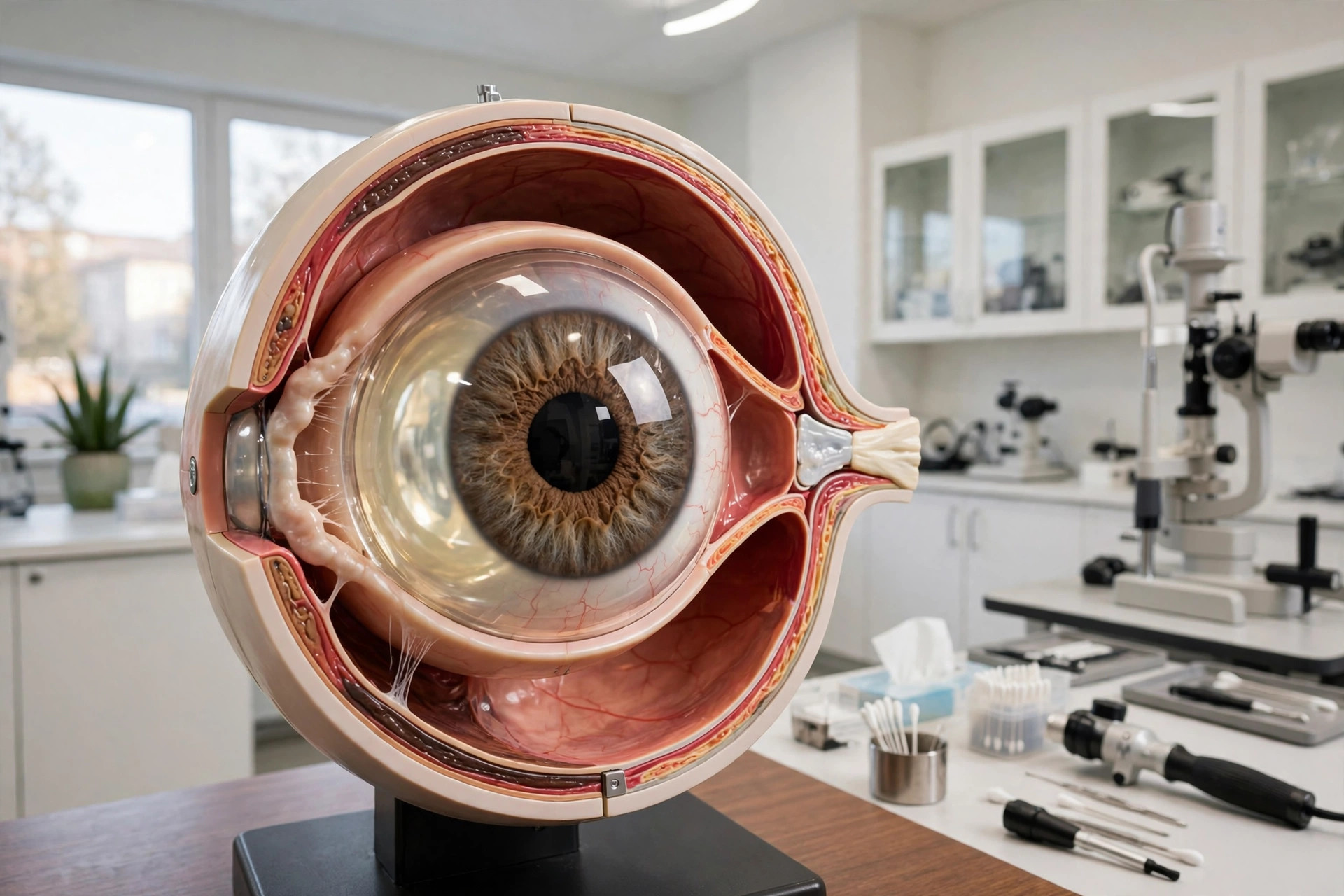
AI-generated anatomical illustration
The iris is the coloured diaphragm of the eye, a muscular ring suspended between the cornea and the lens. Its central opening, the pupil, changes size constantly: sphincter muscles constrict it in bright light and dilator muscles widen it in the dark, fine-tuning the light reaching the retina and improving image sharpness. Its colour comes from melanin in its front layers — more melanin, browner eyes; less, blue or green.
Key facts
- Pupil size ranges from about 2 mm in bright light to 8 mm in darkness — a sixteenfold change in area.
- The iris's detailed pattern of crypts and furrows is unique to each person and eye.
- Both pupils normally constrict together when light hits one eye (the consensual reflex) — a key neurological test.
- The muscles are controlled by the autonomic system: sympathetic dilates, parasympathetic constricts.
What can go wrong
Inflammation of the iris (iritis/anterior uveitis) causes a painful, red, light-sensitive eye with blurred vision and needs prompt eye assessment. Structural problems include coloboma (a developmental gap), damage after injury or surgery, and the floppy-iris behaviour seen with some prostate medicines during cataract surgery. Unequal pupils (anisocoria) are often harmless but new inequality with headache or droopy lid needs urgent review.
Related conditions
Related procedures & tests
Related symptoms
Frequently asked questions
Why do pupils shrink in bright light?
To limit light entering the eye, protect the retina and improve focus — the reflex runs from the retina to the brainstem and back to both irises.
What determines eye colour?
The amount and distribution of melanin in the iris: lots produces brown eyes; little lets light scatter back as blue; intermediate amounts yield green or hazel.
Educational information only. This atlas explains normal anatomy and describes conditions in general terms; it is not medical advice and does not replace assessment by a qualified clinician. If you have symptoms that worry you, seek medical care.