- Physical Examination
- Surgical Examination
- Ophthalmology
- Clinical Skills
- Orthopedics
- Surgery Videos
- Laparoscopy
- Pediatrics
- Funny Videos
- Cardiothoracic Surgery
- Nursing Videos
- Plastic Surgery
- Otorhinolaryngology
- Histology and Histopathology
- Neurosurgery
- Dermatology
- Pediatric Surgery
- Urology
- Dentistry
- Oncology and Cancers
- Anatomy Videos
- Health and Fitness
- Radiology
- Anaesthesia
- Physical Therapy
- Pharmacology
- Interventional Radiology
- Cardiology
- Endocrinology
- Gynecology
- Emergency Medicine
- Psychiatry and Psychology
- Childbirth Videos
- General Medical Videos
- Nephrology
- Physiology
- Diet and Food Health
- Diabetes Mellitus
- Neurology
- Women Health
- Osteoporosis
- Gastroenterology
- Pulmonology
- Hematology
- Rheumatology
- Toxicology
- Nuclear Medicine
- Infectious Diseases
- Vascular Disease
- Reproductive Health
- Burns and Wound Healing
- Kidney Zone Podcast
- Other
Ischium
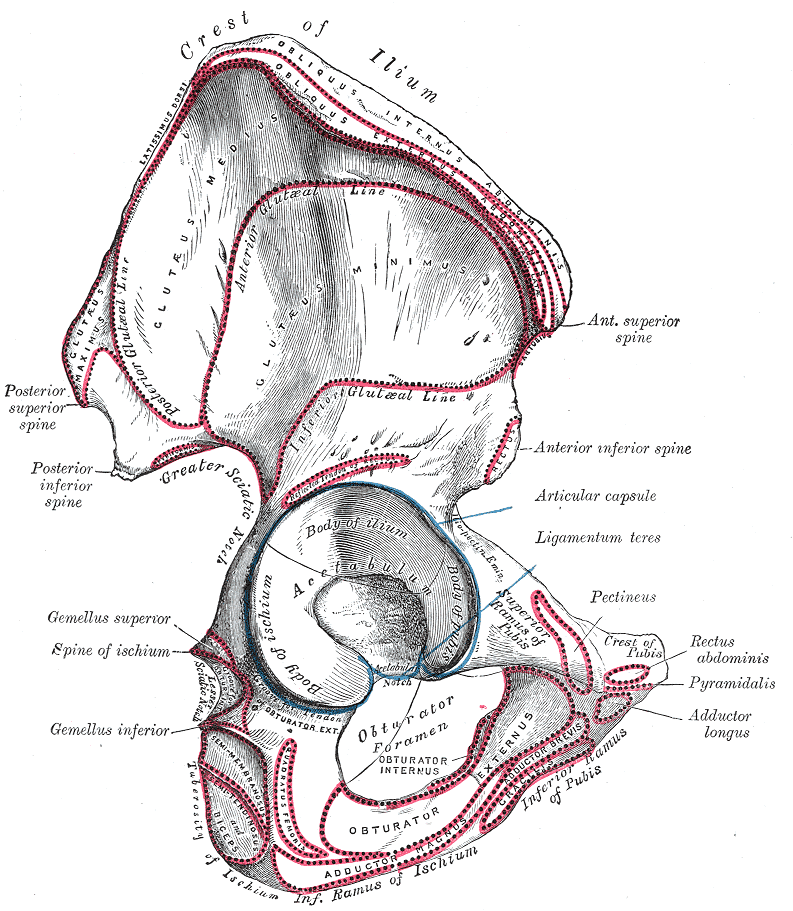
Gray's Anatomy (1918) plate, public domain
The ischium is the lower, back part of the hip bone. Its thickened knob — the ischial tuberosity — is the 'seat bone' you sit on. It forms the back and bottom of the hip socket and the lower border of the obturator foramen, and it anchors the hamstring muscles at the back of the thigh.
Key facts
- The ischial tuberosities bear your weight when sitting upright.
- The hamstrings originate from the ischial tuberosity.
- The ischium forms the lower, posterior part of the hip socket.
- Its ramus runs forwards to join the pubis, framing the obturator hole.
- A bursa over the tuberosity cushions it against the seat.
What can go wrong
Pain directly over the seat bone comes from irritating its bursa ('weaver's bottom') or from the hamstring attachment (proximal hamstring tendinopathy), common in runners and people who sit long hours. In adolescents, the hamstring can avulse the ischium's growth plate in a sudden sprint or stretch.
Related procedures & tests
Related symptoms
Related muscles
Frequently asked questions
Why do my seat bones ache on hard chairs?
Sitting loads the ischial tuberosities directly through a thin layer of tissue; on a hard surface the bursa and the hamstring origin are compressed, which soon becomes uncomfortable.
What is a hamstring avulsion?
Instead of the muscle or tendon tearing, the bony growth plate it attaches to is pulled off the ischium — an injury of adolescents whose growth plates are still weaker than their tendons.
Educational information only. This atlas explains normal anatomy and describes conditions in general terms; it is not medical advice and does not replace assessment by a qualified clinician. If you have symptoms that worry you, seek medical care.