- Physical Examination
- Surgical Examination
- Ophthalmology
- Clinical Skills
- Orthopedics
- Surgery Videos
- Laparoscopy
- Pediatrics
- Funny Videos
- Cardiothoracic Surgery
- Nursing Videos
- Plastic Surgery
- Otorhinolaryngology
- Histology and Histopathology
- Neurosurgery
- Dermatology
- Pediatric Surgery
- Urology
- Dentistry
- Oncology and Cancers
- Anatomy Videos
- Health and Fitness
- Radiology
- Anaesthesia
- Physical Therapy
- Pharmacology
- Interventional Radiology
- Cardiology
- Endocrinology
- Gynecology
- Emergency Medicine
- Psychiatry and Psychology
- Childbirth Videos
- General Medical Videos
- Nephrology
- Physiology
- Diet and Food Health
- Diabetes Mellitus
- Neurology
- Women Health
- Osteoporosis
- Gastroenterology
- Pulmonology
- Hematology
- Rheumatology
- Toxicology
- Nuclear Medicine
- Infectious Diseases
- Vascular Disease
- Reproductive Health
- Burns and Wound Healing
- Kidney Zone Podcast
- Other
Mandible
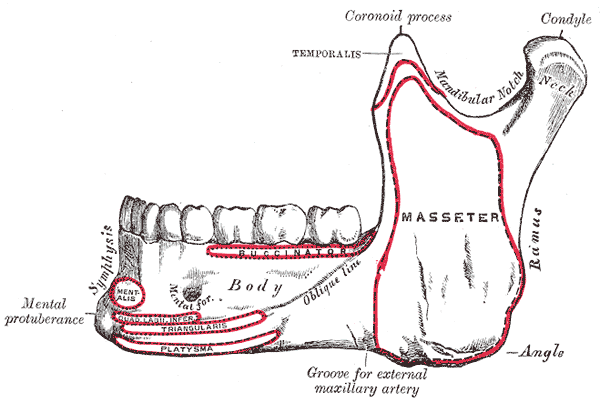
Gray's Anatomy (1918) plate, public domain
The mandible is the lower jaw — the largest and strongest facial bone, and the only bone of the skull that moves freely. It is a U-shaped body holding the lower teeth, with two upward arms (rami) ending in the jaw joint at the skull and a process where the powerful chewing muscles attach.
Key facts
- The mandible is the only movable bone of the skull.
- It forms the jaw joint (temporomandibular joint) just in front of the ear.
- The masseter and temporalis, among the strongest muscles in the body, close it for chewing.
- Its alveolar process holds the roots of the lower teeth.
- A canal inside it carries the nerve that gives feeling to the lower teeth and lip.
What can go wrong
The mandible is the facial bone most often fractured, usually from a blow or fall, and a broken jaw can misalign the bite. The jaw joint can become painful, click or lock (temporomandibular disorder). Wisdom teeth at the back of the mandible sometimes fail to erupt fully and become infected.
Related procedures & tests
Related symptoms
Related muscles
Frequently asked questions
How strong is the jaw?
The chewing muscles acting on the mandible can generate very high forces at the molars — among the greatest forces produced anywhere in the body — which is why the mandible is built as a thick, dense horseshoe of bone.
Why is jaw pain often felt in the ear?
The jaw joint sits immediately in front of the ear canal and shares nerves with it, so problems in the joint are commonly perceived as earache.
Educational information only. This atlas explains normal anatomy and describes conditions in general terms; it is not medical advice and does not replace assessment by a qualified clinician. If you have symptoms that worry you, seek medical care.