- Physical Examination
- Surgical Examination
- Ophthalmology
- Clinical Skills
- Orthopedics
- Surgery Videos
- Laparoscopy
- Pediatrics
- Funny Videos
- Cardiothoracic Surgery
- Nursing Videos
- Plastic Surgery
- Otorhinolaryngology
- Histology and Histopathology
- Neurosurgery
- Dermatology
- Pediatric Surgery
- Urology
- Dentistry
- Oncology and Cancers
- Anatomy Videos
- Health and Fitness
- Radiology
- Anaesthesia
- Physical Therapy
- Pharmacology
- Interventional Radiology
- Cardiology
- Endocrinology
- Gynecology
- Emergency Medicine
- Psychiatry and Psychology
- Childbirth Videos
- General Medical Videos
- Nephrology
- Physiology
- Diet and Food Health
- Diabetes Mellitus
- Neurology
- Women Health
- Osteoporosis
- Gastroenterology
- Pulmonology
- Hematology
- Rheumatology
- Toxicology
- Nuclear Medicine
- Infectious Diseases
- Vascular Disease
- Reproductive Health
- Burns and Wound Healing
- Kidney Zone Podcast
- Other
Medulla Oblongata
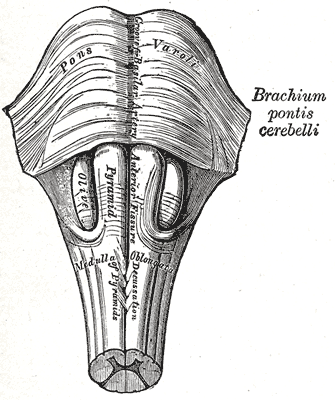
Gray's Anatomy (1918) plate, public domain
The medulla oblongata is the lowest part of the brainstem, continuous with the spinal cord below and the pons above. Small but vital, it contains the centres that set breathing rhythm, heart rate and blood pressure, and the reflex arcs for coughing, gagging, swallowing and vomiting. Most motor and sensory pathways pass through it, and the motor fibres cross to the opposite side here (the decussation) — which is why the left brain controls the right body.
Key facts
- The medulla generates the basic rhythm of breathing automatically, without conscious thought.
- Its vomiting centre samples the blood for toxins in a region outside the blood-brain barrier.
- About 90% of motor fibres cross here; the rest cross later or stay uncrossed.
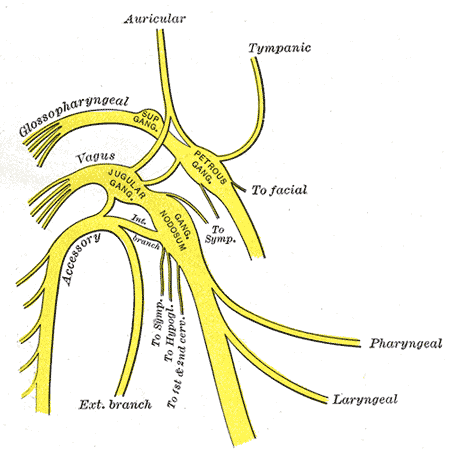
- The last four cranial nerves (IX-XII) emerge from the medulla, serving the throat, viscera and tongue.
What can go wrong
Medullary damage is dangerous precisely because its centres are vital: lateral medullary (Wallenberg) syndrome — from stroke in its feeding artery — combines vertigo, swallowing difficulty, hoarseness, facial sensory loss and limb clumsiness. Central damage can stop breathing drive, especially with sedative drugs or during sleep in some congenital conditions. Tumours and compression at the skull base (for example in Chiari malformation) also affect it.
Related conditions
Related procedures & tests
Related symptoms
Frequently asked questions
Why is the medulla so vital?
It runs the automatic controls for breathing, heart rate and blood pressure; severe injury here can be fatal because there is no backup for these functions.
What is Wallenberg syndrome?
A stroke pattern from a blocked artery to the side of the medulla, causing vertigo, vomiting, hoarseness, difficulty swallowing, loss of pain sensation on one side of the face and the opposite side of the body, and imbalance.
Educational information only. This atlas explains normal anatomy and describes conditions in general terms; it is not medical advice and does not replace assessment by a qualified clinician. If you have symptoms that worry you, seek medical care.