- Physical Examination
- Surgical Examination
- Ophthalmology
- Clinical Skills
- Orthopedics
- Surgery Videos
- Laparoscopy
- Pediatrics
- Funny Videos
- Cardiothoracic Surgery
- Nursing Videos
- Plastic Surgery
- Otorhinolaryngology
- Histology and Histopathology
- Neurosurgery
- Dermatology
- Pediatric Surgery
- Urology
- Dentistry
- Oncology and Cancers
- Anatomy Videos
- Health and Fitness
- Radiology
- Anaesthesia
- Physical Therapy
- Pharmacology
- Interventional Radiology
- Cardiology
- Endocrinology
- Gynecology
- Emergency Medicine
- Psychiatry and Psychology
- Childbirth Videos
- General Medical Videos
- Nephrology
- Physiology
- Diet and Food Health
- Diabetes Mellitus
- Neurology
- Women Health
- Osteoporosis
- Gastroenterology
- Pulmonology
- Hematology
- Rheumatology
- Toxicology
- Nuclear Medicine
- Infectious Diseases
- Vascular Disease
- Reproductive Health
- Burns and Wound Healing
- Kidney Zone Podcast
- Other
Meninges
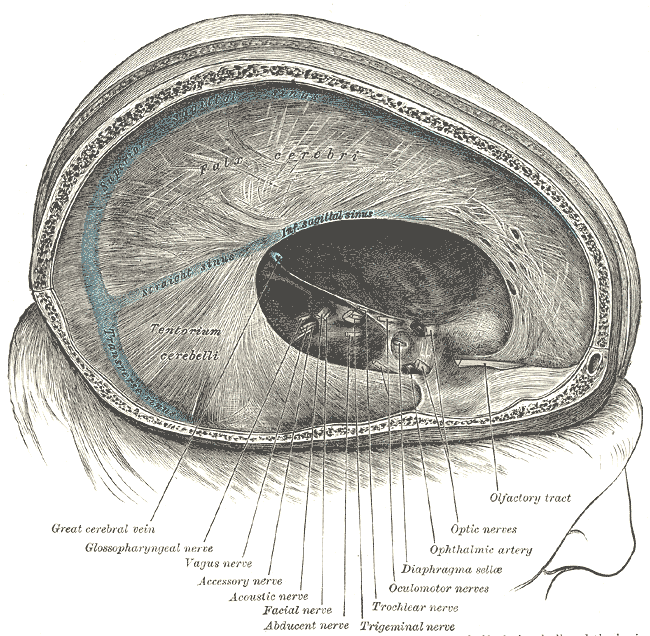
Gray's Anatomy (1918) plate, public domain
The meninges are three membranes wrapping the brain and spinal cord: the tough outer dura mater, the web-like arachnoid, and the delicate pia mater clinging to the surface. Between arachnoid and pia flows cerebrospinal fluid, which cushions the nervous system. The dura folds between the hemispheres and lines the skull, and its venous sinuses drain the brain's blood.
Key facts
- The three layers are dura, arachnoid and pia — from Latin and Greek for 'mother' (mater).
- Cerebrospinal fluid circulates in the subarachnoid space.
- The dura has two layers inside the skull; the sinuses between them drain blood.
- Meningeal blood vessels, not the brain, are a source of headache pain.
- The membranes continue down around the spinal cord to the sacrum.
What can go wrong
Inflammation of the meninges is meningitis — usually viral and self-limiting, but bacterial meningitis is a medical emergency with fever, headache, neck stiffness and sometimes a non-blanching rash. Bleeding can collect inside the dura layers after head injury (subdural and extradural haematomas), pressing on the brain.
Related procedures & tests
Related symptoms
Watch: related videos
Frequently asked questions
Why is it called 'mater'?
Medieval translators rendered the Arabic word for these membranes as 'mother' — dura mater, the 'tough mother', and pia mater, the 'tender mother' — because the membranes were seen as mothering (protecting) the brain.
How does lumbar puncture relate to the meninges?
The needle passes through the dura and arachnoid in the lower back to sample cerebrospinal fluid from the subarachnoid space — safely below the end of the spinal cord.
Educational information only. This atlas explains normal anatomy and describes conditions in general terms; it is not medical advice and does not replace assessment by a qualified clinician. If you have symptoms that worry you, seek medical care.