- Physical Examination
- Surgical Examination
- Ophthalmology
- Clinical Skills
- Orthopedics
- Surgery Videos
- Laparoscopy
- Pediatrics
- Funny Videos
- Cardiothoracic Surgery
- Nursing Videos
- Plastic Surgery
- Otorhinolaryngology
- Histology and Histopathology
- Neurosurgery
- Dermatology
- Pediatric Surgery
- Urology
- Dentistry
- Oncology and Cancers
- Anatomy Videos
- Health and Fitness
- Radiology
- Anaesthesia
- Physical Therapy
- Pharmacology
- Interventional Radiology
- Cardiology
- Endocrinology
- Gynecology
- Emergency Medicine
- Psychiatry and Psychology
- Childbirth Videos
- General Medical Videos
- Nephrology
- Physiology
- Diet and Food Health
- Diabetes Mellitus
- Neurology
- Women Health
- Osteoporosis
- Gastroenterology
- Pulmonology
- Hematology
- Rheumatology
- Toxicology
- Nuclear Medicine
- Infectious Diseases
- Vascular Disease
- Reproductive Health
- Burns and Wound Healing
- Kidney Zone Podcast
- Other
Metatarsals
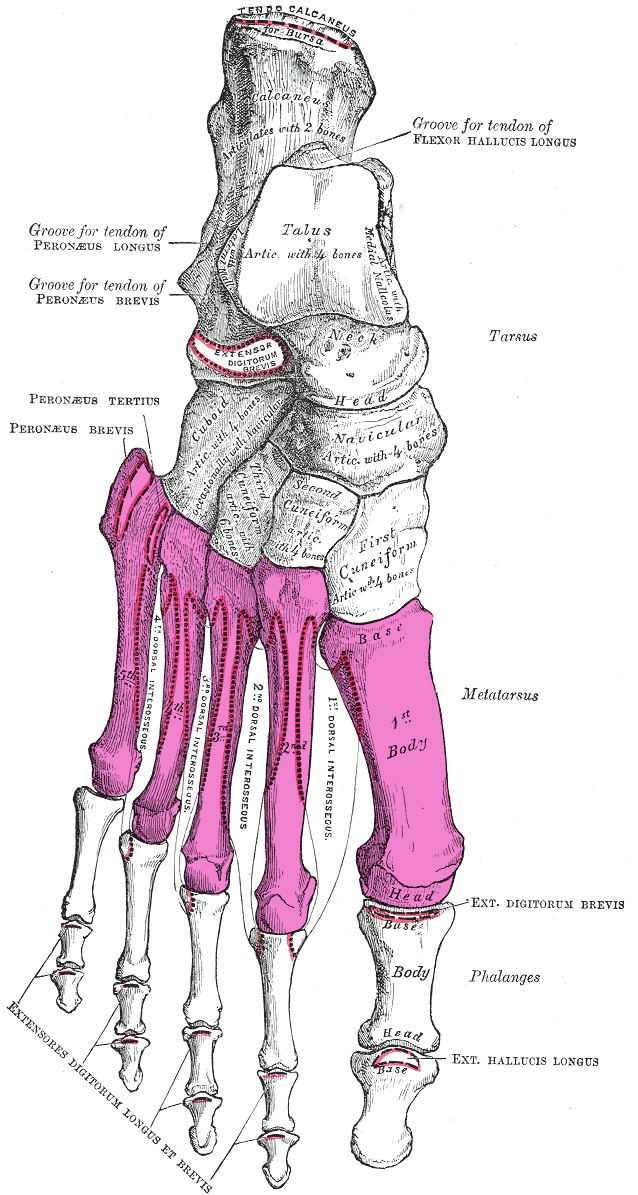
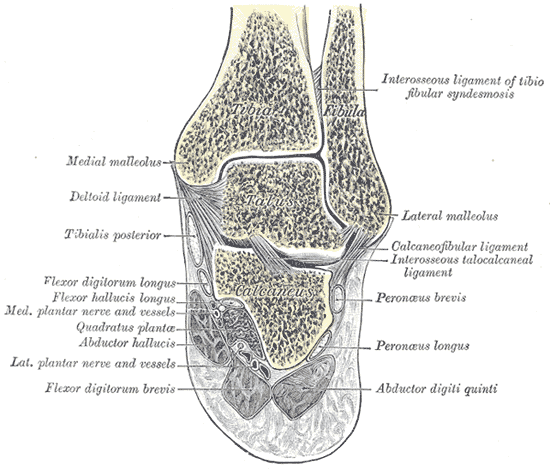
Gray's Anatomy (1918) plate, public domain
The metatarsals are the five long bones of the forefoot, one for each toe, forming the span between the midfoot and the toes. Their heads form the ball of the foot and share the load of standing and push-off; the first is short and thick for the big toe's power, while the second is longest and most firmly fixed. Together with the tarsals they build the foot's arches.
Key facts
- There are five metatarsals, numbered from the big-toe side.
- Their heads form the ball of the foot and the transverse arch.
- The first metatarsal is the shortest and thickest.
- The second metatarsal base is recessed as the midfoot keystone.
- The bump at the fifth metatarsal base is a normal landmark on the outer foot.
What can go wrong
Metatarsals are classic stress-fracture bones in runners and new military recruits ('march fractures'), and they break in direct trauma such as dropping objects on the foot. Pain under their heads (metatarsalgia) is a common complaint with many causes, from footwear to arthritis of the big-toe joint.
Related procedures & tests
Related symptoms
Related muscles
Frequently asked questions
What is a march fracture?
A stress fracture of a metatarsal — historically described in soldiers after long marches in new boots — caused by repeated load exceeding the bone's ability to repair itself.
Why is the ball of the foot padded with fat?
The metatarsal heads take the full force of push-off; a specialised fat pad cushions them. As it thins with age, the heads feel more prominent and can become sore.
Educational information only. This atlas explains normal anatomy and describes conditions in general terms; it is not medical advice and does not replace assessment by a qualified clinician. If you have symptoms that worry you, seek medical care.