- Physical Examination
- Surgical Examination
- Ophthalmology
- Clinical Skills
- Orthopedics
- Surgery Videos
- Laparoscopy
- Pediatrics
- Funny Videos
- Cardiothoracic Surgery
- Nursing Videos
- Plastic Surgery
- Otorhinolaryngology
- Histology and Histopathology
- Neurosurgery
- Dermatology
- Pediatric Surgery
- Urology
- Dentistry
- Oncology and Cancers
- Anatomy Videos
- Health and Fitness
- Radiology
- Anaesthesia
- Physical Therapy
- Pharmacology
- Interventional Radiology
- Cardiology
- Endocrinology
- Gynecology
- Emergency Medicine
- Psychiatry and Psychology
- Childbirth Videos
- General Medical Videos
- Nephrology
- Physiology
- Diet and Food Health
- Diabetes Mellitus
- Neurology
- Women Health
- Osteoporosis
- Gastroenterology
- Pulmonology
- Hematology
- Rheumatology
- Toxicology
- Nuclear Medicine
- Infectious Diseases
- Vascular Disease
- Reproductive Health
- Burns and Wound Healing
- Kidney Zone Podcast
- Other
Mouth
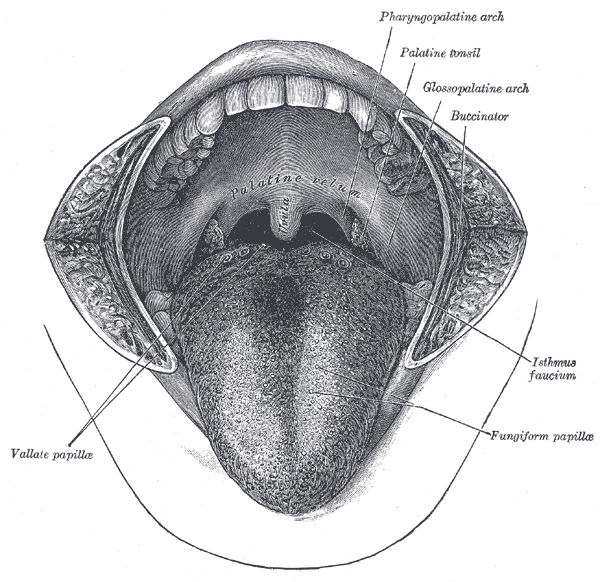
Gray's Anatomy (1918) plate, public domain
The mouth (oral cavity) is where digestion begins: the teeth cut and grind food, the tongue mixes it with saliva and shapes it for swallowing, and enzymes in saliva start breaking down starches. It is lined by a tough, rapidly renewing mucosa, roofed by the hard and soft palate, and floored by muscles under the tongue. The mouth also shapes speech and hosts the taste buds.
Key facts
- Salivary glands open into the mouth, keeping it moist and beginning chemical digestion.
- The mouth lining heals faster than skin and is replaced every few weeks.
- Its normal bacterial community helps crowd out harmful microbes.
- The lips' border (vermilion) is where skin transitions to the moist inner lining.
What can go wrong
Common mouth problems include ulcers, cold sores from herpes simplex, thrush (candida) in people with lowered immunity or after antibiotics, dry mouth from medications or gland disease, and dental disease affecting the teeth and gums. Persistent lumps, red or white patches or non-healing ulcers are assessed promptly because mouth cancers can start this way.
Related conditions
Related procedures & tests
Related symptoms
Related muscles
Frequently asked questions
Why does the mouth heal so quickly?
Its lining renews rapidly, has a rich blood supply and saliva carries growth factors, so minor mouth injuries often heal within days.
What causes mouth ulcers?
Minor aphthous ulcers are common and usually harmless, arising after local trauma, stress or illness; ulcers that persist beyond about three weeks should be examined.
Educational information only. This atlas explains normal anatomy and describes conditions in general terms; it is not medical advice and does not replace assessment by a qualified clinician. If you have symptoms that worry you, seek medical care.