- Physical Examination
- Surgical Examination
- Ophthalmology
- Clinical Skills
- Orthopedics
- Surgery Videos
- Laparoscopy
- Pediatrics
- Funny Videos
- Cardiothoracic Surgery
- Nursing Videos
- Plastic Surgery
- Otorhinolaryngology
- Histology and Histopathology
- Neurosurgery
- Dermatology
- Pediatric Surgery
- Urology
- Dentistry
- Oncology and Cancers
- Anatomy Videos
- Health and Fitness
- Radiology
- Anaesthesia
- Physical Therapy
- Pharmacology
- Interventional Radiology
- Cardiology
- Endocrinology
- Gynecology
- Emergency Medicine
- Psychiatry and Psychology
- Childbirth Videos
- General Medical Videos
- Nephrology
- Physiology
- Diet and Food Health
- Diabetes Mellitus
- Neurology
- Women Health
- Osteoporosis
- Gastroenterology
- Pulmonology
- Hematology
- Rheumatology
- Toxicology
- Nuclear Medicine
- Infectious Diseases
- Vascular Disease
- Reproductive Health
- Burns and Wound Healing
- Kidney Zone Podcast
- Other
Colon
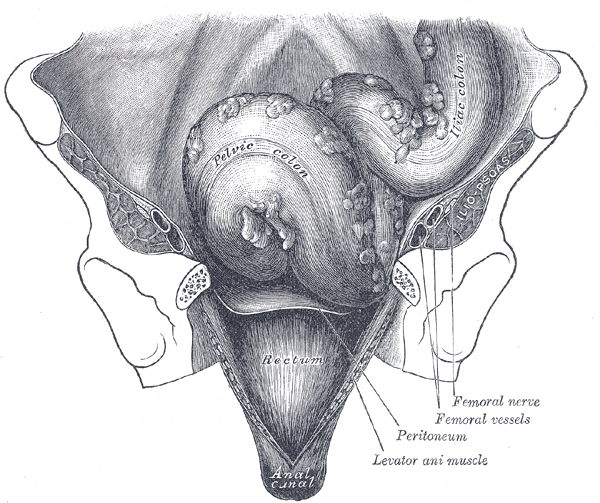
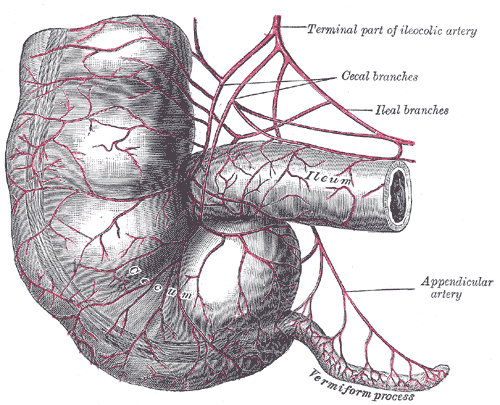
Gray's Anatomy (1918) plate, public domain
The colon is the main part of the large intestine, about 1.5 metres long, framing the small intestine in an upside-down U: ascending, transverse, descending and sigmoid sections. Its job is to absorb water and salts from liquid residue, forming stools, while hosting trillions of bacteria that ferment fibre, produce some vitamins and train the immune system. Its wall has characteristic pouches (haustra) created by three bands of muscle.
Key facts
- Colonic bacteria produce vitamin K and some B vitamins that the body can use.
- Roughly 1-1.5 litres of liquid enter the colon daily; only about 100-200 mL of water normally leaves in stool.
- The muscle bands (taeniae) are shorter than the colon itself, puckering it into sacculations.
- Gas in the colon comes mainly from bacterial fermentation of undigested carbohydrates.
What can go wrong
The colon is the site of common conditions: diverticular pouches that can inflame (diverticulitis), inflammatory bowel diseases (ulcerative colitis affects the colon), irritable bowel syndrome affecting its function, and polyps that can progress to bowel cancer — which is why screening and colonoscopy focus here. A change in bowel habit or blood in the stool are key symptoms that prompt investigation.
Related conditions
Related procedures & tests
Related symptoms
Related muscles
Watch: related videos
Frequently asked questions
What is the difference between the colon and the large intestine?
The large intestine is the whole final section — cecum, colon, rectum and anal canal; the colon is its longest, central part.
Why is colonoscopy used for screening?
It lets clinicians see the entire colon lining and remove polyps — the benign growths from which most bowel cancers develop — before they turn malignant.
Educational information only. This atlas explains normal anatomy and describes conditions in general terms; it is not medical advice and does not replace assessment by a qualified clinician. If you have symptoms that worry you, seek medical care.