- Physical Examination
- Surgical Examination
- Ophthalmology
- Clinical Skills
- Orthopedics
- Surgery Videos
- Laparoscopy
- Pediatrics
- Funny Videos
- Cardiothoracic Surgery
- Nursing Videos
- Plastic Surgery
- Otorhinolaryngology
- Histology and Histopathology
- Neurosurgery
- Dermatology
- Pediatric Surgery
- Urology
- Dentistry
- Oncology and Cancers
- Anatomy Videos
- Health and Fitness
- Radiology
- Anaesthesia
- Physical Therapy
- Pharmacology
- Interventional Radiology
- Cardiology
- Endocrinology
- Gynecology
- Emergency Medicine
- Psychiatry and Psychology
- Childbirth Videos
- General Medical Videos
- Nephrology
- Physiology
- Diet and Food Health
- Diabetes Mellitus
- Neurology
- Women Health
- Osteoporosis
- Gastroenterology
- Pulmonology
- Hematology
- Rheumatology
- Toxicology
- Nuclear Medicine
- Infectious Diseases
- Vascular Disease
- Reproductive Health
- Burns and Wound Healing
- Kidney Zone Podcast
- Other
Cecum
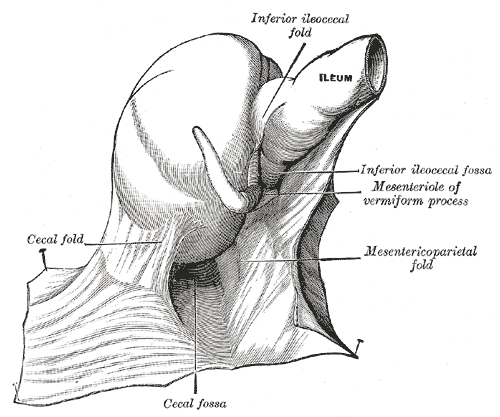
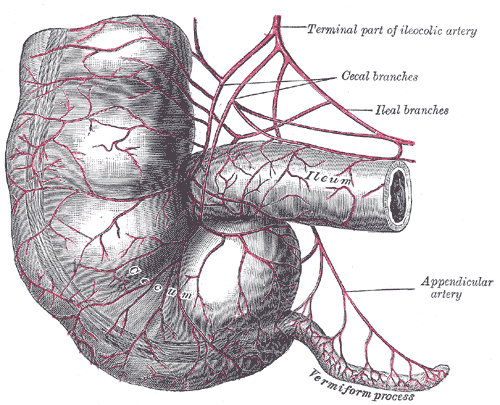
Gray's Anatomy (1918) plate, public domain
The cecum is the blind pouch at the start of the large intestine, sitting in the lower right of the abdomen where the small intestine empties into it through the ileocaecal valve. It receives liquid chyme and begins the colon's work of absorbing water and salts. The appendix hangs from its lower end. Its position is a landmark in abdominal examination — deep tenderness here is a classic sign of appendicitis.
Key facts
- The cecum is continuous with the ascending colon above it, with no dividing sphincter.
- In many grazing animals the cecum is a large fermentation chamber; in humans it is modest.
- The ileocaecal valve at its inlet helps prevent colonic bacteria from refluxing into the small intestine.
- Because its wall stretches readily, the cecum is the part of the colon most at risk of over-distension in blockages.
What can go wrong
The cecum itself is most often involved through its appendix — appendicitis starts with vague central abdominal pain that settles over the cecum in the right lower abdomen. Crohn's disease and infections can inflame the cecum (caecitis), mimicking appendicitis. Tumours of the cecum may present with anaemia from slow bleeding rather than pain.
Related conditions
Related procedures & tests
Related symptoms
Frequently asked questions
Where is the cecum?
In the lower right side of the abdomen, just above the groin crease — the region clinicians palpate when assessing for appendicitis.
What does the cecum do?
It is the receiving pouch of the large intestine: liquid residue from the small intestine enters here and the colon begins absorbing water and electrolytes.
Educational information only. This atlas explains normal anatomy and describes conditions in general terms; it is not medical advice and does not replace assessment by a qualified clinician. If you have symptoms that worry you, seek medical care.