- Physical Examination
- Surgical Examination
- Ophthalmology
- Clinical Skills
- Orthopedics
- Surgery Videos
- Laparoscopy
- Pediatrics
- Funny Videos
- Cardiothoracic Surgery
- Nursing Videos
- Plastic Surgery
- Otorhinolaryngology
- Histology and Histopathology
- Neurosurgery
- Dermatology
- Pediatric Surgery
- Urology
- Dentistry
- Oncology and Cancers
- Anatomy Videos
- Health and Fitness
- Radiology
- Anaesthesia
- Physical Therapy
- Pharmacology
- Interventional Radiology
- Cardiology
- Endocrinology
- Gynecology
- Emergency Medicine
- Psychiatry and Psychology
- Childbirth Videos
- General Medical Videos
- Nephrology
- Physiology
- Diet and Food Health
- Diabetes Mellitus
- Neurology
- Women Health
- Osteoporosis
- Gastroenterology
- Pulmonology
- Hematology
- Rheumatology
- Toxicology
- Nuclear Medicine
- Infectious Diseases
- Vascular Disease
- Reproductive Health
- Burns and Wound Healing
- Kidney Zone Podcast
- Other
Appendix
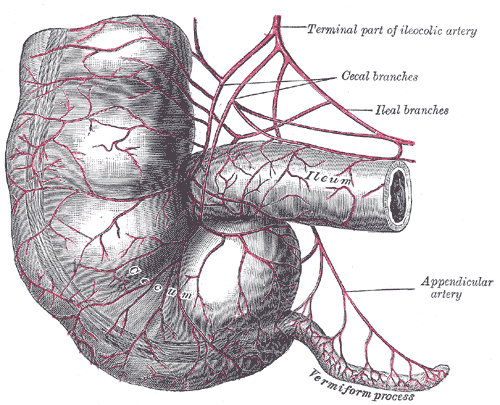
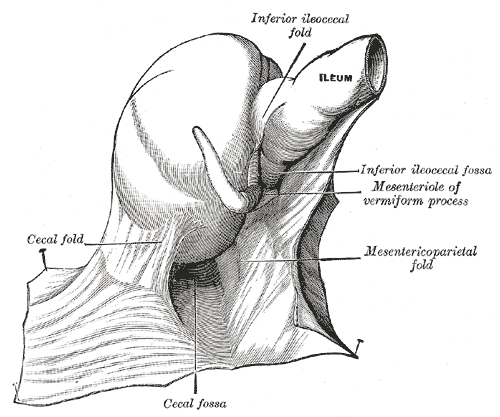
Gray's Anatomy (1918) plate, public domain
The appendix is a slender, blind-ending tube, typically 6-9 cm long, hanging from the cecum in the lower right abdomen. Its wall is rich in lymphoid tissue, suggesting an immune role, and it may act as a safe reservoir of helpful gut bacteria that repopulate the colon after diarrhoeal illness. Its exact position varies — it can point down into the pelvis or up behind the cecum.
Key facts
- The appendix is not useless after all: its lymphoid tissue and bacterial reservoir are now thought to support gut immunity.
- Its opening into the cecum is narrow, which is why blockage by a hard pellet of stool (a faecolith) can trigger inflammation.
- Appendicitis is one of the commonest abdominal emergencies worldwide.
- Some people are born with the appendix on the left because their organs are mirror-imaged (situs inversus).
What can go wrong
Inflammation of the appendix (appendicitis) usually follows blockage of its opening; pressure builds, blood flow fails and the wall can perforate, spilling infection into the abdomen. Pain classically starts around the navel, then localises to the lower right, with nausea, fever and loss of appetite. Diagnosis combines examination, blood tests and often ultrasound or CT; management is usually surgical removal (appendicectomy).
Related conditions
Related procedures & tests
Related symptoms
Frequently asked questions
Can you live normally without an appendix?
Yes. After removal people recover fully and live normally; any immune role it has is shared with lymphoid tissue elsewhere in the gut.
Why does appendicitis pain move?
Early inflammation stretches the appendix and is felt vaguely around the navel; once the inflamed organ irritates the abdominal wall lining, pain localises sharply to the lower right side.
Educational information only. This atlas explains normal anatomy and describes conditions in general terms; it is not medical advice and does not replace assessment by a qualified clinician. If you have symptoms that worry you, seek medical care.