- Physical Examination
- Surgical Examination
- Ophthalmology
- Clinical Skills
- Orthopedics
- Surgery Videos
- Laparoscopy
- Pediatrics
- Funny Videos
- Cardiothoracic Surgery
- Nursing Videos
- Plastic Surgery
- Otorhinolaryngology
- Histology and Histopathology
- Neurosurgery
- Dermatology
- Pediatric Surgery
- Urology
- Dentistry
- Oncology and Cancers
- Anatomy Videos
- Health and Fitness
- Radiology
- Anaesthesia
- Physical Therapy
- Pharmacology
- Interventional Radiology
- Cardiology
- Endocrinology
- Gynecology
- Emergency Medicine
- Psychiatry and Psychology
- Childbirth Videos
- General Medical Videos
- Nephrology
- Physiology
- Diet and Food Health
- Diabetes Mellitus
- Neurology
- Women Health
- Osteoporosis
- Gastroenterology
- Pulmonology
- Hematology
- Rheumatology
- Toxicology
- Nuclear Medicine
- Infectious Diseases
- Vascular Disease
- Reproductive Health
- Burns and Wound Healing
- Kidney Zone Podcast
- Other
Anus
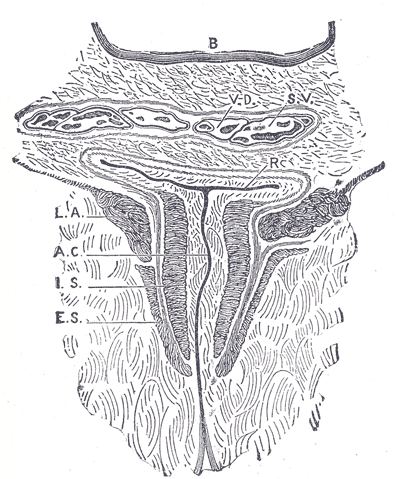
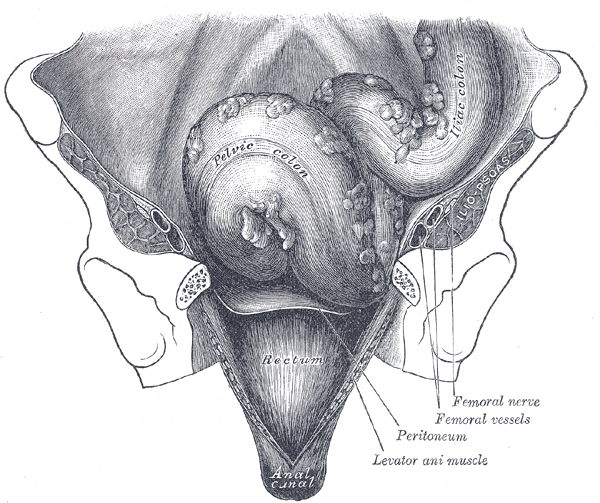
Gray's Anatomy (1918) plate, public domain
The anus is the terminal opening of the digestive tract, closing the 3-4 cm anal canal. Two sphincter muscles guard it: the internal sphincter (involuntary smooth muscle, tonically contracted) and the external sphincter (voluntary skeletal muscle under conscious control), assisted by the pelvic floor. This apparatus keeps the canal closed yet can sample contents and relax in a coordinated way for defecation.
Key facts
- The internal sphincter provides most of the resting closure pressure without tiring.
- The upper anal canal lining and lower skin have different nerve supplies, which is why some painful conditions hurt sharply and others ache dully.
- Cushions of blood vessels (anal cushions) help seal the canal — when enlarged and symptomatic they are called haemorrhoids (piles).
- Sensation here is remarkably discriminative for such a small area.
What can go wrong
Common anal problems include haemorrhoids, painful tears (anal fissures), infections and abscesses in the glands around the canal, and fistulas (abnormal tunnels). Itching, pain, bleeding or a lump are typical symptoms. Continence can be weakened by sphincter injury — for example after childbirth — or nerve disease. Persistent symptoms are assessed by inspection and examination, sometimes with a small scope (proctoscopy).
Related conditions
Related procedures & tests
- Proctoscopy and sigmoidoscopy (rigid)
- Haemorrhoid surgery (haemorrhoidectomy)
- Anorectal physiology and manometry
Related symptoms
Frequently asked questions
What is the difference between internal and external haemorrhoids?
Internal ones arise above the anal canal's sensory line and mainly bleed painlessly; external ones arise under the sensitive skin and can be painful, especially if a clot forms in them.
How does the body know when to open the bowels?
Stool entering the rectum triggers reflex relaxation of the internal sphincter and sampling by the sensitive canal; the brain then decides whether to contract or relax the external sphincter.
Educational information only. This atlas explains normal anatomy and describes conditions in general terms; it is not medical advice and does not replace assessment by a qualified clinician. If you have symptoms that worry you, seek medical care.