- Physical Examination
- Surgical Examination
- Ophthalmology
- Clinical Skills
- Orthopedics
- Surgery Videos
- Laparoscopy
- Pediatrics
- Funny Videos
- Cardiothoracic Surgery
- Nursing Videos
- Plastic Surgery
- Otorhinolaryngology
- Histology and Histopathology
- Neurosurgery
- Dermatology
- Pediatric Surgery
- Urology
- Dentistry
- Oncology and Cancers
- Anatomy Videos
- Health and Fitness
- Radiology
- Anaesthesia
- Physical Therapy
- Pharmacology
- Interventional Radiology
- Cardiology
- Endocrinology
- Gynecology
- Emergency Medicine
- Psychiatry and Psychology
- Childbirth Videos
- General Medical Videos
- Nephrology
- Physiology
- Diet and Food Health
- Diabetes Mellitus
- Neurology
- Women Health
- Osteoporosis
- Gastroenterology
- Pulmonology
- Hematology
- Rheumatology
- Toxicology
- Nuclear Medicine
- Infectious Diseases
- Vascular Disease
- Reproductive Health
- Burns and Wound Healing
- Kidney Zone Podcast
- Other
Digestive System
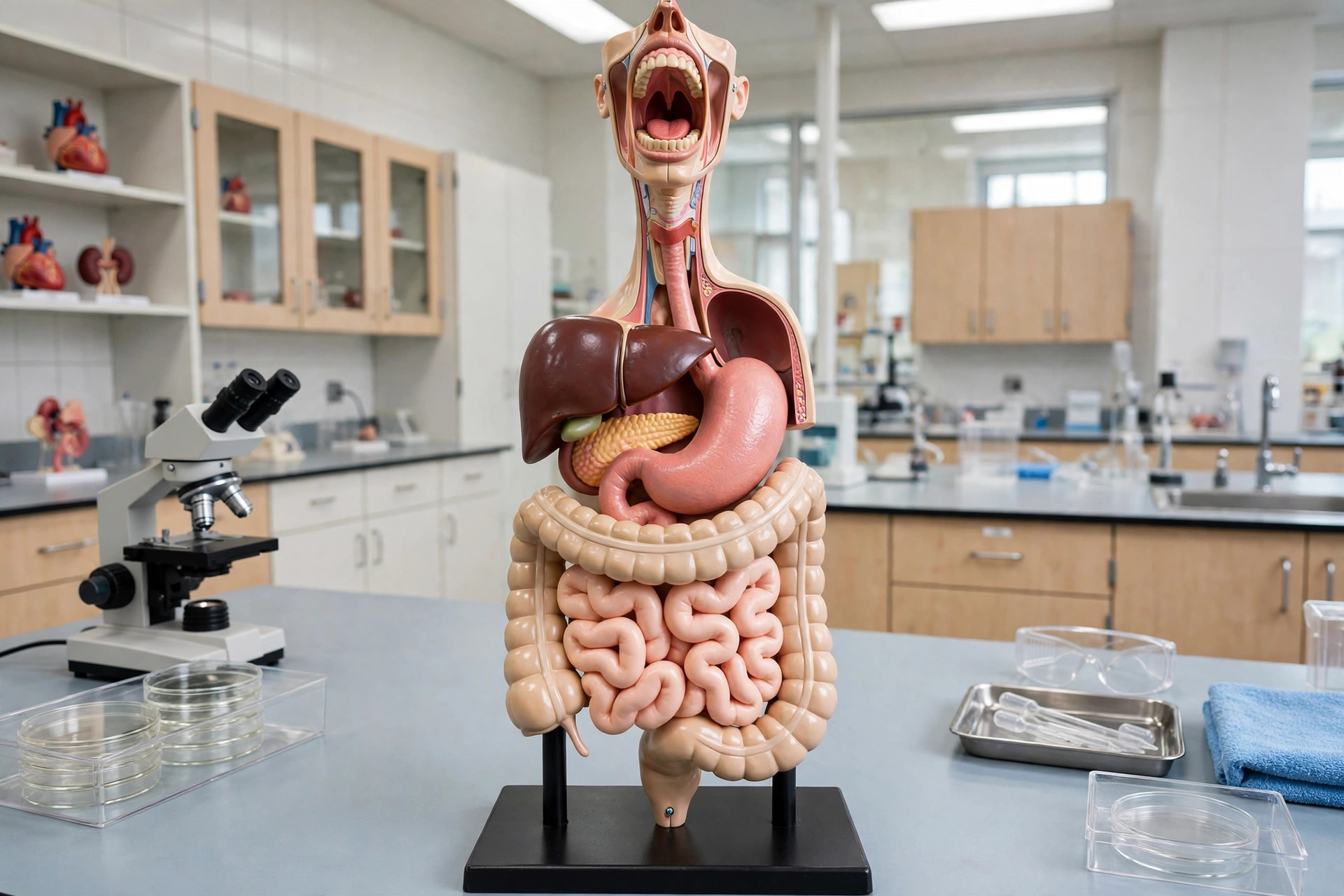
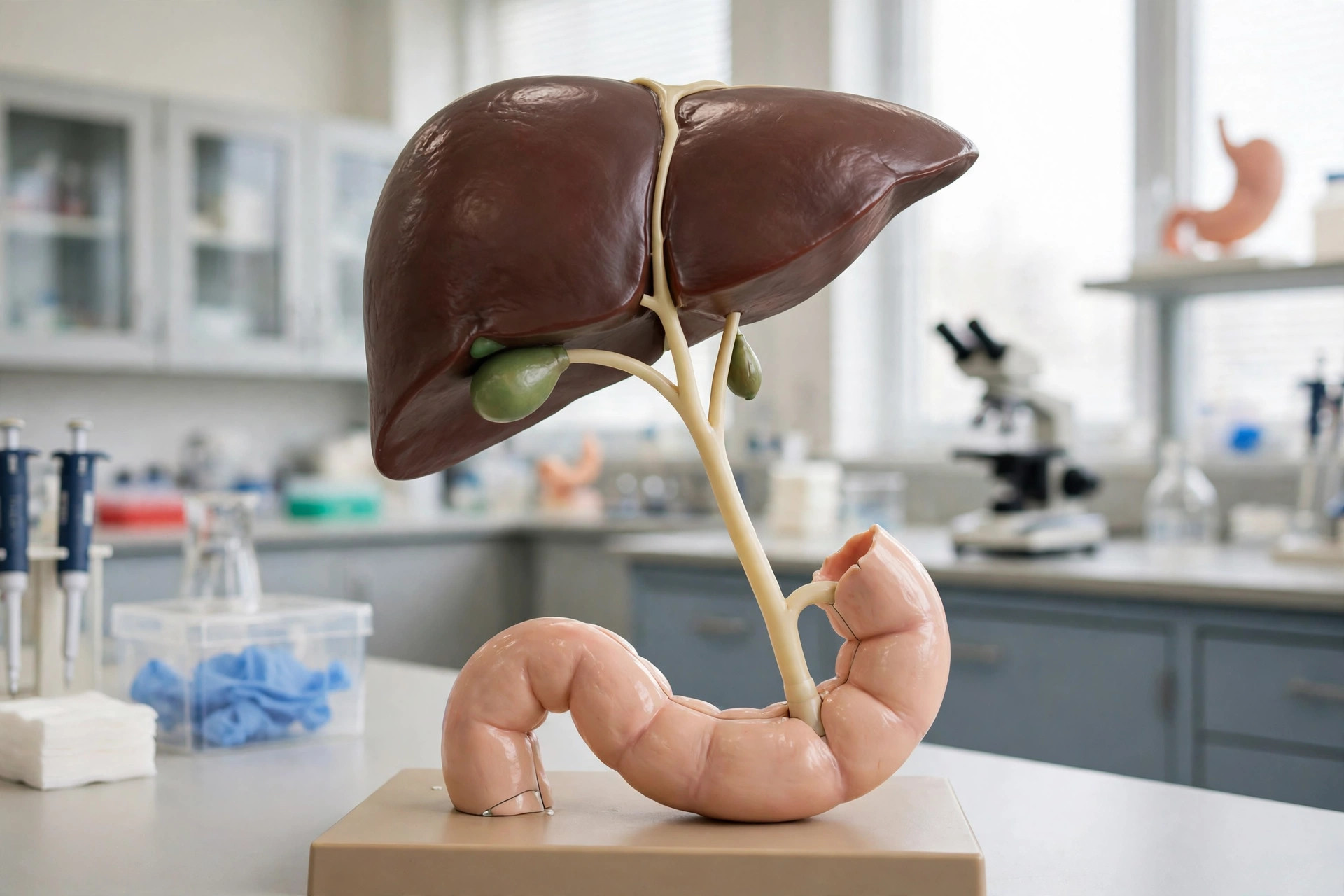
AI-generated anatomical illustration
The digestive system is the continuous tract — mouth, pharynx, esophagus, stomach, small and large intestines, rectum and anus — together with its accessory glands: salivary glands, liver, gallbladder and pancreas. It ingests food, breaks it down mechanically and chemically, absorbs nutrients, water and vitamins, hosts the gut microbiome and expels the residue. From mouth to anus the tract measures about 9 metres in adults.
Key facts
- If the small intestine's folds and villi were flattened, the absorptive area would rival a tennis court.
- The tract has its own nervous system (the enteric nervous system) with hundreds of millions of neurons — sometimes called the second brain.
- Digestive juices total around 7 litres a day across saliva, stomach, pancreas, bile and intestinal secretions.
- Most of the immune system's tissue is associated with the gut, sampling everything that passes through.
What can go wrong
With so many organs and functions, digestive problems range widely: reflux and ulcers in the upper tract, malabsorption and inflammatory bowel disease in the intestines, liver and pancreatic disorders, and cancers at many sites. Cardinal symptoms include abdominal pain, altered bowel habit, bleeding, difficulty swallowing and unexplained weight loss — persistent versions of any of these merit investigation.
Related conditions
Related procedures & tests
Related symptoms
Frequently asked questions
How long does digestion take from start to finish?
A meal typically leaves the stomach within 2-4 hours, crosses the small intestine in 3-5 hours, and the residue may spend 12-48 hours in the colon before being passed.
What is the gut microbiome?
The community of trillions of microbes, mostly in the colon, that ferment fibre, produce vitamins, shape immunity and influence many aspects of health.
Educational information only. This atlas explains normal anatomy and describes conditions in general terms; it is not medical advice and does not replace assessment by a qualified clinician. If you have symptoms that worry you, seek medical care.