- Physical Examination
- Surgical Examination
- Ophthalmology
- Clinical Skills
- Orthopedics
- Surgery Videos
- Laparoscopy
- Pediatrics
- Funny Videos
- Cardiothoracic Surgery
- Nursing Videos
- Plastic Surgery
- Otorhinolaryngology
- Histology and Histopathology
- Neurosurgery
- Dermatology
- Pediatric Surgery
- Urology
- Dentistry
- Oncology and Cancers
- Anatomy Videos
- Health and Fitness
- Radiology
- Anaesthesia
- Physical Therapy
- Pharmacology
- Interventional Radiology
- Cardiology
- Endocrinology
- Gynecology
- Emergency Medicine
- Psychiatry and Psychology
- Childbirth Videos
- General Medical Videos
- Nephrology
- Physiology
- Diet and Food Health
- Diabetes Mellitus
- Neurology
- Women Health
- Osteoporosis
- Gastroenterology
- Pulmonology
- Hematology
- Rheumatology
- Toxicology
- Nuclear Medicine
- Infectious Diseases
- Vascular Disease
- Reproductive Health
- Burns and Wound Healing
- Kidney Zone Podcast
- Other
Muscular System
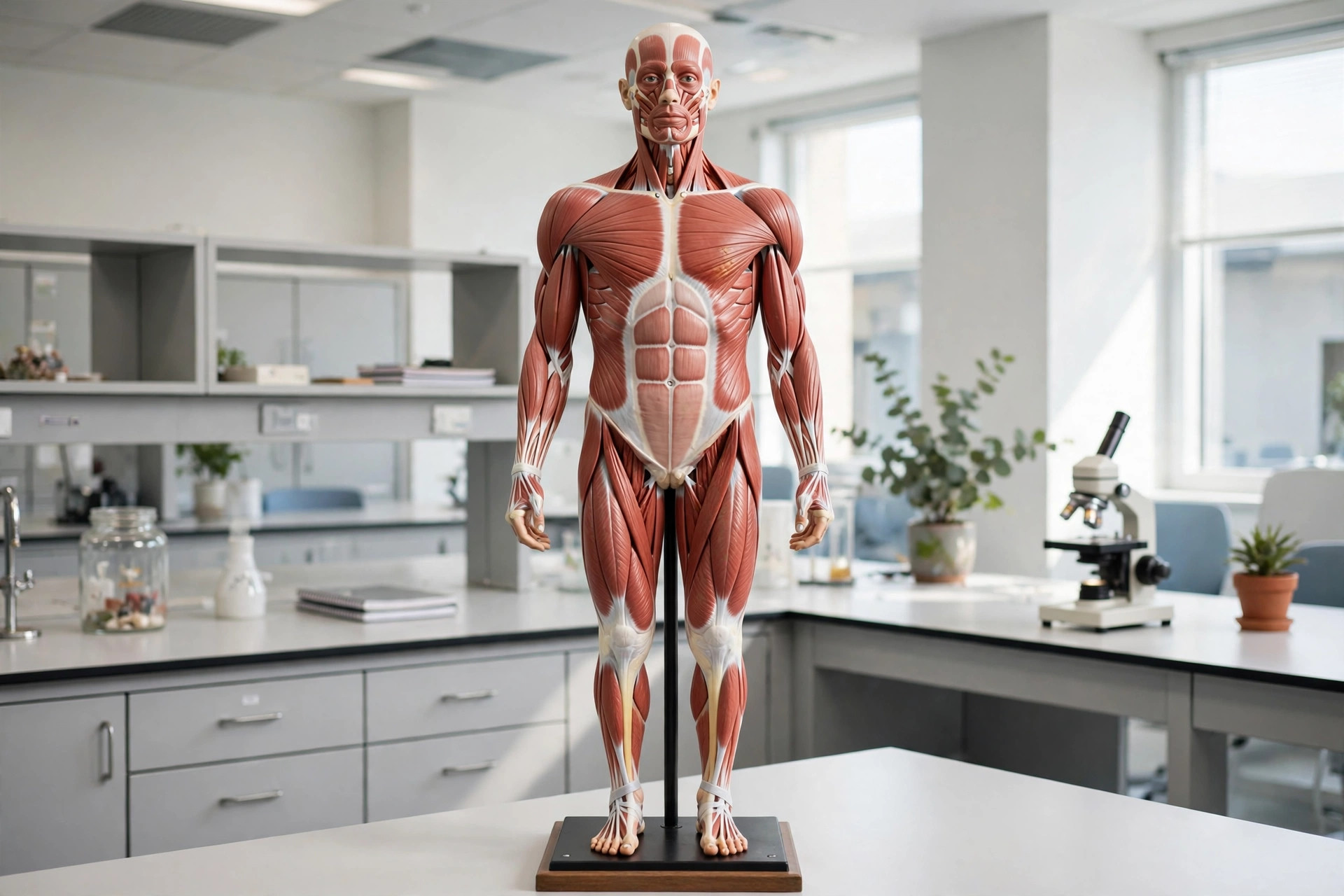
AI-generated anatomical illustration
The muscular system comprises over 600 skeletal muscles that move the skeleton, maintain posture, stabilise joints and generate heat. Muscles account for about 40% of body weight. They work in opposing groups across joints and are classified by action and architecture. Two other muscle types complete the picture: smooth muscle in the organs and vessels, and cardiac muscle in the heart — both beyond voluntary control. Explore the individual muscles in our Muscles A-Z section.
Key facts
- The largest muscle is the gluteus maximus; the smallest (stapedius, in the ear) is about 1 mm.
- Muscles generate about a quarter of the body's heat at rest and far more in exercise — shivering is involuntary heat production.
- Muscle tissue is metabolically active: it is the main site of glucose uptake after meals.
- Strength depends more on the nervous system's recruitment of fibres than on muscle size alone, especially in early training.
What can go wrong
Muscle problems include strains and tears from overload, cramps, inflammatory diseases (myositis), inherited dystrophies, wasting from disuse or illness (sarcopenia with age), and pain syndromes where the muscle becomes a pain generator. Weakness is assessed by pattern: problems at the nerve, the junction (myasthenia) or the muscle itself each leave different signatures.
Related procedures & tests
Related symptoms
Related muscles
Frequently asked questions
Why do muscles work in pairs?
Muscles can only pull, not push; so every movement needs an opposing muscle (or gravity) to reverse it — flexors bend a joint, extensors straighten it.
What is sarcopenia?
The age-related loss of muscle mass and strength, driven by inactivity, hormonal change and reduced protein synthesis; resistance exercise and adequate protein slow it substantially.
Educational information only. This atlas explains normal anatomy and describes conditions in general terms; it is not medical advice and does not replace assessment by a qualified clinician. If you have symptoms that worry you, seek medical care.