- Physical Examination
- Surgical Examination
- Ophthalmology
- Clinical Skills
- Orthopedics
- Surgery Videos
- Laparoscopy
- Pediatrics
- Funny Videos
- Cardiothoracic Surgery
- Nursing Videos
- Plastic Surgery
- Otorhinolaryngology
- Histology and Histopathology
- Neurosurgery
- Dermatology
- Pediatric Surgery
- Urology
- Dentistry
- Oncology and Cancers
- Anatomy Videos
- Health and Fitness
- Radiology
- Anaesthesia
- Physical Therapy
- Pharmacology
- Interventional Radiology
- Cardiology
- Endocrinology
- Gynecology
- Emergency Medicine
- Psychiatry and Psychology
- Childbirth Videos
- General Medical Videos
- Nephrology
- Physiology
- Diet and Food Health
- Diabetes Mellitus
- Neurology
- Women Health
- Osteoporosis
- Gastroenterology
- Pulmonology
- Hematology
- Rheumatology
- Toxicology
- Nuclear Medicine
- Infectious Diseases
- Vascular Disease
- Reproductive Health
- Burns and Wound Healing
- Kidney Zone Podcast
- Other
Nasal Bone
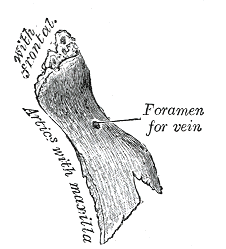
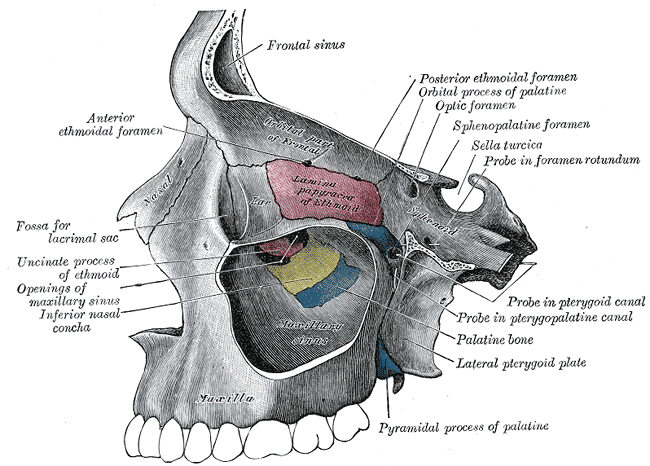
Gray's Anatomy (1918) plate, public domain
The nasal bones are two small, oblong plates that meet in the midline to form the bridge of the nose. They are the most commonly broken bones of the face — the nose's lower two-thirds are cartilage, not bone, so nasal fractures involve these small bones at the top of the nose.
Key facts
- The two nasal bones form only the bridge (upper third) of the nose.
- The rest of the external nose is cartilage, which is why it is flexible.
- They join the frontal bone above and the maxillae at the sides.
- Despite their small size they help define the face's profile.
- They sit directly over the upper nasal cavity.
What can go wrong
Nasal bone fractures are among the most common facial fractures, from sport, falls and blows. Signs include swelling, bruising around the eyes and a visibly shifted nose. A collection of blood under the septum's lining is the one complication checked for urgently, as it can damage the cartilage if not drained.
Related procedures & tests
Related symptoms
Related muscles
Frequently asked questions
Is a broken nose a broken nasal bone?
Usually, yes — the fracture is in one or both nasal bones at the bridge. The lower nose is cartilage, which can be bent or torn but does not fracture in the same way.
Does every broken nose need resetting?
No. If the nose is straight and breathing is normal, many fractures are left to heal. A visibly crooked nose is usually assessed after the swelling settles, when it can be straightened if needed.
Educational information only. This atlas explains normal anatomy and describes conditions in general terms; it is not medical advice and does not replace assessment by a qualified clinician. If you have symptoms that worry you, seek medical care.