- Physical Examination
- Surgical Examination
- Ophthalmology
- Clinical Skills
- Orthopedics
- Surgery Videos
- Laparoscopy
- Pediatrics
- Funny Videos
- Cardiothoracic Surgery
- Nursing Videos
- Plastic Surgery
- Otorhinolaryngology
- Histology and Histopathology
- Neurosurgery
- Dermatology
- Pediatric Surgery
- Urology
- Dentistry
- Oncology and Cancers
- Anatomy Videos
- Health and Fitness
- Radiology
- Anaesthesia
- Physical Therapy
- Pharmacology
- Interventional Radiology
- Cardiology
- Endocrinology
- Gynecology
- Emergency Medicine
- Psychiatry and Psychology
- Childbirth Videos
- General Medical Videos
- Nephrology
- Physiology
- Diet and Food Health
- Diabetes Mellitus
- Neurology
- Women Health
- Osteoporosis
- Gastroenterology
- Pulmonology
- Hematology
- Rheumatology
- Toxicology
- Nuclear Medicine
- Infectious Diseases
- Vascular Disease
- Reproductive Health
- Burns and Wound Healing
- Kidney Zone Podcast
- Other
Nasal Cavity
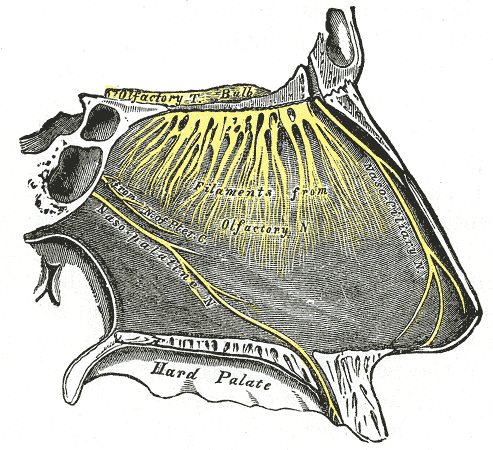
Gray's Anatomy (1918) plate, public domain
The nasal cavity is the large air-filled space behind the nose, stretching from the nostrils to the back of the throat. A wall of bone and cartilage, the septum, divides it into right and left passages. Three curved shelves of bone — the conchae or turbinates — project from each side wall, hugely increasing the surface area that warms and humidifies air. At the very top sits the olfactory region where smells are detected.
Key facts
- The turbinates create a surface area roughly the size of a large postage-stamp sheet folded into each side of the nose.
- The cavity is lined with mucus-producing tissue whose tiny hairs (cilia) sweep mucus towards the throat.
- The openings of the paranasal sinuses drain into this cavity, which is why sinus problems cause nasal symptoms.
- Air reaches body temperature and near-full humidity by the time it leaves the nasal cavity.
What can go wrong
Inflammation of the lining (rhinitis) is the commonest problem — from colds, allergies or irritants — causing blockage, discharge and sneezing. Swollen turbinates can contribute to snoring and mouth breathing. Nasal polyps, soft painless growths of the lining, can block the cavity and blunt the sense of smell. Long-standing blockage is assessed with a small camera (nasal endoscopy) and sometimes a CT scan.
Related procedures & tests
Related symptoms
Watch: related videos
Frequently asked questions
What do the turbinates do?
They are curved bony shelves covered in soft tissue that warm, moisten and filter incoming air, and they swell and shrink in a normal cycle through the day.
Why does one side of my nose feel more blocked when I lie down?
Blood flow shifts with position and the lower turbinate swells, so the dependent side often feels fuller — a normal effect called the nasal cycle.
Educational information only. This atlas explains normal anatomy and describes conditions in general terms; it is not medical advice and does not replace assessment by a qualified clinician. If you have symptoms that worry you, seek medical care.