- Physical Examination
- Surgical Examination
- Ophthalmology
- Clinical Skills
- Orthopedics
- Surgery Videos
- Laparoscopy
- Pediatrics
- Funny Videos
- Cardiothoracic Surgery
- Nursing Videos
- Plastic Surgery
- Otorhinolaryngology
- Histology and Histopathology
- Neurosurgery
- Dermatology
- Pediatric Surgery
- Urology
- Dentistry
- Oncology and Cancers
- Anatomy Videos
- Health and Fitness
- Radiology
- Anaesthesia
- Physical Therapy
- Pharmacology
- Interventional Radiology
- Cardiology
- Endocrinology
- Gynecology
- Emergency Medicine
- Psychiatry and Psychology
- Childbirth Videos
- General Medical Videos
- Nephrology
- Physiology
- Diet and Food Health
- Diabetes Mellitus
- Neurology
- Women Health
- Osteoporosis
- Gastroenterology
- Pulmonology
- Hematology
- Rheumatology
- Toxicology
- Nuclear Medicine
- Infectious Diseases
- Vascular Disease
- Reproductive Health
- Burns and Wound Healing
- Kidney Zone Podcast
- Other
Navicular
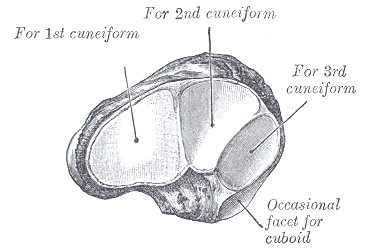
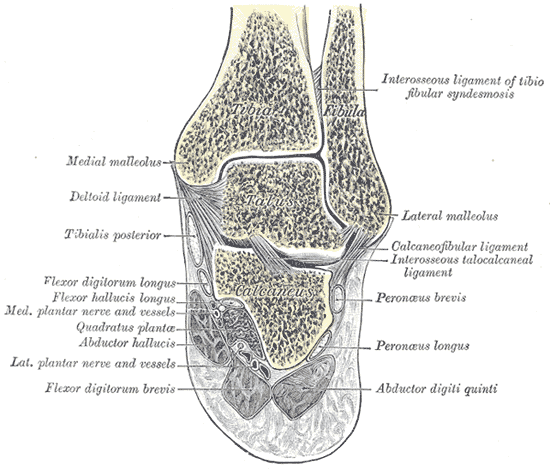
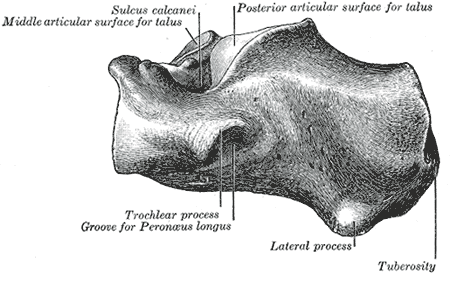
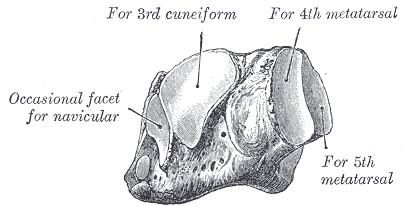
Gray's Anatomy (1918) plate, public domain
The navicular is the boat-shaped tarsal on the inner side of the midfoot, between the talus behind and the three cuneiforms in front. It is a keystone of the foot's medial arch, and its inner bump (tuberosity) anchors the tibialis posterior tendon — the main dynamic support of the arch. Some people have an extra (accessory) navicular bone here.
Key facts
- The navicular is the keystone of the medial (inner) arch.
- The tibialis posterior tendon attaches to its tuberosity.
- It articulates with the talus behind and the cuneiforms in front.
- An accessory navicular is a common normal variant, present from birth.
- It is a recognised site of stress fractures in athletes.
What can go wrong
Navicular stress fractures occur in runners and jumping athletes and are notorious for slow healing because the bone's central part has a modest blood supply. A prominent accessory navicular can become painful where shoes press or the tendon pulls. Failure of the tibialis posterior tendon lets the navicular sag and the arch flatten.
Related procedures & tests
Related symptoms
Related muscles
Frequently asked questions
What is an accessory navicular?
An extra small bone or cartilage island within the tibialis posterior tendon at the navicular — a common variant found in roughly one in ten people. Most never cause symptoms.
Why do navicular stress fractures heal slowly?
The middle of the bone lies in a watershed between blood supplies, so the repair process is sluggish; these fractures often need a period of strict non-weight-bearing.
Educational information only. This atlas explains normal anatomy and describes conditions in general terms; it is not medical advice and does not replace assessment by a qualified clinician. If you have symptoms that worry you, seek medical care.