- Physical Examination
- Surgical Examination
- Ophthalmology
- Clinical Skills
- Orthopedics
- Surgery Videos
- Laparoscopy
- Pediatrics
- Funny Videos
- Cardiothoracic Surgery
- Nursing Videos
- Plastic Surgery
- Otorhinolaryngology
- Histology and Histopathology
- Neurosurgery
- Dermatology
- Pediatric Surgery
- Urology
- Dentistry
- Oncology and Cancers
- Anatomy Videos
- Health and Fitness
- Radiology
- Anaesthesia
- Physical Therapy
- Pharmacology
- Interventional Radiology
- Cardiology
- Endocrinology
- Gynecology
- Emergency Medicine
- Psychiatry and Psychology
- Childbirth Videos
- General Medical Videos
- Nephrology
- Physiology
- Diet and Food Health
- Diabetes Mellitus
- Neurology
- Women Health
- Osteoporosis
- Gastroenterology
- Pulmonology
- Hematology
- Rheumatology
- Toxicology
- Nuclear Medicine
- Infectious Diseases
- Vascular Disease
- Reproductive Health
- Burns and Wound Healing
- Kidney Zone Podcast
- Other
Plantar Fascia
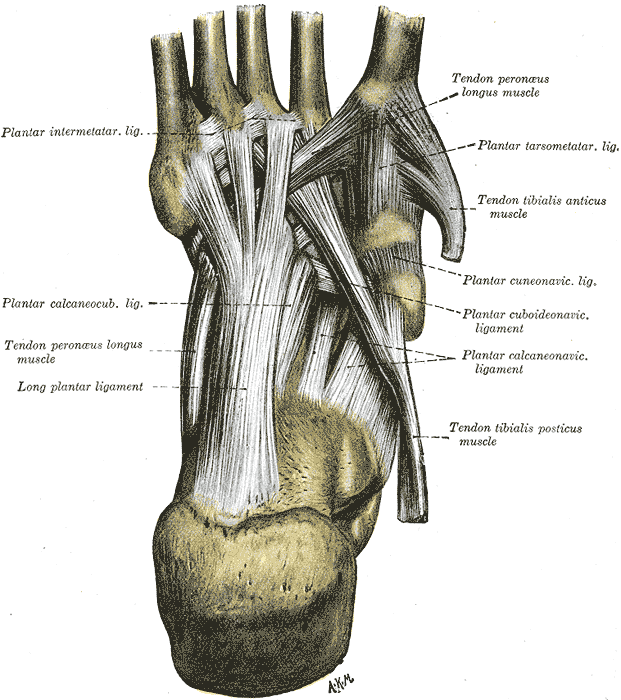
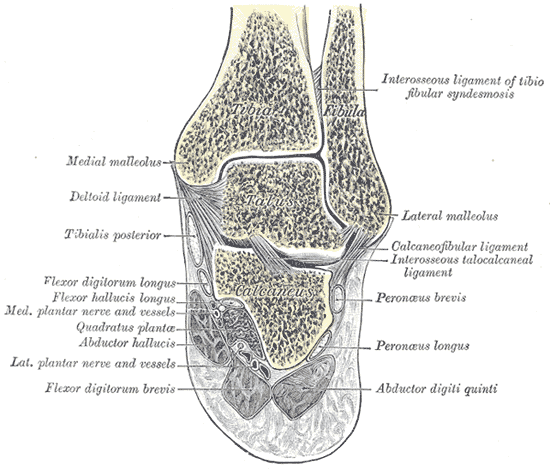
Gray's Anatomy (1918) plate, public domain
The plantar fascia is a thick band of fibrous tissue running along the sole from the heel bone (calcaneus) to the toes. It acts as the foot's bowstring: it supports the arch, stores elastic energy with each step and tightens as the toes bend during push-off (the windlass mechanism), stiffening the foot into a lever. Its deep surface also protects the sole's muscles, nerves and vessels.
Key facts
- Loading in walking can reach over body weight through the fascia with each step; in running, considerably more.
- The windlass mechanism — toes bending up winding the fascia around the metatarsal heads — is what re-forms the arch at push-off.
- It is continuous with the Achilles tendon's fibres at the heel in younger people.
- Its thickness (normally about 2-4 mm) increases measurably in plantar fasciitis.
What can go wrong
Plantar fasciitis — irritation and degeneration at its heel attachment — is the commonest cause of heel pain: sharp under the heel, worst with the first steps in the morning or after rest, and usually settling over months with load management and stretching. The fascia can rupture acutely in sport (a sudden pop in the arch). Persistent heel pain has other causes — stress fractures, nerve entrapment, inflammatory arthritis — so atypical cases are reassessed.
Related procedures & tests
Related symptoms
Related muscles
Frequently asked questions
Why is plantar fasciitis worst in the morning?
Overnight the fascia rests in a shortened position; the first steps suddenly stretch the irritated, stiffened tissue, causing sharp pain that eases as it warms up.
Is a heel spur the cause of the pain?
Usually not — heel spurs are common in pain-free feet; the pain comes from the fascia's attachment tissue, not the spur itself.
Educational information only. This atlas explains normal anatomy and describes conditions in general terms; it is not medical advice and does not replace assessment by a qualified clinician. If you have symptoms that worry you, seek medical care.