- Physical Examination
- Surgical Examination
- Ophthalmology
- Clinical Skills
- Orthopedics
- Surgery Videos
- Laparoscopy
- Pediatrics
- Funny Videos
- Cardiothoracic Surgery
- Nursing Videos
- Plastic Surgery
- Otorhinolaryngology
- Histology and Histopathology
- Neurosurgery
- Dermatology
- Pediatric Surgery
- Urology
- Dentistry
- Oncology and Cancers
- Anatomy Videos
- Health and Fitness
- Radiology
- Anaesthesia
- Physical Therapy
- Pharmacology
- Interventional Radiology
- Cardiology
- Endocrinology
- Gynecology
- Emergency Medicine
- Psychiatry and Psychology
- Childbirth Videos
- General Medical Videos
- Nephrology
- Physiology
- Diet and Food Health
- Diabetes Mellitus
- Neurology
- Women Health
- Osteoporosis
- Gastroenterology
- Pulmonology
- Hematology
- Rheumatology
- Toxicology
- Nuclear Medicine
- Infectious Diseases
- Vascular Disease
- Reproductive Health
- Burns and Wound Healing
- Kidney Zone Podcast
- Other
Pons
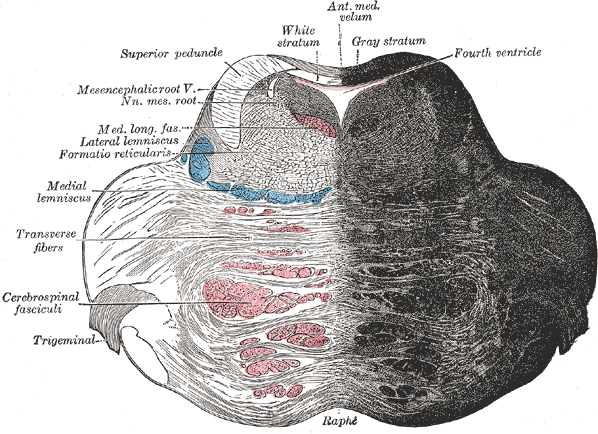
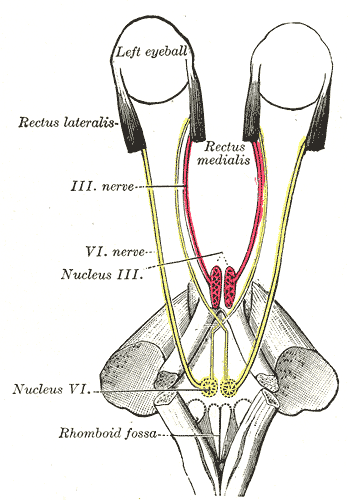
Gray's Anatomy (1918) plate, public domain
The pons is the rounded middle segment of the brainstem, bridging the midbrain above and the medulla below — its name means 'bridge'. It relays signals between the cerebrum and the cerebellum through massive fibre bundles, houses the nuclei of cranial nerves V-VIII (face sensation and movement, eye movement, hearing and balance), and contains networks that regulate breathing rhythm, sleep and arousal.
Key facts
- Its bulge is formed by fibres sweeping across to the cerebellum — among the largest fibre tracts in the brain.
- The pons helps generate REM sleep, the dreaming stage.
- Its breathing centres fine-tune the medulla's basic rhythm, smoothing transitions between breaths.
- Taste and facial sensation both pass through pontine relays.
What can go wrong
Pontine strokes — from small-vessel disease or basilar artery problems — can cause combinations of crossed signs: facial weakness on one side with limb weakness on the other, eye movement problems, slurred speech and imbalance. A large pontine haemorrhage or stroke can impair consciousness because the arousal networks pass through here. Rapid correction of very low sodium can injure the pons (osmotic demyelination).
Related conditions
Related procedures & tests
Related symptoms
Frequently asked questions
Why is the pons called a bridge?
Because its transverse fibres literally bridge the two cerebellar hemispheres and relay the cerebral cortex's instructions to them.
What is 'locked-in' syndrome?
A rare result of severe pontine damage: consciousness and eye movements are preserved but nearly all voluntary movement is lost, because the motor pathways are interrupted in the pons.
Educational information only. This atlas explains normal anatomy and describes conditions in general terms; it is not medical advice and does not replace assessment by a qualified clinician. If you have symptoms that worry you, seek medical care.