- Physical Examination
- Surgical Examination
- Ophthalmology
- Clinical Skills
- Orthopedics
- Surgery Videos
- Laparoscopy
- Pediatrics
- Funny Videos
- Cardiothoracic Surgery
- Nursing Videos
- Plastic Surgery
- Otorhinolaryngology
- Histology and Histopathology
- Neurosurgery
- Dermatology
- Pediatric Surgery
- Urology
- Dentistry
- Oncology and Cancers
- Anatomy Videos
- Health and Fitness
- Radiology
- Anaesthesia
- Physical Therapy
- Pharmacology
- Interventional Radiology
- Cardiology
- Endocrinology
- Gynecology
- Emergency Medicine
- Psychiatry and Psychology
- Childbirth Videos
- General Medical Videos
- Nephrology
- Physiology
- Diet and Food Health
- Diabetes Mellitus
- Neurology
- Women Health
- Osteoporosis
- Gastroenterology
- Pulmonology
- Hematology
- Rheumatology
- Toxicology
- Nuclear Medicine
- Infectious Diseases
- Vascular Disease
- Reproductive Health
- Burns and Wound Healing
- Kidney Zone Podcast
- Other
Sesamoid Bones
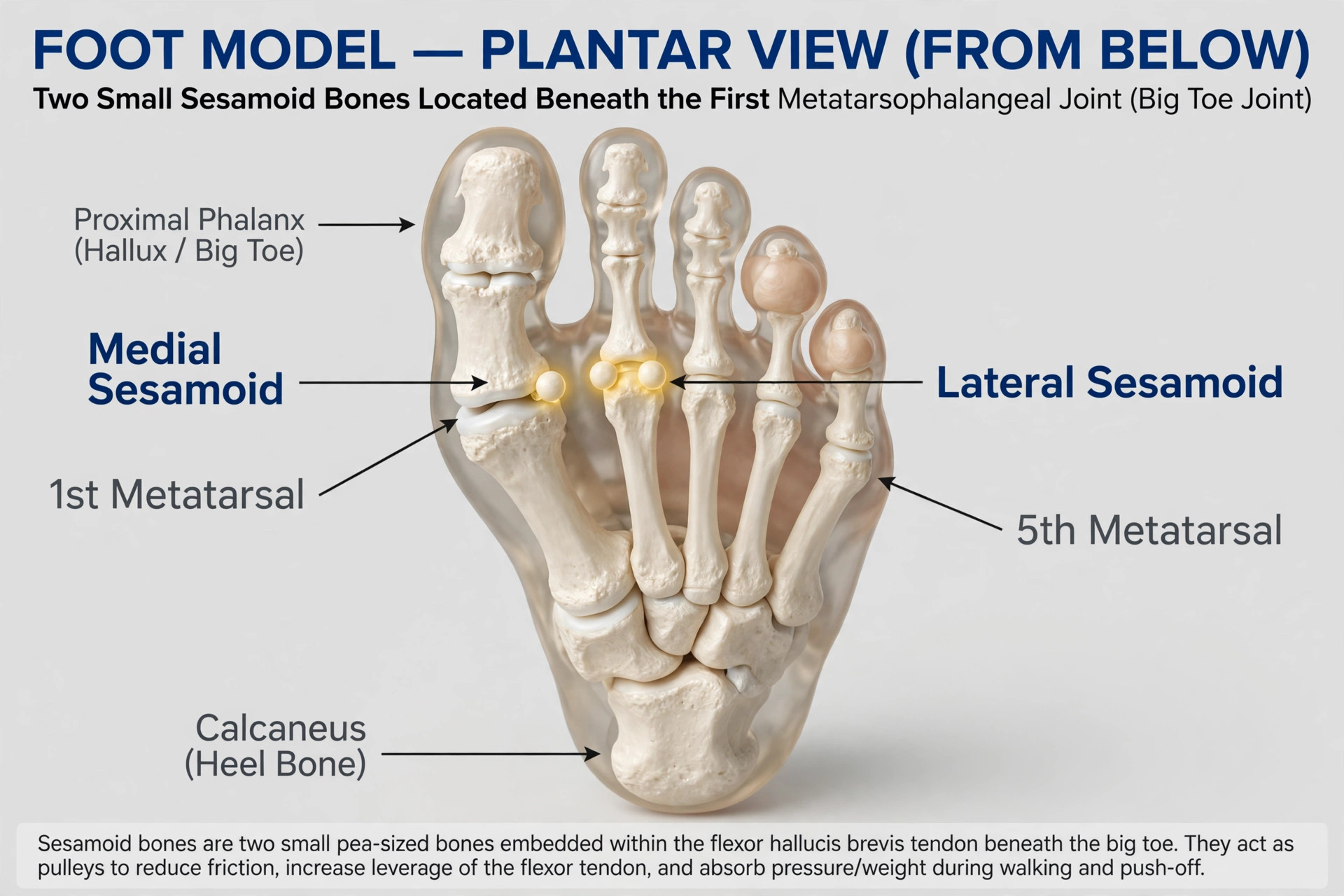
AI-generated anatomical illustration
Sesamoids are small bones embedded inside tendons where they pass joints. The most important are the two pea-sized sesamoids under the big toe's metatarsal head, which act as bearings for push-off; others occur under the thumb and occasionally elsewhere. The kneecap is the body's largest sesamoid. A bipartite (two-piece) sesamoid is a common normal variant.
Key facts
- Sesamoids develop inside tendons, not as part of the main skeleton.
- The two under the big toe are called the tibial and fibular sesamoids.
- They protect the flexor tendon and improve its leverage.
- They bear weight directly — they have their own small joint surfaces.
- Extra sesamoids are found in many people and are usually incidental.
What can go wrong
Inflammation of the big-toe sesamoids (sesamoiditis) causes pain under the ball of the big toe in runners and dancers, and they can fracture under load or degenerate. Because a two-piece sesamoid looks like a fracture on X-ray, the smooth edges of the variant are the distinguishing clue.
Related procedures & tests
Related symptoms
Related muscles
Frequently asked questions
Why do dancers injure their sesamoids?
Working on demi-pointe loads the ball of the big toe with several times body weight through two pea-sized bones — exactly the overuse pattern that inflames or stress-fractures them.
Is a two-piece sesamoid a fracture?
Usually not: a bipartite sesamoid is a developmental variant with smooth, rounded edges and often present on both feet. A fracture has sharp, irregular edges and a matching history of injury.
Educational information only. This atlas explains normal anatomy and describes conditions in general terms; it is not medical advice and does not replace assessment by a qualified clinician. If you have symptoms that worry you, seek medical care.