- Physical Examination
- Surgical Examination
- Ophthalmology
- Clinical Skills
- Orthopedics
- Surgery Videos
- Laparoscopy
- Pediatrics
- Funny Videos
- Cardiothoracic Surgery
- Nursing Videos
- Plastic Surgery
- Otorhinolaryngology
- Histology and Histopathology
- Neurosurgery
- Dermatology
- Pediatric Surgery
- Urology
- Dentistry
- Oncology and Cancers
- Anatomy Videos
- Health and Fitness
- Radiology
- Anaesthesia
- Physical Therapy
- Pharmacology
- Interventional Radiology
- Cardiology
- Endocrinology
- Gynecology
- Emergency Medicine
- Psychiatry and Psychology
- Childbirth Videos
- General Medical Videos
- Nephrology
- Physiology
- Diet and Food Health
- Diabetes Mellitus
- Neurology
- Women Health
- Osteoporosis
- Gastroenterology
- Pulmonology
- Hematology
- Rheumatology
- Toxicology
- Nuclear Medicine
- Infectious Diseases
- Vascular Disease
- Reproductive Health
- Burns and Wound Healing
- Kidney Zone Podcast
- Other
Seventh Cervical Vertebra
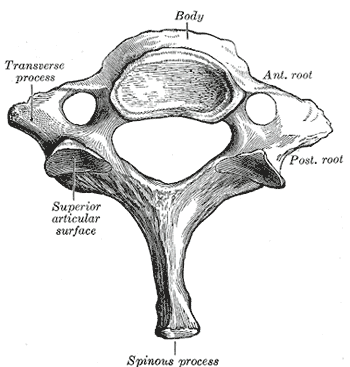
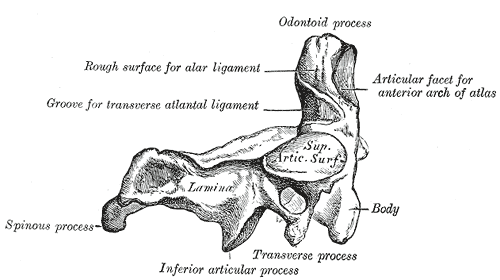
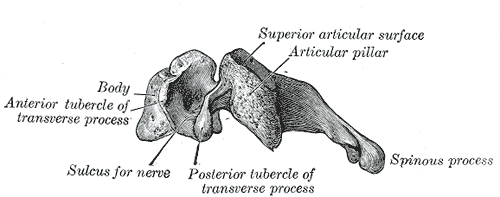
Gray's Anatomy (1918) plate, public domain
The seventh cervical vertebra (C7) is called the vertebra prominens because its long, non-split spinous process forms the visible bump at the base of the neck. It is a transition bone — mostly cervical, but its enlarged process and occasional rib facets look ahead to the thoracic vertebrae below.
Key facts
- Its long spinous process is the landmark bump at the base of the neck.
- Clinicians count the spine's levels starting from this bump.
- Unlike other cervical vertebrae, its spinous process is not split in two.
- It attaches the ligamentum nuchae, the elastic ligament of the neck.
- In some people it carries a small extra rib (a cervical rib).
What can go wrong
The C7 bump itself is normal anatomy, though fat or soft tissue over it (sometimes called a dowager's hump when the upper back curves with age) makes it more prominent. A cervical rib attached here can occasionally press on nerves or vessels to the arm. Pain felt at the C7 level is very common with neck strain and posture-related aches.
Related procedures & tests
Related symptoms
Related muscles
Frequently asked questions
How do I find my C7?
Drop your chin to your chest and run a finger down the back of your neck: the most prominent bump at the bottom of the neck is the spinous process of C7.
Is the bump at the base of my neck a problem?
Almost always not — it is simply the vertebra prominens showing through, especially when the neck bends. It only needs checking if it appeared suddenly with pain, or keeps growing.
Educational information only. This atlas explains normal anatomy and describes conditions in general terms; it is not medical advice and does not replace assessment by a qualified clinician. If you have symptoms that worry you, seek medical care.