- Physical Examination
- Surgical Examination
- Ophthalmology
- Clinical Skills
- Orthopedics
- Surgery Videos
- Laparoscopy
- Pediatrics
- Funny Videos
- Cardiothoracic Surgery
- Nursing Videos
- Plastic Surgery
- Otorhinolaryngology
- Histology and Histopathology
- Neurosurgery
- Dermatology
- Pediatric Surgery
- Urology
- Dentistry
- Oncology and Cancers
- Anatomy Videos
- Health and Fitness
- Radiology
- Anaesthesia
- Physical Therapy
- Pharmacology
- Interventional Radiology
- Cardiology
- Endocrinology
- Gynecology
- Emergency Medicine
- Psychiatry and Psychology
- Childbirth Videos
- General Medical Videos
- Nephrology
- Physiology
- Diet and Food Health
- Diabetes Mellitus
- Neurology
- Women Health
- Osteoporosis
- Gastroenterology
- Pulmonology
- Hematology
- Rheumatology
- Toxicology
- Nuclear Medicine
- Infectious Diseases
- Vascular Disease
- Reproductive Health
- Burns and Wound Healing
- Kidney Zone Podcast
- Other
Stapes
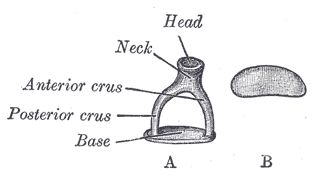
Gray's Anatomy (1918) plate, public domain
The stapes — Latin for 'stirrup', which it resembles — is the smallest bone in the human body, about 3 millimetres tall. Its footplate sits in the oval window of the inner ear, rocking to pass sound vibrations from the ossicle chain into the fluid of the cochlea.
Key facts
- The stapes is the smallest bone in the body.
- Its footplate seals the oval window of the inner ear.
- The stapedius, the body's smallest skeletal muscle, attaches to it and protects against loud sound.
- It is the last link in the ossicle chain before the inner ear.
- It develops before birth and reaches adult size early.
What can go wrong
The stapes is the bone affected in otosclerosis, where abnormal bone growth gradually fixes the footplate and causes progressive hearing loss, often starting in young adults. It can sometimes be treated with an operation (stapedectomy) that replaces the fixed bone with a tiny piston prosthesis.
Related procedures & tests
Related symptoms
Frequently asked questions
What is the smallest bone in the human body?
The stapes, in the middle ear — about 3 millimetres tall and shaped like a stirrup. The smallest muscle, the stapedius, attaches to it.
What is otosclerosis?
A condition in which extra bone grows around the stapes footplate and slowly stops it moving, causing a gradually worsening conductive hearing loss.
Educational information only. This atlas explains normal anatomy and describes conditions in general terms; it is not medical advice and does not replace assessment by a qualified clinician. If you have symptoms that worry you, seek medical care.