- Physical Examination
- Surgical Examination
- Ophthalmology
- Clinical Skills
- Orthopedics
- Surgery Videos
- Laparoscopy
- Pediatrics
- Funny Videos
- Cardiothoracic Surgery
- Nursing Videos
- Plastic Surgery
- Otorhinolaryngology
- Histology and Histopathology
- Neurosurgery
- Dermatology
- Pediatric Surgery
- Urology
- Dentistry
- Oncology and Cancers
- Anatomy Videos
- Health and Fitness
- Radiology
- Anaesthesia
- Physical Therapy
- Pharmacology
- Interventional Radiology
- Cardiology
- Endocrinology
- Gynecology
- Emergency Medicine
- Psychiatry and Psychology
- Childbirth Videos
- General Medical Videos
- Nephrology
- Physiology
- Diet and Food Health
- Diabetes Mellitus
- Neurology
- Women Health
- Osteoporosis
- Gastroenterology
- Pulmonology
- Hematology
- Rheumatology
- Toxicology
- Nuclear Medicine
- Infectious Diseases
- Vascular Disease
- Reproductive Health
- Burns and Wound Healing
- Kidney Zone Podcast
- Other
Third Metatarsal
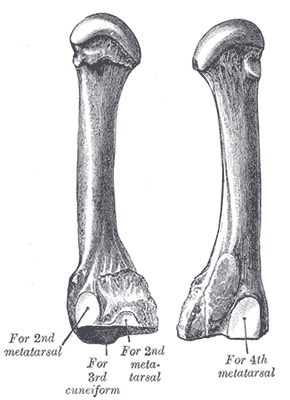
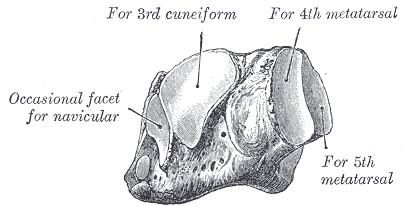
Gray's Anatomy (1918) plate, public domain
The third metatarsal is the middle toe's forefoot bone, sharing with the second the role of the forefoot's fixed central pillar. Its head is a common site of overload pain (metatarsalgia) and, like its neighbours, it can develop stress fractures under repetitive load, especially when footwear or training changes suddenly.
Key facts
- It forms the central ray of the forefoot.
- It is firmly based on the lateral cuneiform.
- Its head shares push-off load with the second and fourth.
- Stress fractures here are classic overuse injuries.
- The interosseous muscles attach along its shaft.
What can go wrong
Third metatarsal problems are usually overuse: stress reactions and fractures in runners, or overload pain under the head when the arch's mechanics change. A Morton's neuroma — an irritated nerve between the third and fourth metatarsal heads — causes a different, burning forefoot pain with tingling into the toes.
Related procedures & tests
Related symptoms
Related muscles
Frequently asked questions
What is metatarsalgia?
A general term for pain under the ball of the foot at the metatarsal heads. It describes a symptom rather than a diagnosis — causes range from overload and arthritis to nerve irritation.
How are metatarsal stress fractures found?
Early X-rays are often normal; the history of activity-related forefoot pain is the main clue, and MRI or bone scans show the injury if confirmation is needed.
Educational information only. This atlas explains normal anatomy and describes conditions in general terms; it is not medical advice and does not replace assessment by a qualified clinician. If you have symptoms that worry you, seek medical care.