- Physical Examination
- Surgical Examination
- Ophthalmology
- Clinical Skills
- Orthopedics
- Surgery Videos
- Laparoscopy
- Pediatrics
- Funny Videos
- Cardiothoracic Surgery
- Nursing Videos
- Plastic Surgery
- Otorhinolaryngology
- Histology and Histopathology
- Neurosurgery
- Dermatology
- Pediatric Surgery
- Urology
- Dentistry
- Oncology and Cancers
- Anatomy Videos
- Health and Fitness
- Radiology
- Anaesthesia
- Physical Therapy
- Pharmacology
- Interventional Radiology
- Cardiology
- Endocrinology
- Gynecology
- Emergency Medicine
- Psychiatry and Psychology
- Childbirth Videos
- General Medical Videos
- Nephrology
- Physiology
- Diet and Food Health
- Diabetes Mellitus
- Neurology
- Women Health
- Osteoporosis
- Gastroenterology
- Pulmonology
- Hematology
- Rheumatology
- Toxicology
- Nuclear Medicine
- Infectious Diseases
- Vascular Disease
- Reproductive Health
- Burns and Wound Healing
- Kidney Zone Podcast
- Other
Ulna
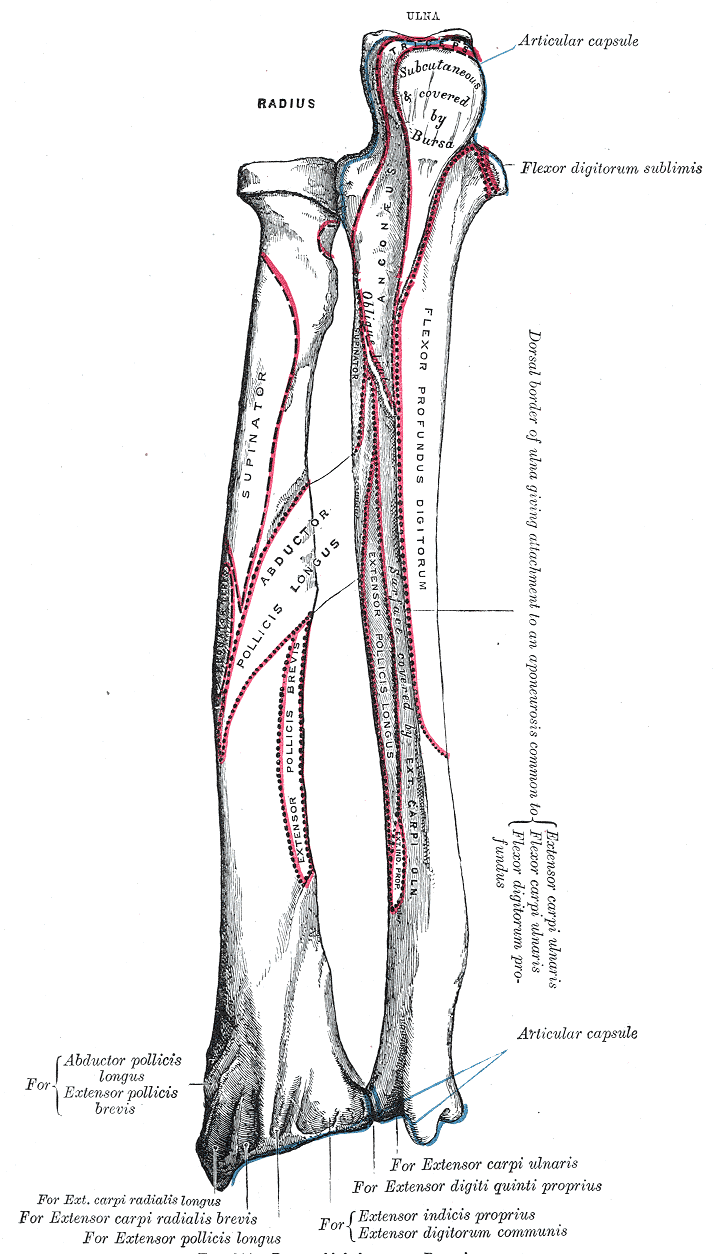
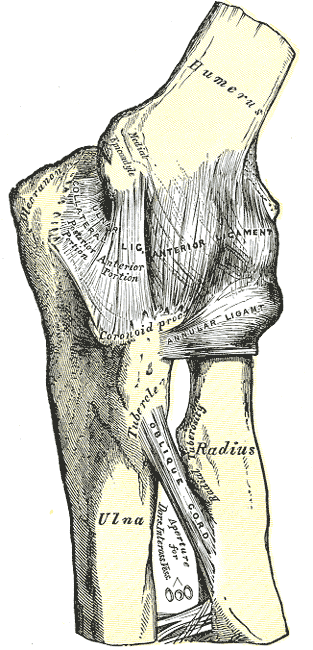
Gray's Anatomy (1918) plate, public domain
The ulna is the forearm bone on the little-finger side. At the elbow it is large: its C-shaped notch grips the humerus to form the elbow hinge, and its backward point — the olecranon — is the bony tip of the elbow that the triceps pulls on to straighten the arm. At the wrist it tapers to a small head, playing only a minor part in the wrist joint.
Key facts
- The ulna forms the main hinge of the elbow with the humerus.
- The olecranon is the point of the elbow and the triceps' lever.
- It is the stable post around which the radius rotates.
- It is easy to feel along its whole back edge, from elbow to wrist.
- The ulnar nerve passes behind the elbow in a groove beside it.
What can go wrong
The olecranon can fracture from a direct blow on the elbow, or be pulled apart by the triceps. The bursa over its tip can swell dramatically after prolonged leaning or a knock ('student's elbow'). Ulna shaft fractures classically occur when the forearm is raised to ward off a blow ('nightstick fracture').
Related procedures & tests
Related symptoms
Related muscles
Watch: related videos
Frequently asked questions
What is the point of the elbow called?
The olecranon — the upper end of the ulna. It locks into a hollow on the humerus when the arm is straight, which is what stops the elbow bending backwards.
Why does the ulna matter less at the wrist?
At the wrist the load passes mainly through the radius to the hand; a pad of cartilage sits between the small ulna head and the wrist bones, so the ulna's role there is mostly stability.
Educational information only. This atlas explains normal anatomy and describes conditions in general terms; it is not medical advice and does not replace assessment by a qualified clinician. If you have symptoms that worry you, seek medical care.