- Physical Examination
- Surgical Examination
- Ophthalmology
- Clinical Skills
- Orthopedics
- Surgery Videos
- Laparoscopy
- Pediatrics
- Funny Videos
- Cardiothoracic Surgery
- Nursing Videos
- Plastic Surgery
- Otorhinolaryngology
- Histology and Histopathology
- Neurosurgery
- Dermatology
- Pediatric Surgery
- Urology
- Dentistry
- Oncology and Cancers
- Anatomy Videos
- Health and Fitness
- Radiology
- Anaesthesia
- Physical Therapy
- Pharmacology
- Interventional Radiology
- Cardiology
- Endocrinology
- Gynecology
- Emergency Medicine
- Psychiatry and Psychology
- Childbirth Videos
- General Medical Videos
- Nephrology
- Physiology
- Diet and Food Health
- Diabetes Mellitus
- Neurology
- Women Health
- Osteoporosis
- Gastroenterology
- Pulmonology
- Hematology
- Rheumatology
- Toxicology
- Nuclear Medicine
- Infectious Diseases
- Vascular Disease
- Reproductive Health
- Burns and Wound Healing
- Kidney Zone Podcast
- Other
Ulnar Nerve
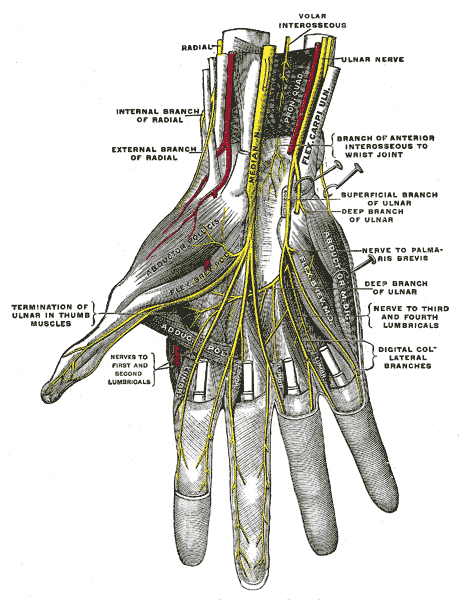
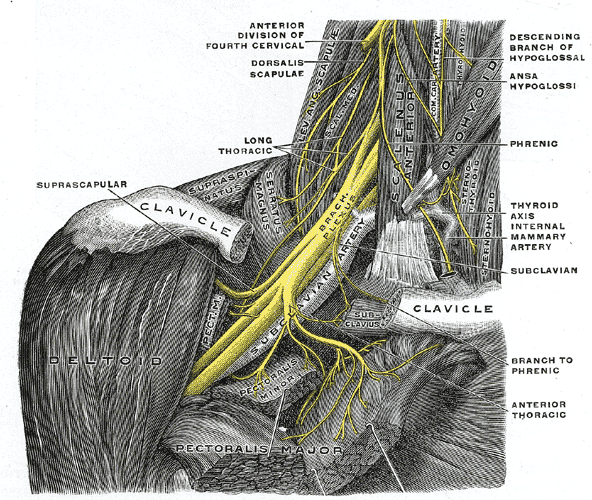
Gray's Anatomy (1918) plate, public domain
The ulnar nerve runs from the brachial plexus down the inner arm, passing behind the inner elbow bump (medial epicondyle) — where it lies so superficially that a knock produces the 'funny bone' electric shock — then down the forearm into the hand. It supplies most of the small muscles of the hand (fine finger movements) and sensation to the little finger and half of the ring finger.
Key facts
- It is the largest unprotected nerve in the body at the elbow, covered only by skin and fascia.
- Most intrinsic hand muscles are ulnar — it is the nerve of dexterity, powering finger spread and pinch.
- It enters the hand through its own small canal (Guyon's canal) beside the wrist bones.
- Chronic elbow leaning can compress it; cyclists can compress it at the handlebar (Guyon's canal).
What can go wrong
Compression at the elbow (cubital tunnel syndrome) causes tingling in the little and ring fingers, worse with elbow bending, and can progress to hand clumsiness and wasting of the small muscles — sometimes with a claw-like posture of the ring and little fingers. At the wrist it can be compressed in Guyon's canal. Fractures and dislocations around the elbow also threaten it.
Related procedures & tests
Related symptoms
Related muscles
Frequently asked questions
Why is it called the funny bone if it is a nerve?
The tingling shock on knocking the elbow is the ulnar nerve being struck where it crosses the humerus bone — the name is a pun on the humerus, and the sensation is anything but funny.
What is a claw hand?
The posture from severe ulnar nerve loss: the ring and little fingers curl because their straightening and spreading muscles (the interossei and lumbricals) are paralysed while the long flexors still pull.
Educational information only. This atlas explains normal anatomy and describes conditions in general terms; it is not medical advice and does not replace assessment by a qualified clinician. If you have symptoms that worry you, seek medical care.