- Physical Examination
- Surgical Examination
- Ophthalmology
- Clinical Skills
- Orthopedics
- Surgery Videos
- Laparoscopy
- Pediatrics
- Funny Videos
- Cardiothoracic Surgery
- Nursing Videos
- Plastic Surgery
- Otorhinolaryngology
- Histology and Histopathology
- Neurosurgery
- Dermatology
- Pediatric Surgery
- Urology
- Dentistry
- Oncology and Cancers
- Anatomy Videos
- Health and Fitness
- Radiology
- Anaesthesia
- Physical Therapy
- Pharmacology
- Interventional Radiology
- Cardiology
- Endocrinology
- Gynecology
- Emergency Medicine
- Psychiatry and Psychology
- Childbirth Videos
- General Medical Videos
- Nephrology
- Physiology
- Diet and Food Health
- Diabetes Mellitus
- Neurology
- Women Health
- Osteoporosis
- Gastroenterology
- Pulmonology
- Hematology
- Rheumatology
- Toxicology
- Nuclear Medicine
- Infectious Diseases
- Vascular Disease
- Reproductive Health
- Burns and Wound Healing
- Kidney Zone Podcast
- Other
Vocal Cords
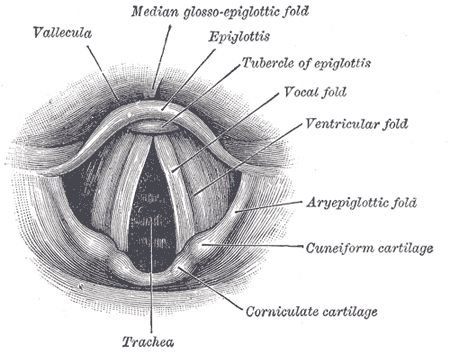
Gray's Anatomy (1918) plate, public domain
The vocal cords (vocal folds) are two pale, pearly bands stretched across the larynx. Muscles swing them apart to breathe and bring them together so that exhaled air sets them vibrating — the vibration is the raw sound of the voice, shaped into speech by the throat, mouth and tongue. A thin layer of mucus keeps their surface supple so the vibration stays smooth.
Key facts
- The cords vibrate hundreds of times per second in speech — faster for high notes, slower for low ones.
- Only the front two-thirds of each fold vibrates freely; the back part is anchored to cartilage that rotates to open and close them.
- One nerve on each side (the recurrent laryngeal nerve) drives most cord movement; the left one loops down into the chest and back.
- The cords also seal the airway for coughing, straining and heavy lifting.
What can go wrong
Hoarseness is the hallmark of cord problems: short-term inflammation from infections or shouting, and longer-term causes such as reflux, inhaled irritants, benign growths (nodules, polyps) or weakness of one cord after nerve injury — for example following neck or chest surgery. A cord that does not move well can also cause a weak cough and choking on liquids.
Related conditions
Related procedures & tests
Related symptoms
Watch: related videos
Frequently asked questions
Why do voices sound rough in the morning?
Fluid collects in the cord tissues overnight and mucus thickens; after waking, gentle use and hydration shift it and the voice usually clears.
Can one vocal cord stop working?
Yes — if its nerve is stretched, compressed or damaged, that cord may sit off-centre, giving a breathy, weak voice that clinicians assess with a camera examination.
Educational information only. This atlas explains normal anatomy and describes conditions in general terms; it is not medical advice and does not replace assessment by a qualified clinician. If you have symptoms that worry you, seek medical care.