- Physical Examination
- Surgical Examination
- Ophthalmology
- Clinical Skills
- Orthopedics
- Surgery Videos
- Laparoscopy
- Pediatrics
- Funny Videos
- Cardiothoracic Surgery
- Nursing Videos
- Plastic Surgery
- Otorhinolaryngology
- Histology and Histopathology
- Neurosurgery
- Dermatology
- Pediatric Surgery
- Urology
- Dentistry
- Oncology and Cancers
- Anatomy Videos
- Health and Fitness
- Radiology
- Anaesthesia
- Physical Therapy
- Pharmacology
- Interventional Radiology
- Cardiology
- Endocrinology
- Gynecology
- Emergency Medicine
- Psychiatry and Psychology
- Childbirth Videos
- General Medical Videos
- Nephrology
- Physiology
- Diet and Food Health
- Diabetes Mellitus
- Neurology
- Women Health
- Osteoporosis
- Gastroenterology
- Pulmonology
- Hematology
- Rheumatology
- Toxicology
- Nuclear Medicine
- Infectious Diseases
- Vascular Disease
- Reproductive Health
- Burns and Wound Healing
- Kidney Zone Podcast
- Other
Vulva
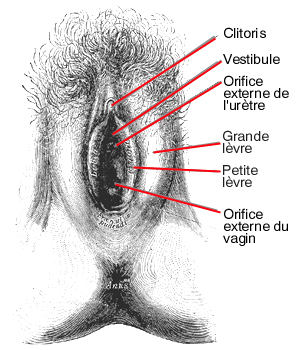
Gray's Anatomy (1918) plate, public domain
The vulva is the external female genital region: the mons pubis, the outer and inner labia, the clitoris, and the openings of the urethra and vagina, together with the Bartholin's glands that lubricate the vaginal entrance. Its skin is sensitive and hormone-responsive, and its anatomy varies widely and normally between women. The clitoris is a highly innervated erectile organ whose visible part is only a small fraction of its full structure.
Key facts
- The labia protect the urethral and vaginal openings and are rich in oil and sweat glands.
- Bartholin's glands, pea-sized and sitting at the vaginal entrance, can form cysts if their ducts block.
- The clitoris has internal parts (crura and bulbs) extending several centimetres within the pelvis.
- Vulval skin is thinner and more permeable than most body skin, so it reacts strongly to irritants.
What can go wrong
Vulval problems include skin conditions such as lichen sclerosus (itchy, pale, thinning skin), infections, Bartholin's cysts and abscesses, and persistent itching or pain (vulvodynia). Lumps, ulcers, skin changes or itch that do not settle should be examined, since pre-cancerous changes and vulval cancer, though uncommon, occur here. Assessment is by inspection, with biopsy of any suspicious area.
Related conditions
Related procedures & tests
Related symptoms
Frequently asked questions
What is lichen sclerosus?
A chronic inflammatory skin condition of the vulva causing itching and pale, fragile skin; it is managed long-term and monitored because it slightly raises the risk of vulval skin cancer.
What causes a Bartholin's cyst?
Blockage of the duct of a Bartholin's gland traps its fluid, forming a swelling at the vaginal entrance; if it becomes infected it turns into a painful abscess.
Educational information only. This atlas explains normal anatomy and describes conditions in general terms; it is not medical advice and does not replace assessment by a qualified clinician. If you have symptoms that worry you, seek medical care.