- Physical Examination
- Surgical Examination
- Ophthalmology
- Clinical Skills
- Orthopedics
- Surgery Videos
- Laparoscopy
- Pediatrics
- Funny Videos
- Cardiothoracic Surgery
- Nursing Videos
- Plastic Surgery
- Otorhinolaryngology
- Histology and Histopathology
- Neurosurgery
- Dermatology
- Pediatric Surgery
- Urology
- Dentistry
- Oncology and Cancers
- Anatomy Videos
- Health and Fitness
- Radiology
- Anaesthesia
- Physical Therapy
- Pharmacology
- Interventional Radiology
- Cardiology
- Endocrinology
- Gynecology
- Emergency Medicine
- Psychiatry and Psychology
- Childbirth Videos
- General Medical Videos
- Nephrology
- Physiology
- Diet and Food Health
- Diabetes Mellitus
- Neurology
- Women Health
- Osteoporosis
- Gastroenterology
- Pulmonology
- Hematology
- Rheumatology
- Toxicology
- Nuclear Medicine
- Infectious Diseases
- Vascular Disease
- Reproductive Health
- Burns and Wound Healing
- Kidney Zone Podcast
- Other
Wrist Joint
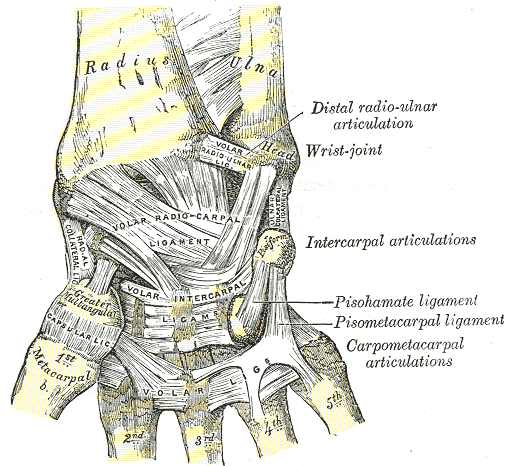
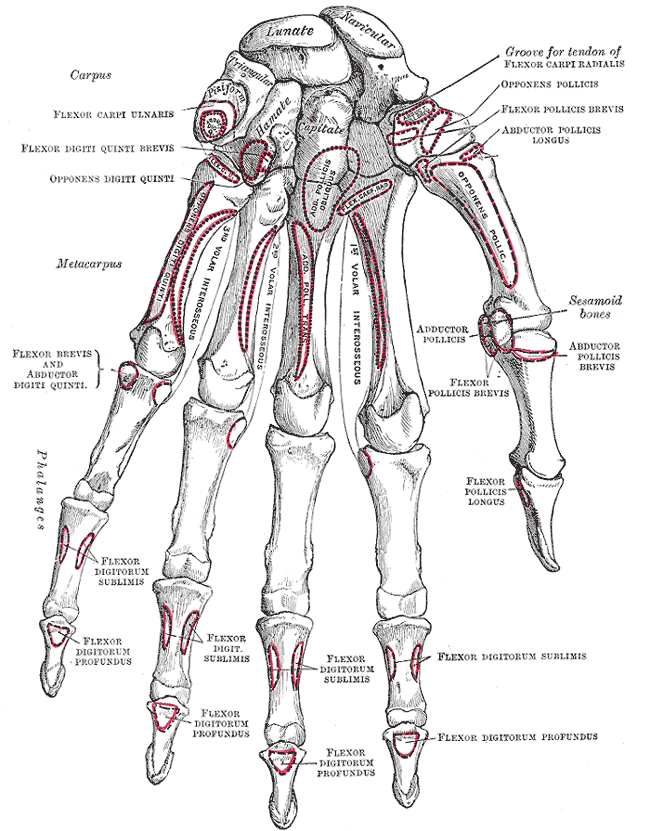
Gray's Anatomy (1918) plate, public domain
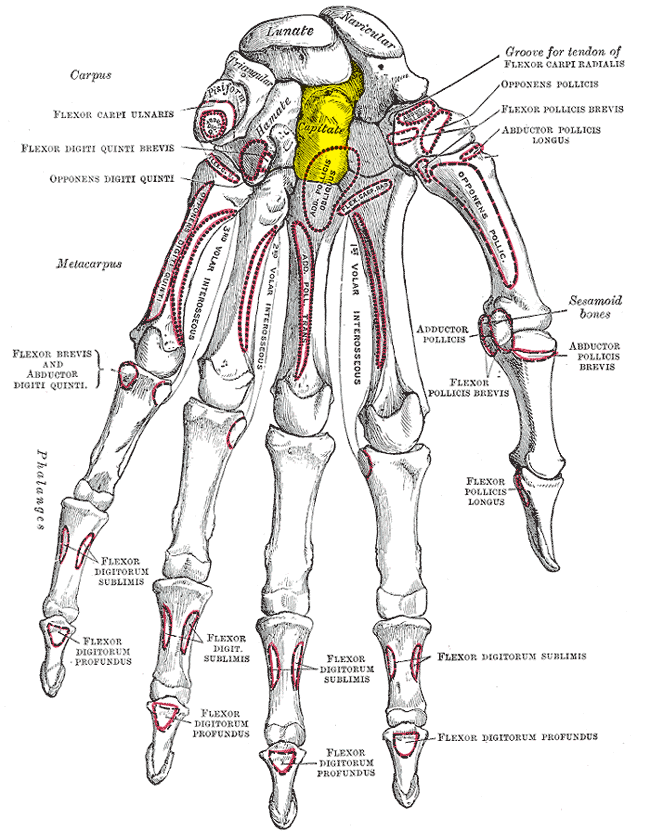
The wrist (radiocarpal joint) joins the forearm's radius to the first row of carpal bones (scaphoid, lunate, triquetrum), with a cartilage disc completing the surface on the ulna side. It bends in two planes and combines with forearm rotation and the mid-carpal joints to position the hand with great versatility. A dense web of ligaments binds the eight carpal bones, and the flexor tendons and median nerve pass beneath the transverse carpal ligament into the hand.
Key facts
- The radius bears about 80% of the load crossing the wrist; the ulna side is cushioned by the triangular fibrocartilage complex (TFCC).
- Wrist movement is really two joints cooperating: radiocarpal and midcarpal rows.
- The scaphoid bridges both carpal rows, which is why its fracture is so significant.
- Grip strength peaks with the wrist slightly extended — the position its ligaments naturally favour.
What can go wrong
The wrist's commonest injury is the distal radius fracture after a fall on the outstretched hand (Colles' fracture), and scaphoid fractures that can be missed initially with lasting consequences if untreated. Ganglion cysts — jelly-filled swellings from joint or tendon linings — are its commonest lumps. Arthritis follows old fractures or inflammatory disease, and the neighbouring carpal tunnel houses the median nerve problems described elsewhere.
Related procedures & tests
Related symptoms
Related muscles
Frequently asked questions
What is a ganglion cyst?
A benign, jelly-filled swelling arising from a joint capsule or tendon sheath, most often on the back of the wrist; many settle on their own and they are not cancerous.
Why are scaphoid fractures taken so seriously?
Part of the scaphoid's blood supply enters at its far end, so fractures across its waist can cut off flow to the near fragment, risking bone death and wrist arthritis if missed.
Educational information only. This atlas explains normal anatomy and describes conditions in general terms; it is not medical advice and does not replace assessment by a qualified clinician. If you have symptoms that worry you, seek medical care.