- Physical Examination
- Surgical Examination
- Ophthalmology
- Clinical Skills
- Orthopedics
- Surgery Videos
- Laparoscopy
- Pediatrics
- Funny Videos
- Cardiothoracic Surgery
- Nursing Videos
- Plastic Surgery
- Otorhinolaryngology
- Histology and Histopathology
- Neurosurgery
- Dermatology
- Pediatric Surgery
- Urology
- Dentistry
- Oncology and Cancers
- Anatomy Videos
- Health and Fitness
- Radiology
- Anaesthesia
- Physical Therapy
- Pharmacology
- Interventional Radiology
- Cardiology
- Endocrinology
- Gynecology
- Emergency Medicine
- Psychiatry and Psychology
- Childbirth Videos
- General Medical Videos
- Nephrology
- Physiology
- Diet and Food Health
- Diabetes Mellitus
- Neurology
- Women Health
- Osteoporosis
- Gastroenterology
- Pulmonology
- Hematology
- Rheumatology
- Toxicology
- Nuclear Medicine
- Infectious Diseases
- Vascular Disease
- Reproductive Health
- Burns and Wound Healing
- Kidney Zone Podcast
- Other
Cold Water Shock and Immersion — First Aid
What to do
- Cold water shock is the body's reflex response to sudden immersion in cold water: an involuntary gasp, rapid uncontrollable breathing and a racing heart. It kills within the first minute by water inhalation — before hypothermia begins.
- If you fall in: fight the urge to thrash. Float on your back, control your breathing, and let the initial shock pass (usually within about a minute) before trying to swim or climb out.
- Call 911 (or the coastguard on the water) as early as possible. Get out of the water or onto anything that floats; if you cannot get out, keep movements minimal and hold onto a floating object.
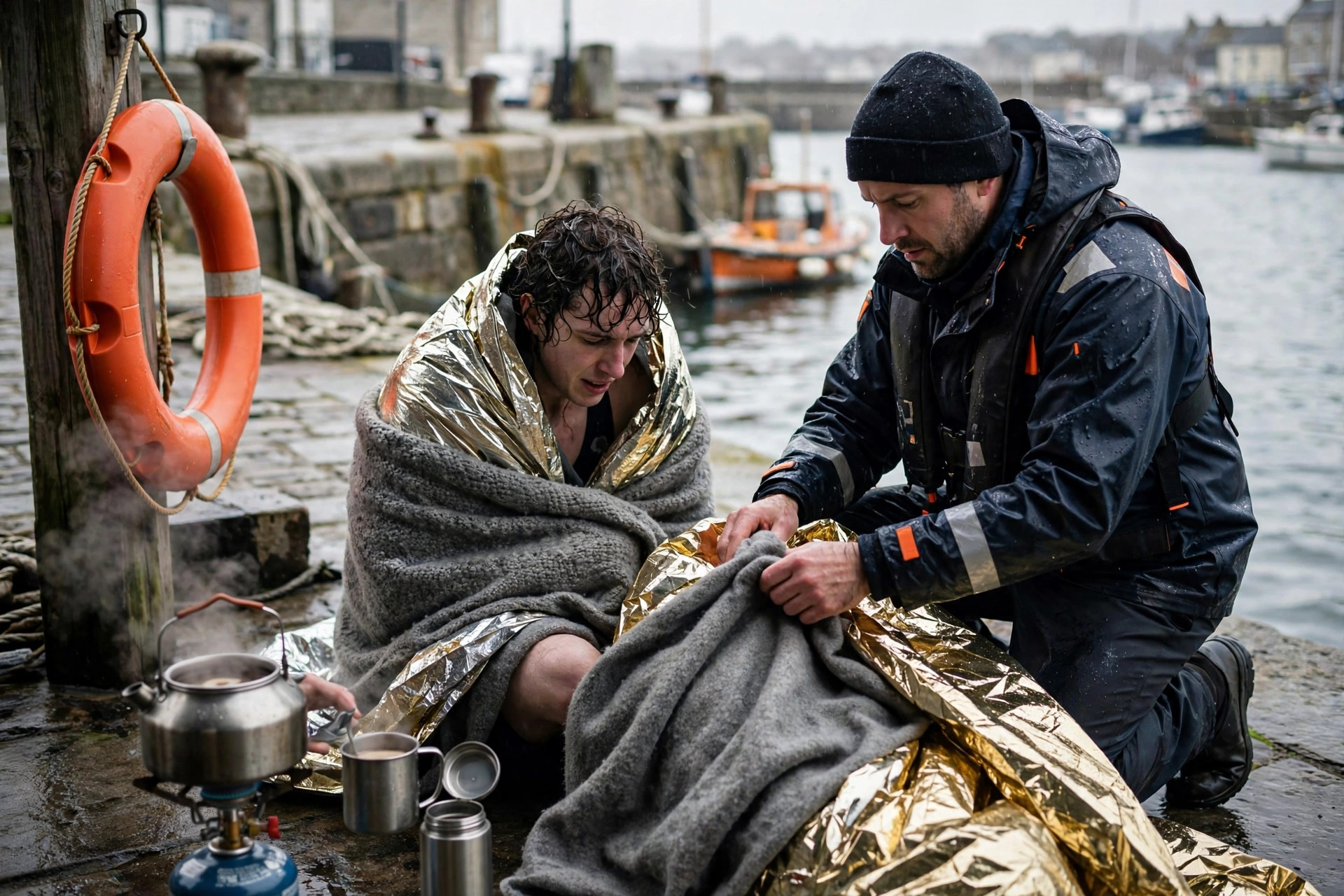
- Once out: handle the person gently and keep them horizontal — collapse can occur during or just after rescue. Remove wet clothing, dry them, and insulate with blankets including underneath, covering the head.
- Give a warm sweet drink only if fully conscious. No alcohol. Do not use hot baths or direct high heat.
- Anyone who has inhaled water, is breathless, coughing persistently, confused, or was immersed for more than a few minutes needs hospital assessment — breathing problems can worsen over the following hours.
What NOT to do
- Do not jump into cold water to rescue someone unless trained and equipped — throw a line or flotation aid and call 911/coastguard.
- Do not swim immediately on falling in — float first until breathing is controlled.
- Do not stand the rescued person up or walk them around — post-rescue collapse is a recognised danger.
- Do not give alcohol 'for warmth'.
When to get medical care
Call 911 for any cold-water immersion with breathing difficulty, persistent cough, confusion, collapse, chest pain, immersion longer than a few minutes, or where the person inhaled water. Hospital assessment is needed even after apparent recovery, because lung irritation can worsen over hours.
Related symptoms
Frequently asked questions
What is the difference between cold water shock and hypothermia?
Cold water shock is the immediate gasping and heart response in the first minute or two — it causes most cold-water deaths by drowning. Hypothermia is the later fall in core temperature, usually taking 30 minutes or more of immersion. Float first, then get out, then warm up.
Why keep a rescued person lying flat?
Cold, wet bodies have fragile circulation: loss of the water's squeezing effect plus cold blood returning from the limbs can cause a sudden blood-pressure drop ('circum-rescue collapse'). Gentle, horizontal handling and gradual warming reduce the risk.
In an emergency, call 911 (or your local emergency number) first — do not delay a call to read a guide. These pages are educational first-aid information in general terms; they are not a substitute for emergency services, first-aid training, or assessment by a qualified clinician.