- Physical Examination
- Surgical Examination
- Ophthalmology
- Clinical Skills
- Orthopedics
- Surgery Videos
- Laparoscopy
- Pediatrics
- Funny Videos
- Cardiothoracic Surgery
- Nursing Videos
- Plastic Surgery
- Otorhinolaryngology
- Histology and Histopathology
- Neurosurgery
- Dermatology
- Pediatric Surgery
- Urology
- Dentistry
- Oncology and Cancers
- Anatomy Videos
- Health and Fitness
- Radiology
- Anaesthesia
- Physical Therapy
- Pharmacology
- Interventional Radiology
- Cardiology
- Endocrinology
- Gynecology
- Emergency Medicine
- Psychiatry and Psychology
- Childbirth Videos
- General Medical Videos
- Nephrology
- Physiology
- Diet and Food Health
- Diabetes Mellitus
- Neurology
- Women Health
- Osteoporosis
- Gastroenterology
- Pulmonology
- Hematology
- Rheumatology
- Toxicology
- Nuclear Medicine
- Infectious Diseases
- Vascular Disease
- Reproductive Health
- Burns and Wound Healing
- Kidney Zone Podcast
- Other
Frostbite — First Aid
What to do
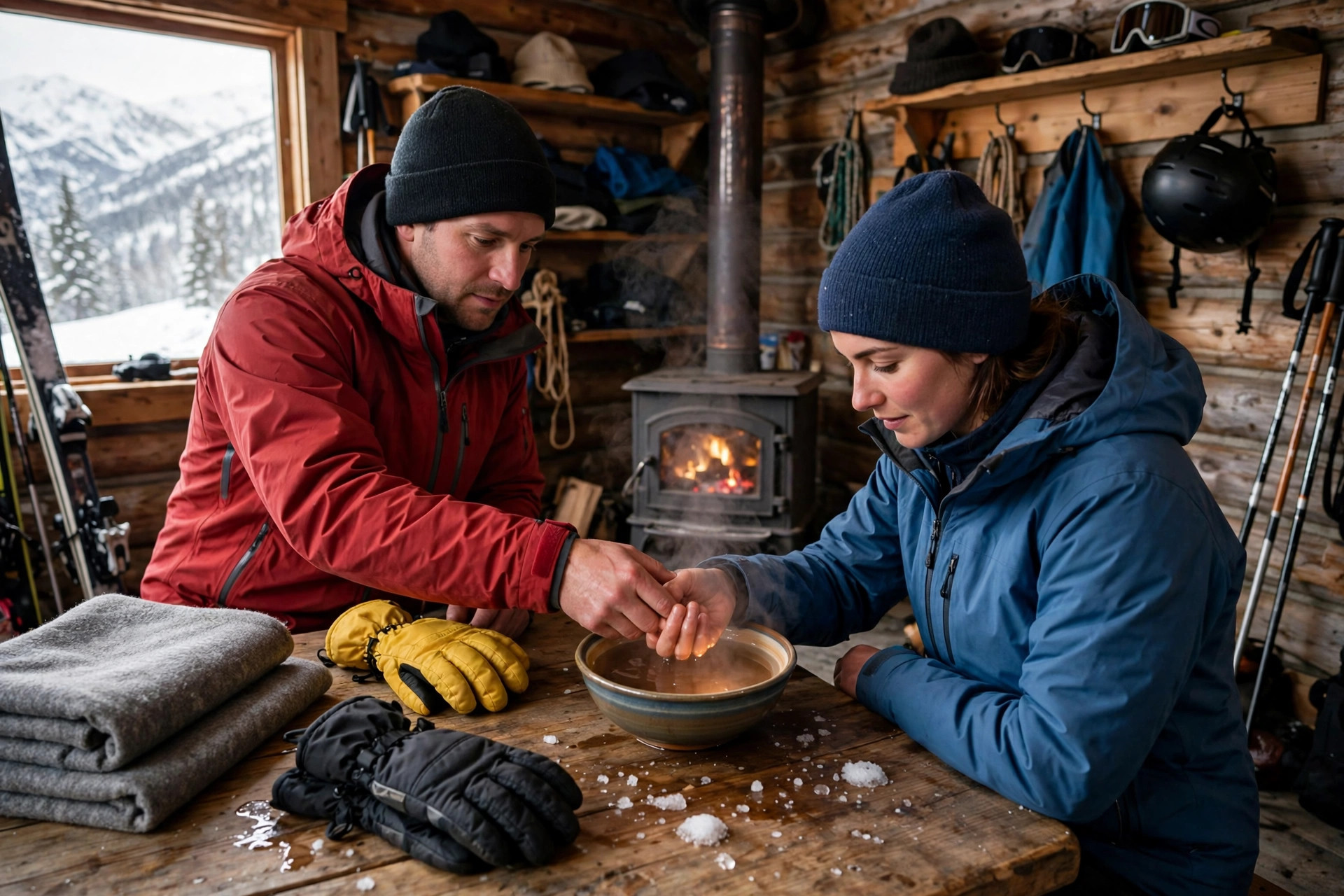
- Move the person into warmth and out of the wind. Remove wet clothing, gloves, boots and anything tight or constricting near the affected area, including rings.
- Do not thaw the area if there is any chance it will refreeze before reaching care — refreezing causes far worse damage. If safe from refreezing, proceed to warm it.
- Warm the frostbitten part in warm (not hot) water — comfortably warm to an unaffected hand, roughly bath temperature — for about 20 to 30 minutes, until the skin becomes red and soft. Expect stinging and pain as it thaws; that is normal.
- Do not use direct heat such as a fire, radiator, heat lamp or hot water bottle on frostbitten skin — numb skin burns without warning.
- Once thawed, dry gently, place loose, dry dressings over the area and between fingers or toes, raise the part, and keep it still. Do not burst any blisters.
- Give a warm drink, simple pain relief as directed on the packet, and arrange medical assessment for anything beyond superficial frostnip (skin that fully recovers colour and feeling within about 30 minutes).
What NOT to do
- Do not rub the area or massage it with snow — a persistent and harmful myth.
- Do not walk on frostbitten feet if avoidable; thawing and walking worsens damage.
- Do not thaw with dry heat, fires or very hot water.
- Do not burst blisters or remove dead-looking skin — hospital teams assess and treat.
When to get medical care
Seek urgent hospital care for frostbite with white, waxy, hard or numb skin that does not recover with warming, blistering, swelling, or involvement of the face, ears or large areas; for all frostbite in children; and if the person also shows hypothermia signs. Deep frostbite is a surgical condition where early treatment improves outcomes.
Related symptoms
Frequently asked questions
What is the difference between frostnip and frostbite?
Frostnip is superficial cold injury: the skin goes pale and numb but recovers fully with gentle warming, with no blistering or lasting damage. Frostbite involves freezing of deeper tissues — the skin may feel hard or waxy, and blisters and swelling develop after thawing.
How long does frostbite take to heal?
Superficial frostbite may settle over days to a couple of weeks. Deep frostbite evolves over weeks, and tissue loss is sometimes unavoidable; early hospital care, careful wound management and avoiding refreezing give the best chance of recovery.
In an emergency, call 911 (or your local emergency number) first — do not delay a call to read a guide. These pages are educational first-aid information in general terms; they are not a substitute for emergency services, first-aid training, or assessment by a qualified clinician.